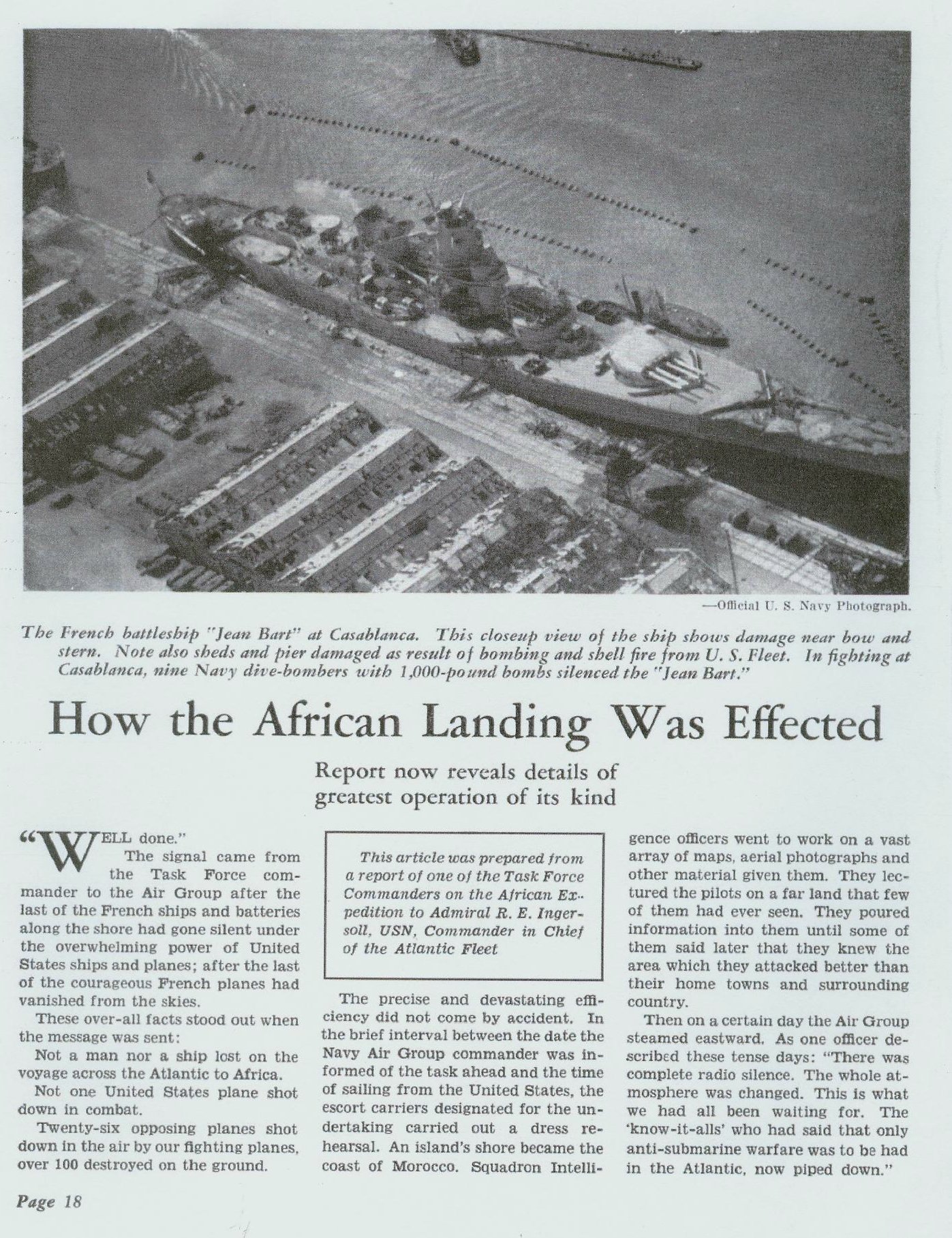
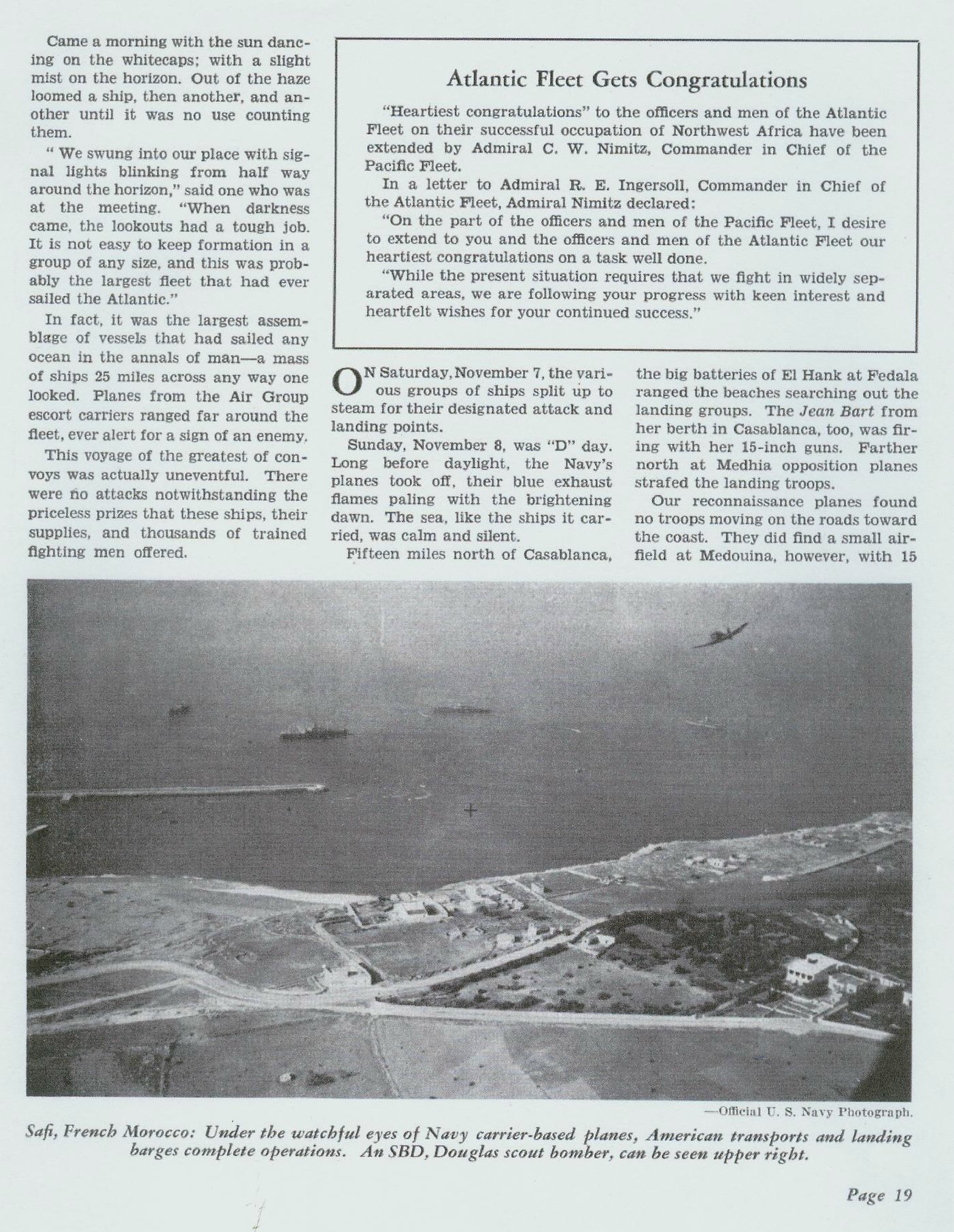
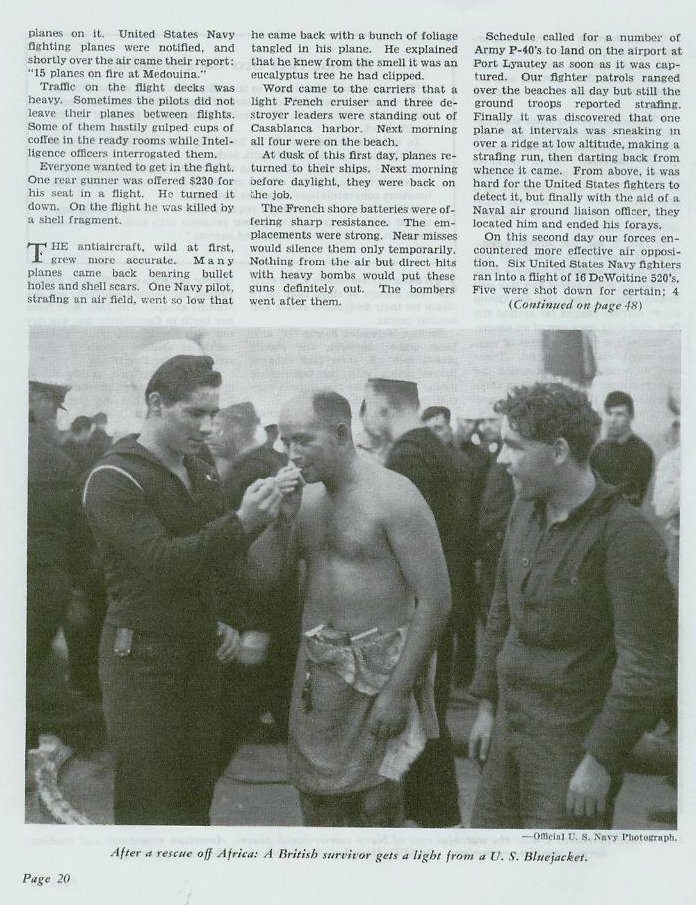
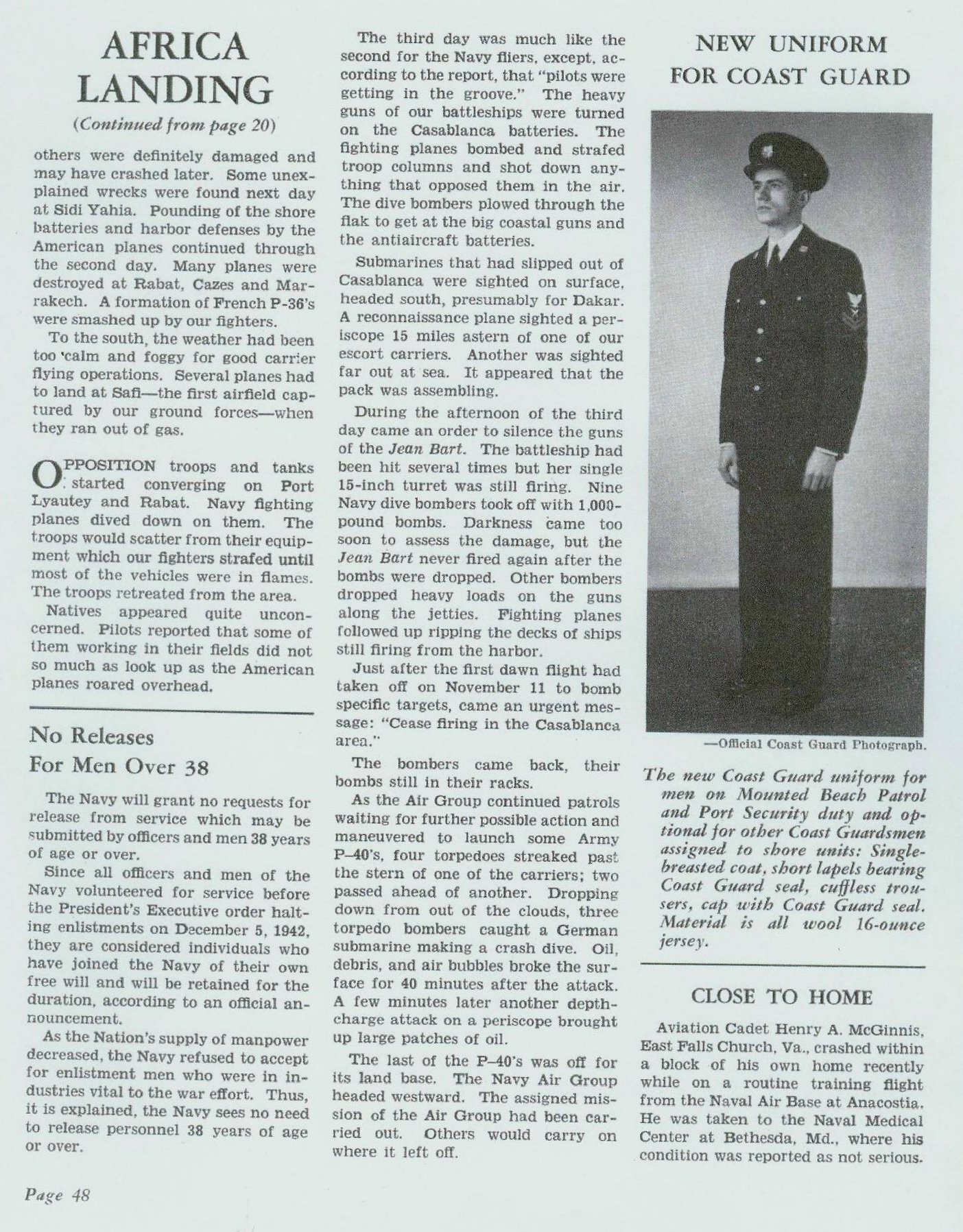
Operation Torch — the Allied amphibious landings in French North Africa on November 8, 1942 — was the first large-scale American amphibious operation of World War II and a critical test of joint Allied doctrine and logistics. Three task forces came ashore simultaneously at Casablanca on the Atlantic coast of Morocco and at Oran and Algiers on the Mediterranean coast of Algeria. Executing such coordinated landings over open beaches under opposition required months of planning and the movement of hundreds of ships across the Atlantic. The February 1943 Bureau of Naval Personnel Information Bulletin — the publication later renamed All Hands — devoted four pages to explaining how the African landing was effected: the assembly of the invasion fleet, the role of naval gunfire and carrier aviation, and the mechanics of putting tens of thousands of troops ashore in darkness.
Click to enlarge