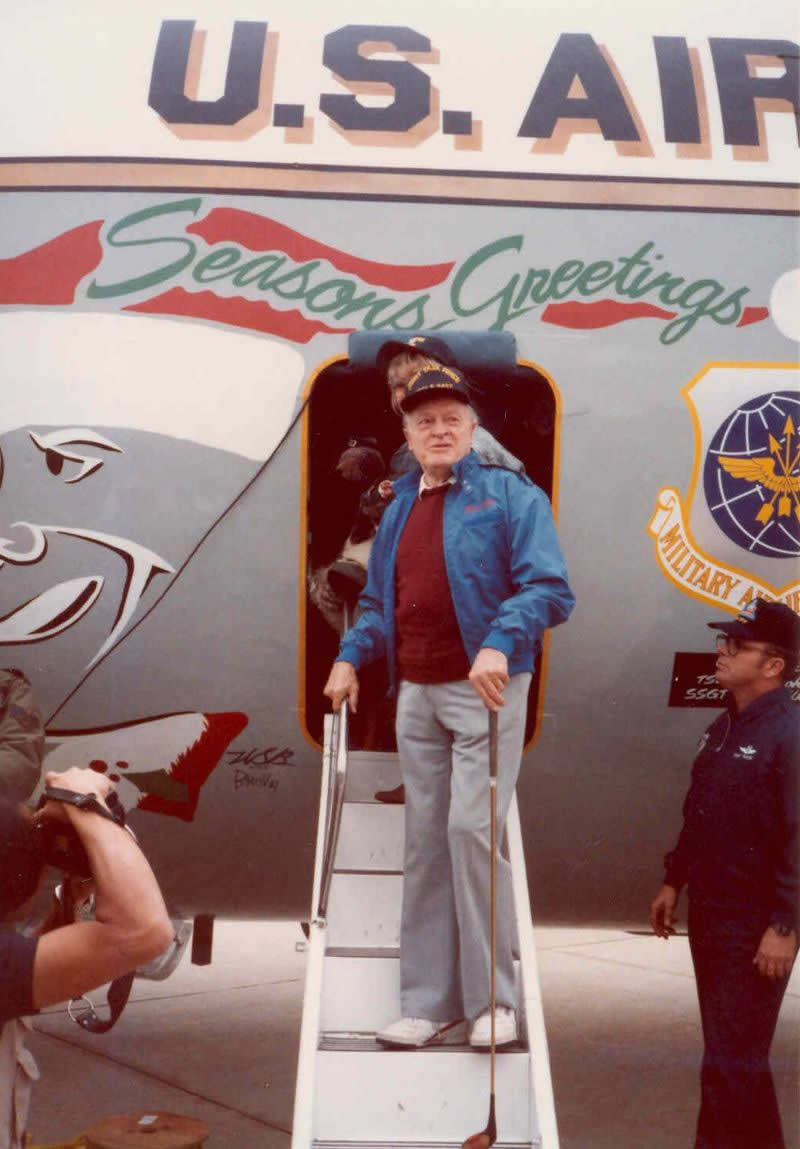
First and Only Honorary Veteran — 50 Years Entertaining Our Military
⚓
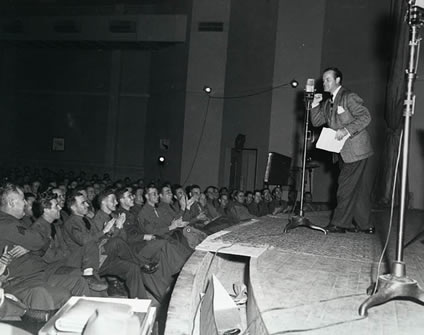
This video takes us back to March Field in early 1941, when Bob Hope and Bing Crosby
appeared in what was probably the first organized USO show for our Armed Forces — only
months before the beginning of World War II.
In 1996, the U.S. Congress honored Bob Hope by declaring him the
“first and only honorary veteran of the U.S. armed forces.”
Bob Hope appeared in, or hosted, 199 known USO shows and performed uncounted individual
appearances for each.
For a man who once played third billing to Siamese twins and trained seals, Bob Hope
became the most recognized talent in the world — and in all of show business, no
individual traveled so far, so often, to entertain so many.
Click to Play
▶ Bob Hope & the USO — Photos and Video from the National Archives: 10 minutes
WWII Radio Broadcasts
Bob Hope began most of his radio broadcasts with the words, “This is Bob [fill in
remote location] Hope.” During World War II he and his troupe traveled nearly every week
to perform The Pepsodent Show at a military training site. Of 144 wartime episodes,
only nine originated from NBC’s studios.
In 1944 Bob Hope wrote I Never Left Home about his work entertaining the armed
forces. Over 1.5 million copies were sold.
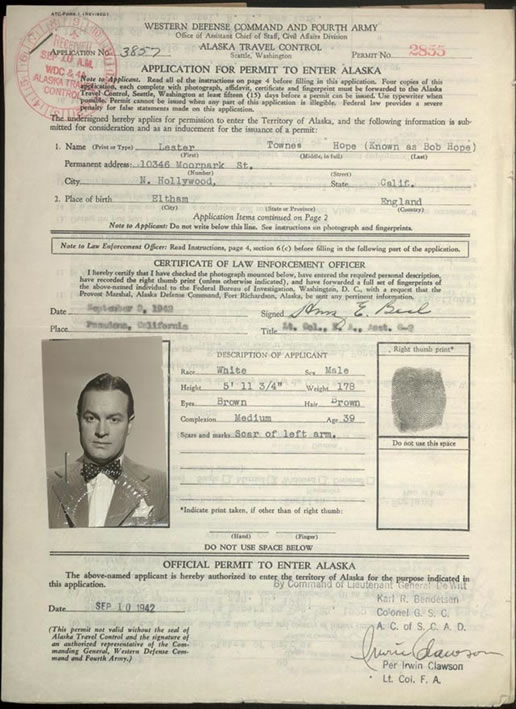
First Overseas Visit
Nine months after the U.S. entered WWII, Bob Hope made his first overseas trip to entertain
the troops in Alaska — then a U.S. territory requiring a special permit to visit.
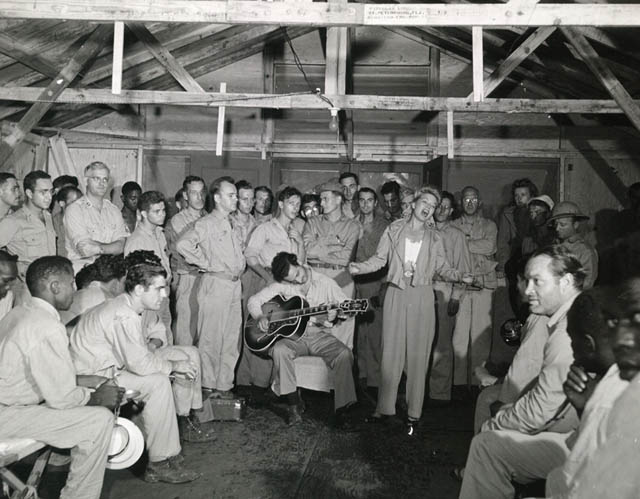
South Pacific Tour 1944
In the summer of 1944 Bob Hope hopped from island to island in the South Pacific. He
logged over 30,000 miles and gave more than 150 performances, accompanied by guitarist
Tony Romano, singer Frances Langford, dancer Patty Thomas, and gag-writer Barney Dean.
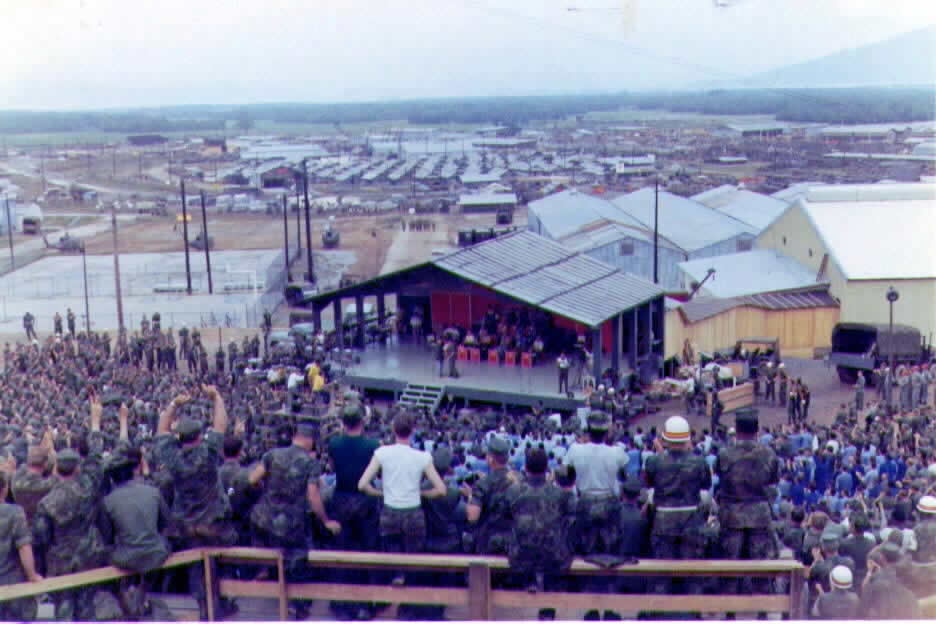
Vietnam & the Christmas Tours
Nine of Bob Hope’s Christmas tours included Vietnam, from 1964 until 1972. His
1969 “Around the World with the U.S.O.” tour was the most ambitious of his career,
opening with a performance for President Nixon at the White House.
Throughout his career Hope carried a golf club on stage — a vaudevillian’s cane,
a symbol of his lifelong love for the sport.
Prompted by patriotism and perhaps vaudevillian wanderlust, Bob Hope kept touring for
more than fifty years. His variety shows for the troops included comedy monologues,
specialty acts, celebrity appearances, dancers, singers, and skits. His mildly irreverent
humor provided a welcome respite — a reminder, in Hope’s words, “of what
they were fighting for.”
Bob Hope Christmas Tours — A tradition lasting until 1990