
The use of the word “rank” for Navy enlisted personnel is incorrect. The correct term is “rate.” The rating badge — a combination of rate (pay grade) and rating (job specialty) — is worn on the left sleeve of the dress blue uniform. Do not confuse rate with paygrades such as E-1 or O-5; paygrades are administrative classifications used to standardize compensation.
US Navy Ranks in Order
The tables below list every US Navy pay grade in order, lowest to highest. Click a section heading above to see the insignia for each rank in full detail.
| Pay Grade | Rate | Abbreviation |
|---|---|---|
| E-1 | Seaman Recruit | SR |
| E-2 | Seaman Apprentice | SA |
| E-3 | Seaman | SN |
| E-4 | Petty Officer Third Class | PO3 |
| E-5 | Petty Officer Second Class | PO2 |
| E-6 | Petty Officer First Class | PO1 |
| E-7 | Chief Petty Officer | CPO |
| E-8 | Senior Chief Petty Officer | SCPO |
| E-9 | Master Chief Petty Officer | MCPO |
| E-9 | Fleet / Command Master Chief Petty Officer | FLTCM / CMDCM |
| E-9 | Master Chief Petty Officer of the Navy | MCPON |
| Pay Grade | Rank |
|---|---|
| W-1 | Warrant Officer 1 |
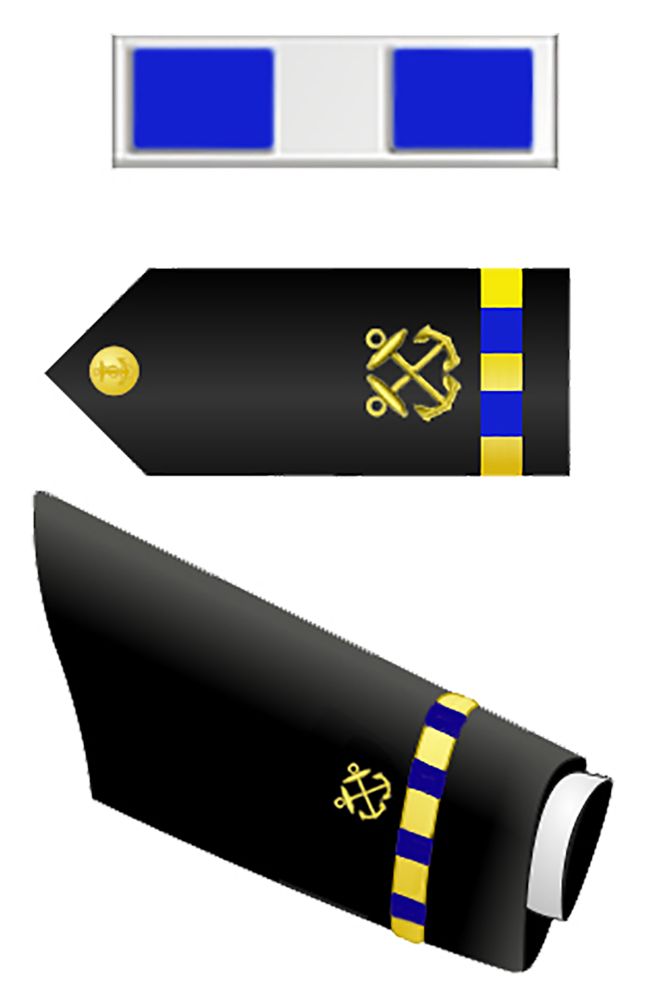
| W-2 | Chief Warrant Officer 2 |
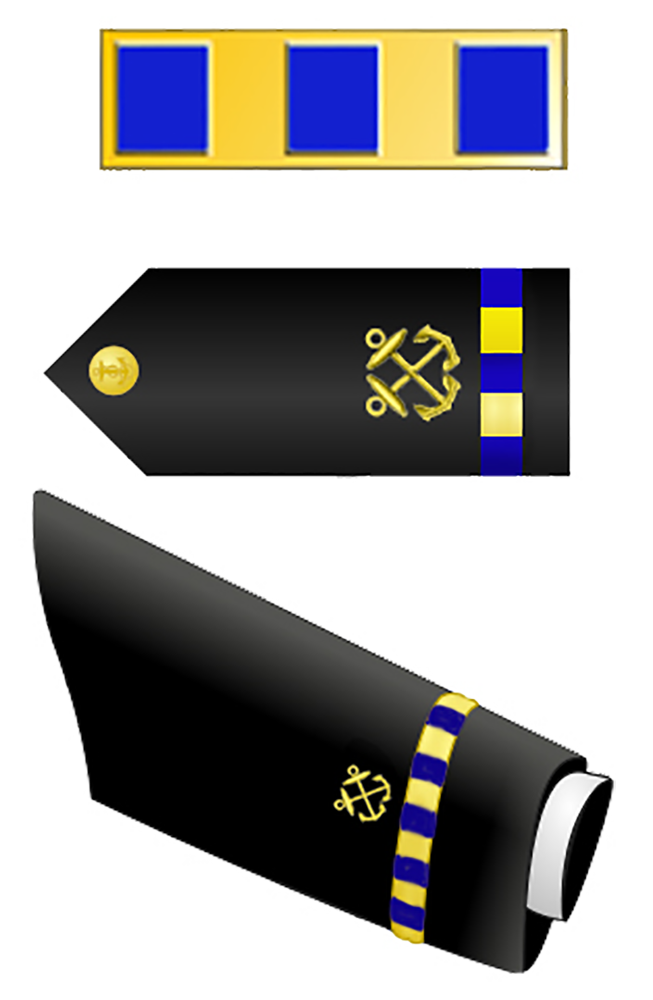
| W-3 | Chief Warrant Officer 3 |
| W-4 | Chief Warrant Officer 4 |
| W-5 | Chief Warrant Officer 5 |
| O-1 | Ensign |
| O-2 | Lieutenant Junior Grade |
| O-3 | Lieutenant |
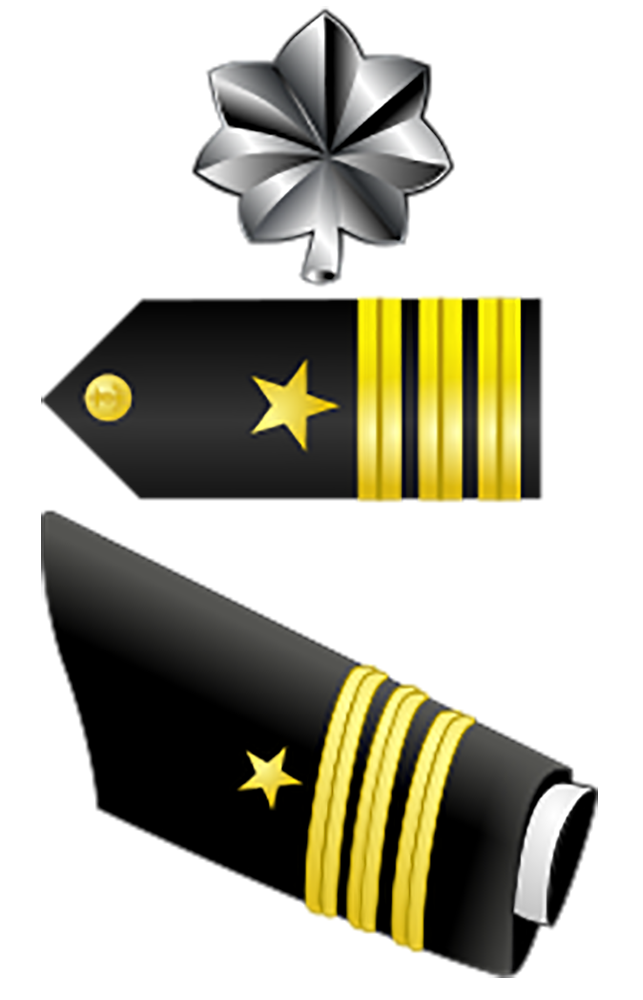
| O-4 | Lieutenant Commander |
| O-5 | Commander |
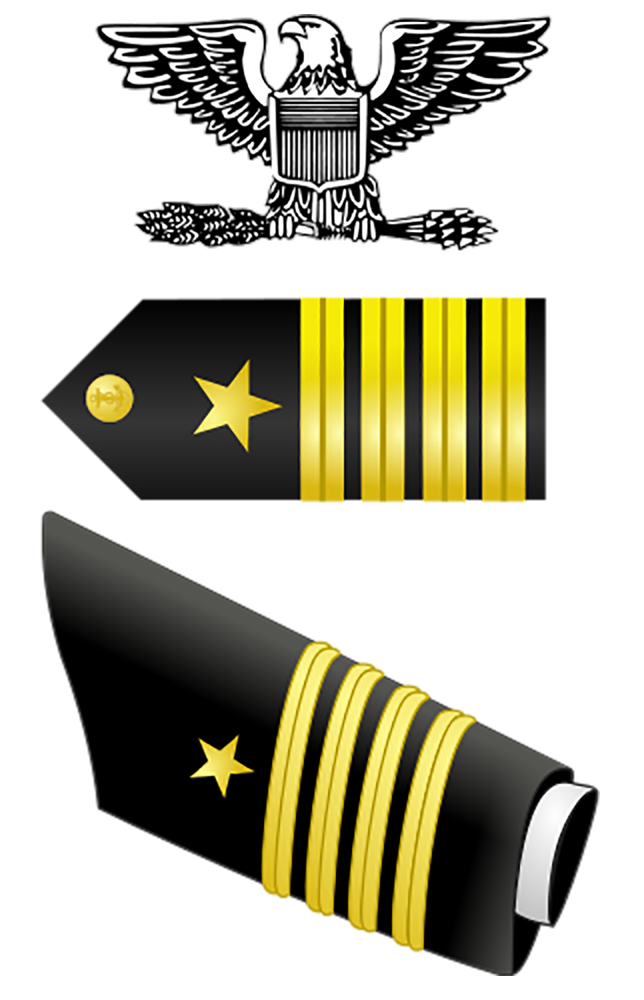
| O-6 | Captain |
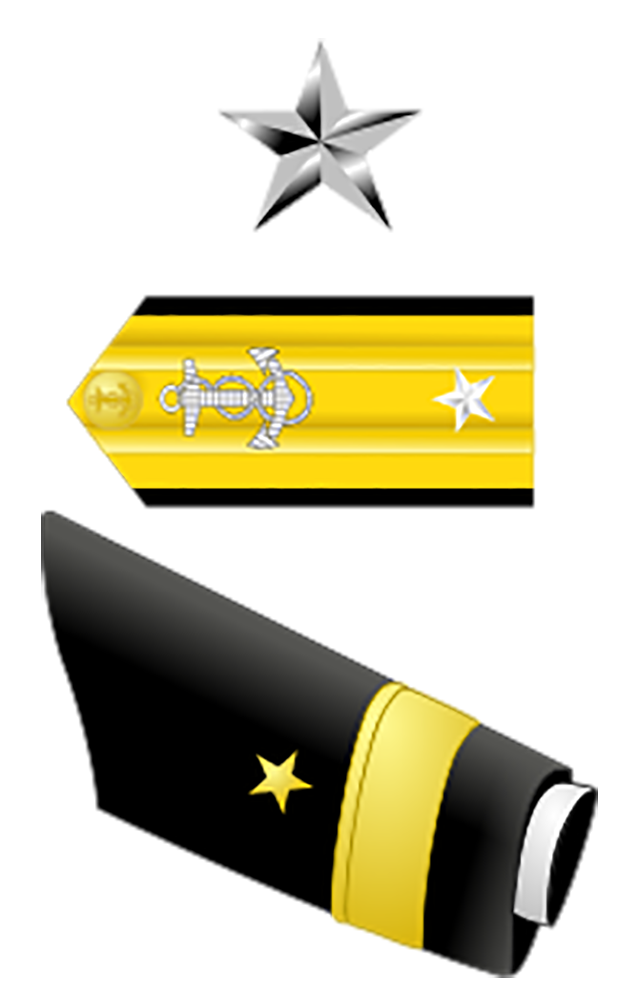
| O-7 | Rear Admiral Lower Half |
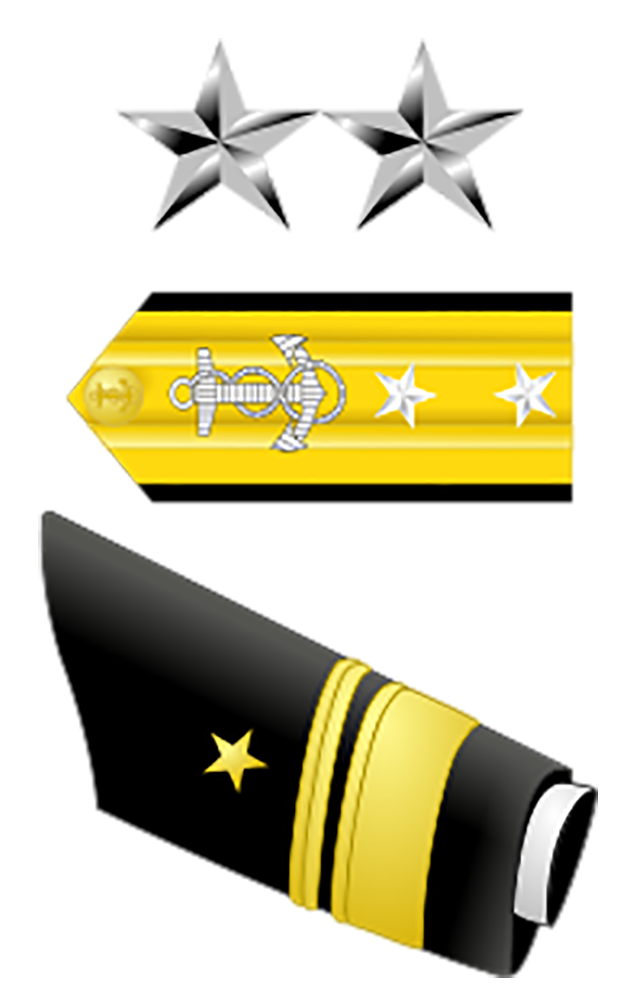
| O-8 | Rear Admiral Upper Half |
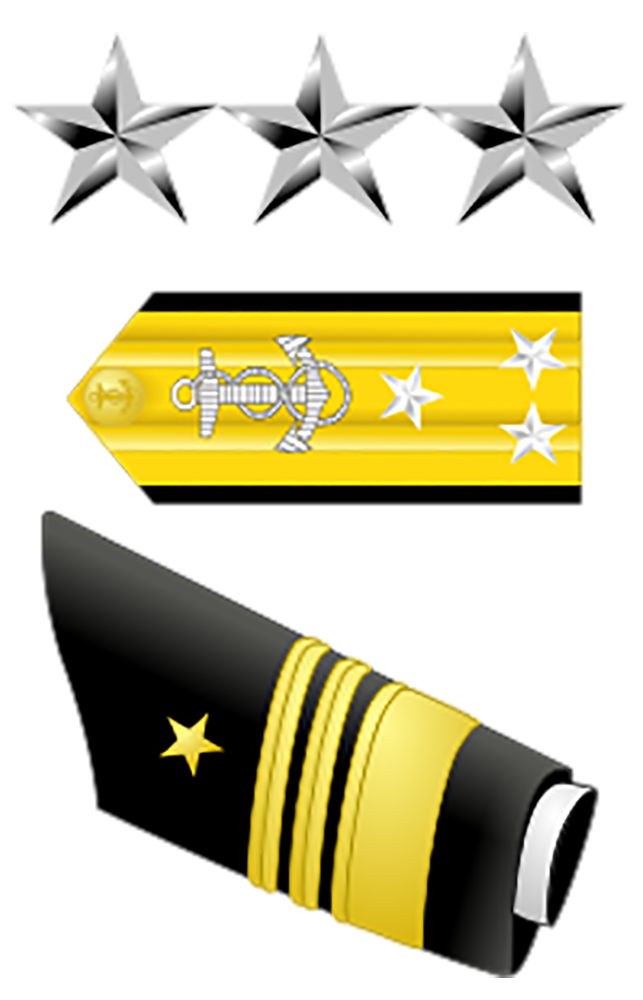
| O-9 | Vice Admiral |
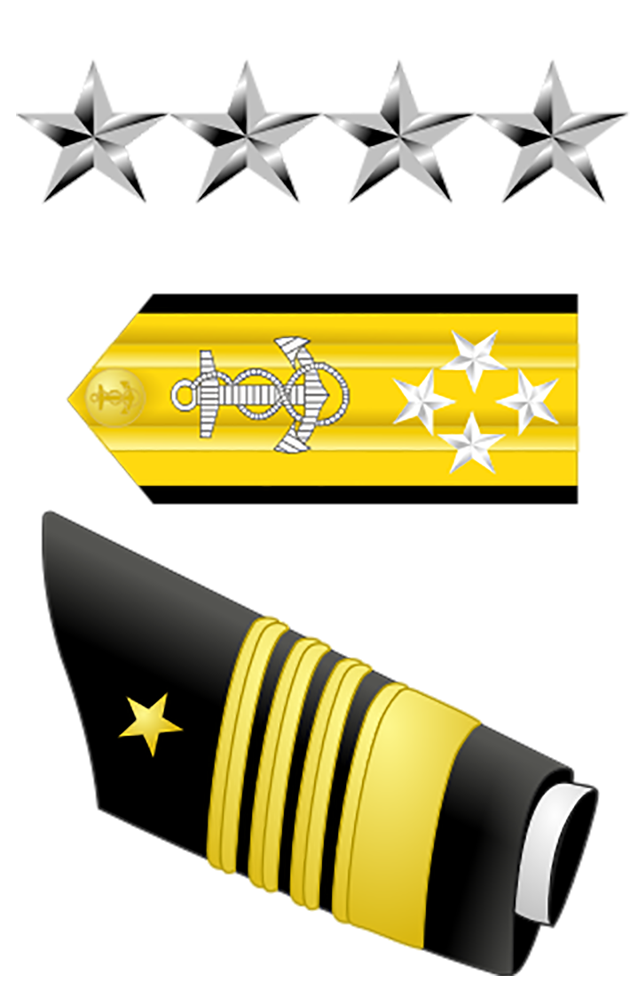
| O-10 | Admiral |
| O-11 | Fleet Admiral (wartime only — last held by the five-star admirals of World War II) |
Insignia images courtesy of the U.S. Department of War (war.gov).
Enlisted Ranks
Sailors in pay grades E-1 through E-3 are in apprenticeship training. The NCO equivalent in the Navy — petty officer — begins at E-4. Chief Petty Officers are always addressed as “Chief,” “Senior Chief,” or “Master Chief” as appropriate.
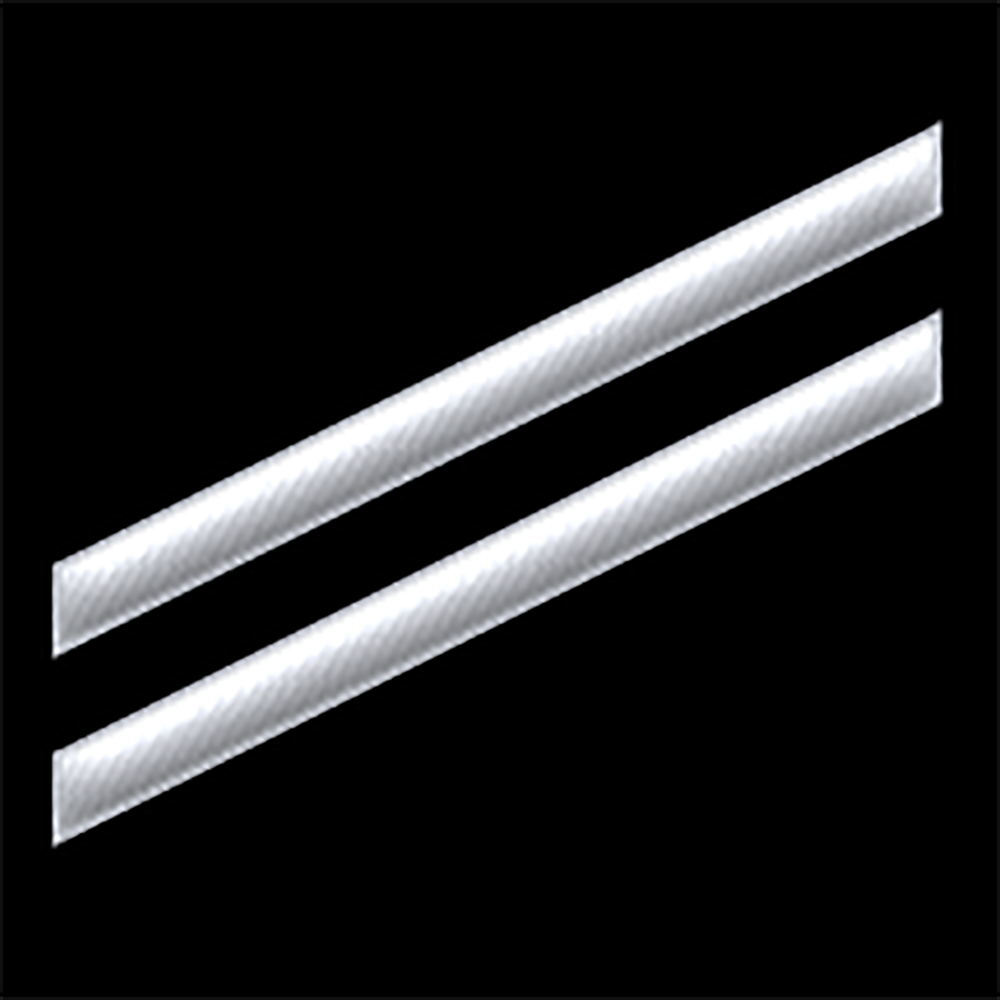
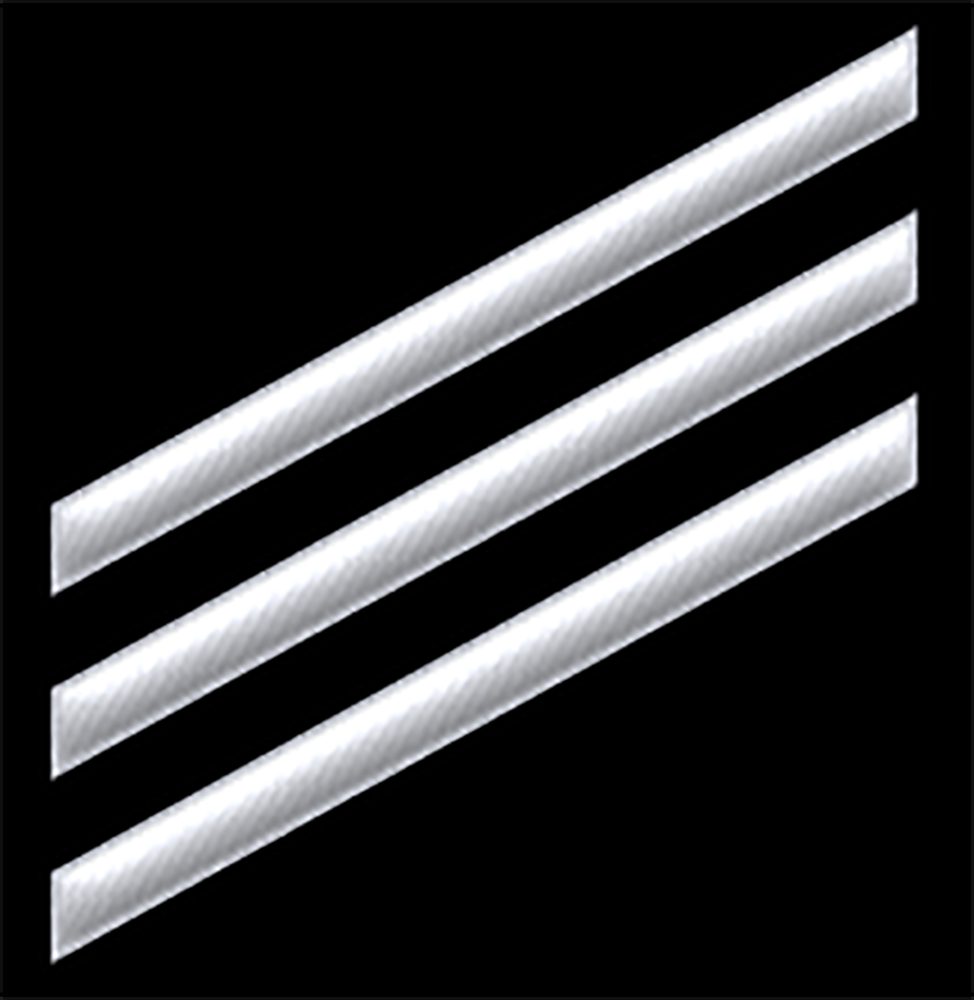
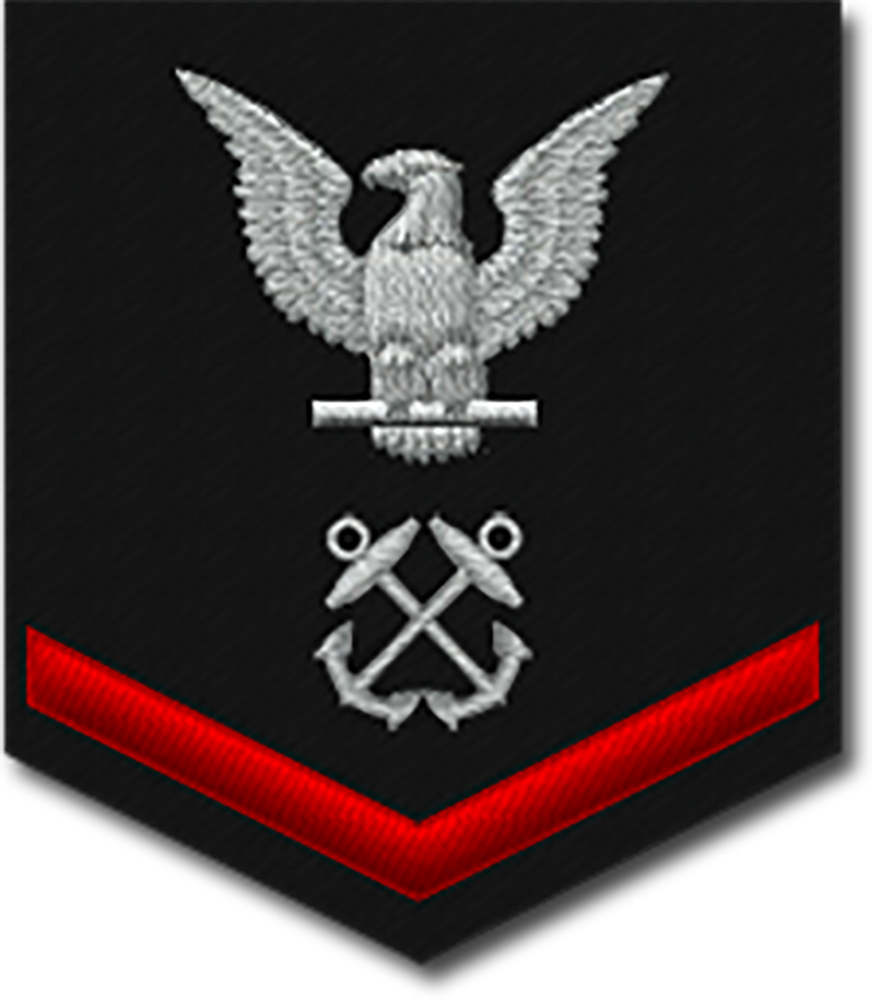
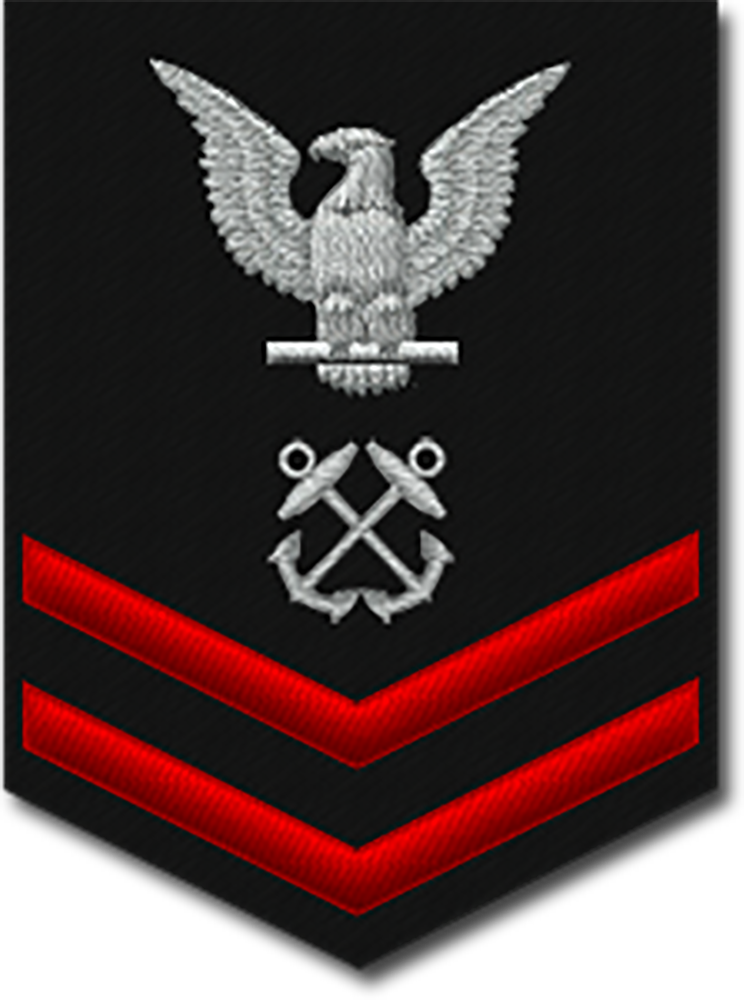
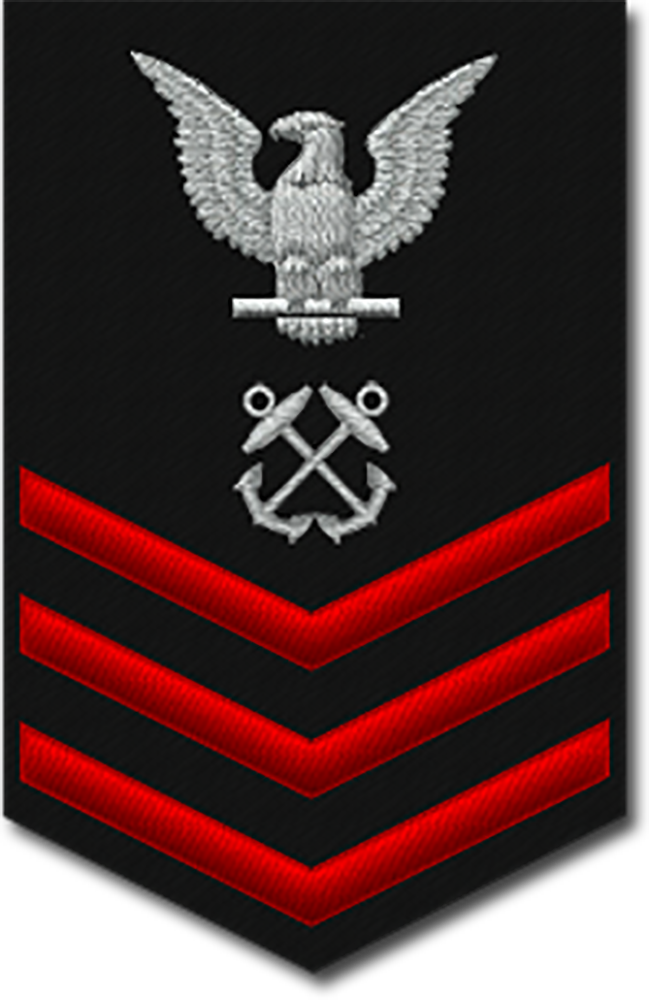
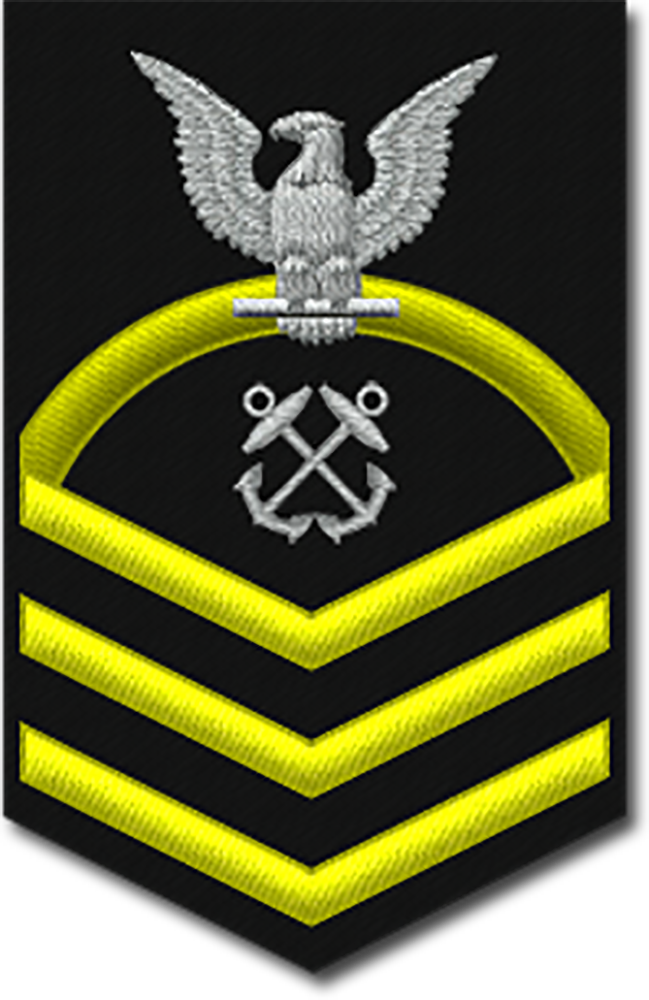
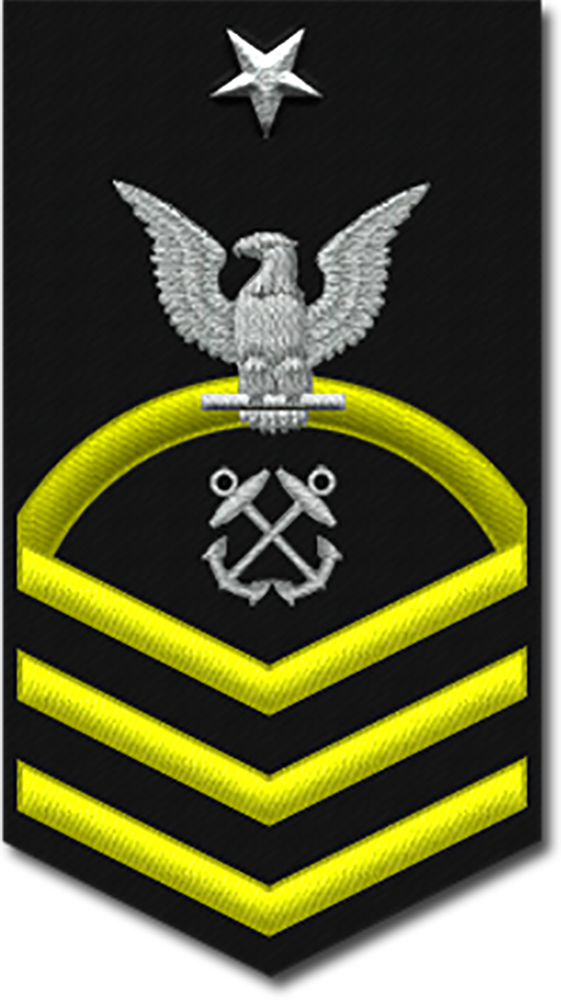
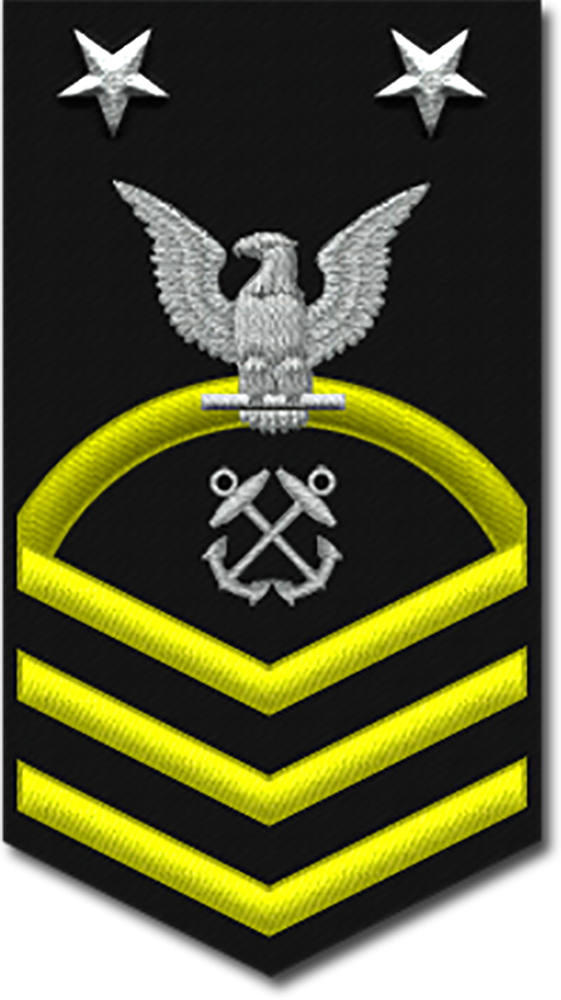
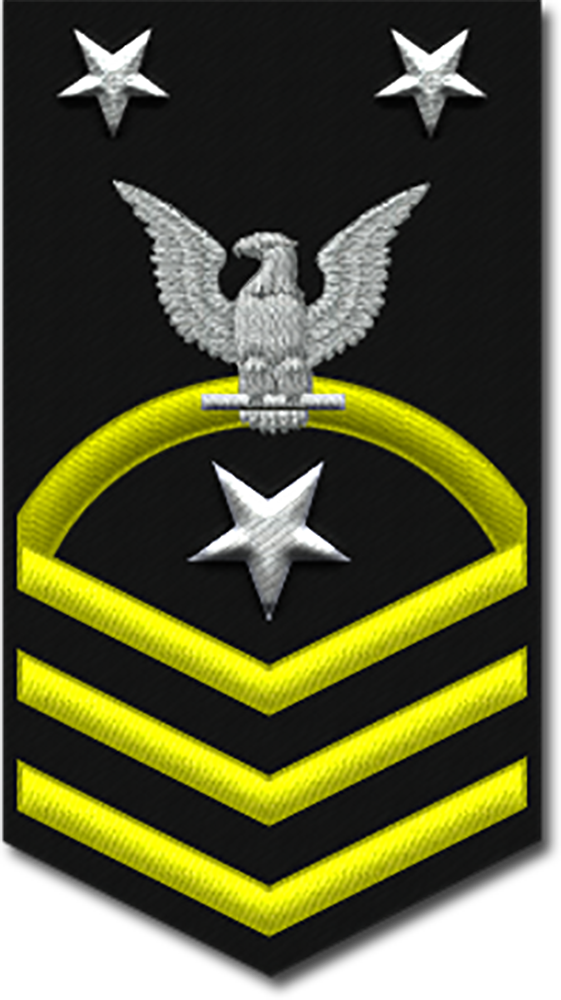
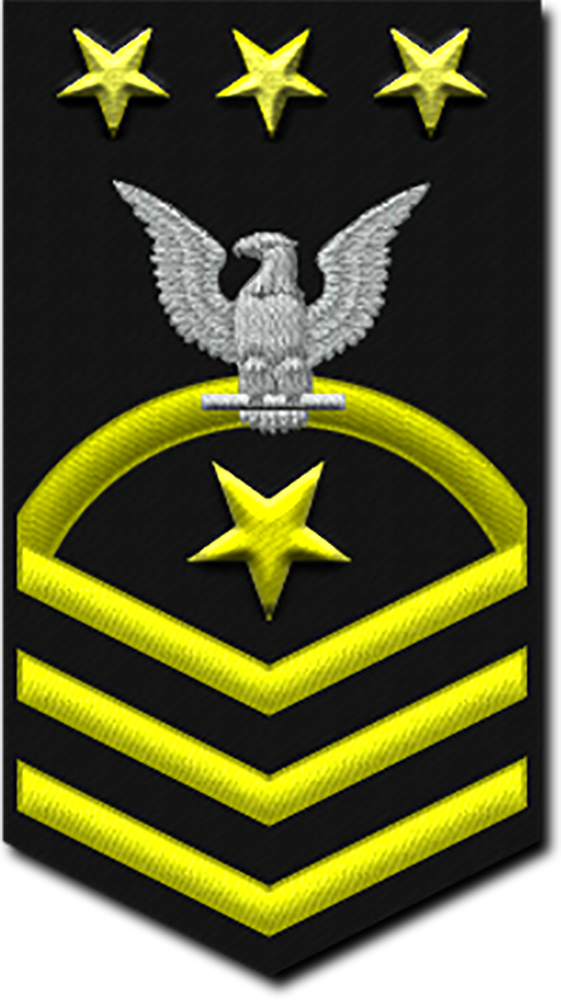
** A specialty mark in the center of a rating badge indicates the wearer’s particular rating. Gold stripes indicate 12 or more years of good conduct.
*** 1. Master Chief Petty Officer of the Navy and Fleet/Force Master Chiefs. 2. Command Master Chiefs wear silver stars. 3. Master Chief Petty Officers wear silver stars and silver specialty rating marks.
Officer Ranks
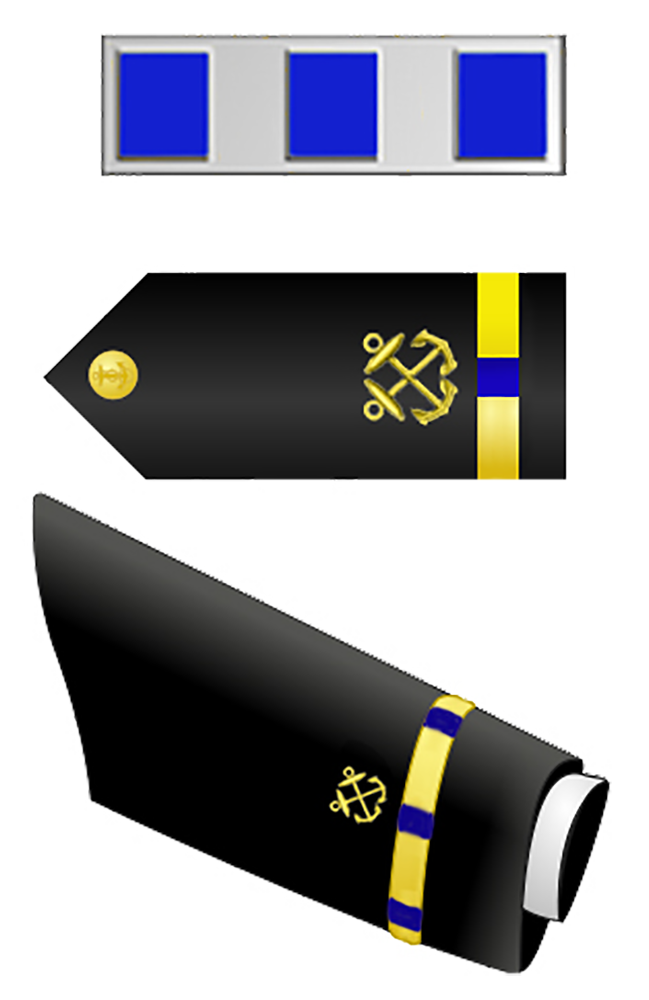
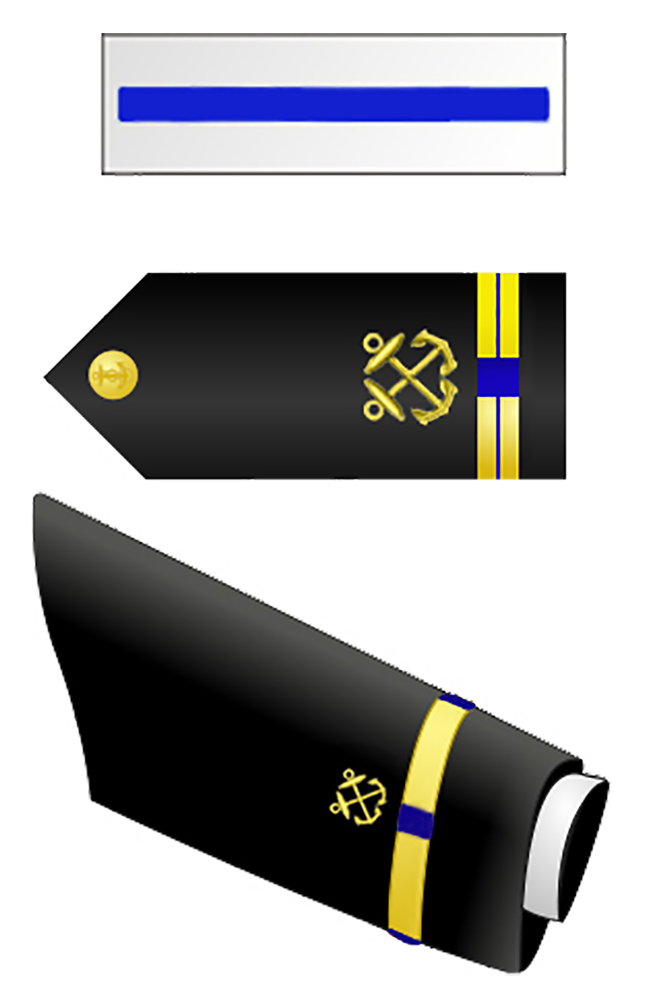
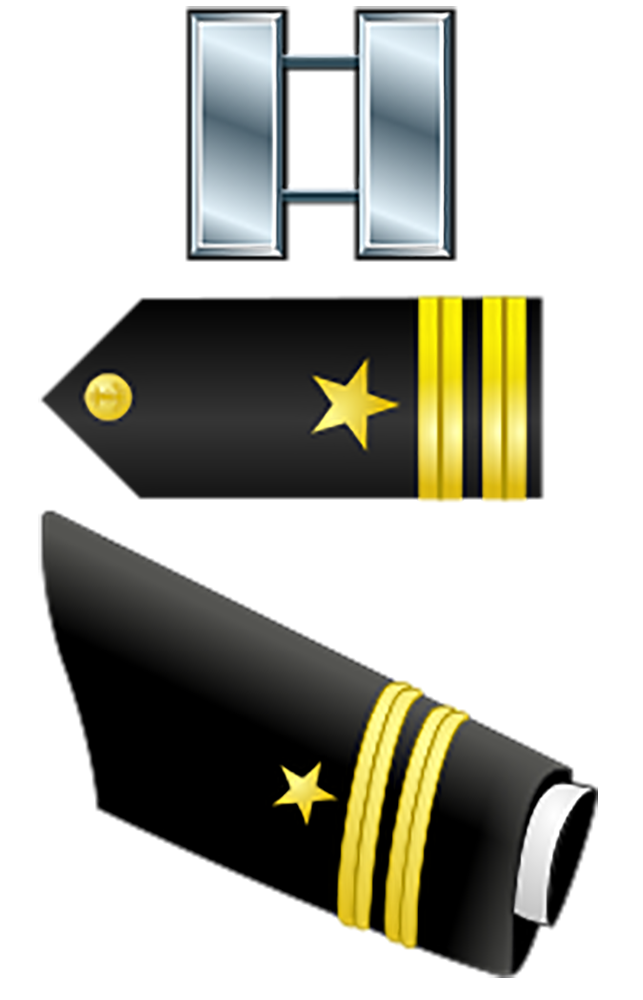
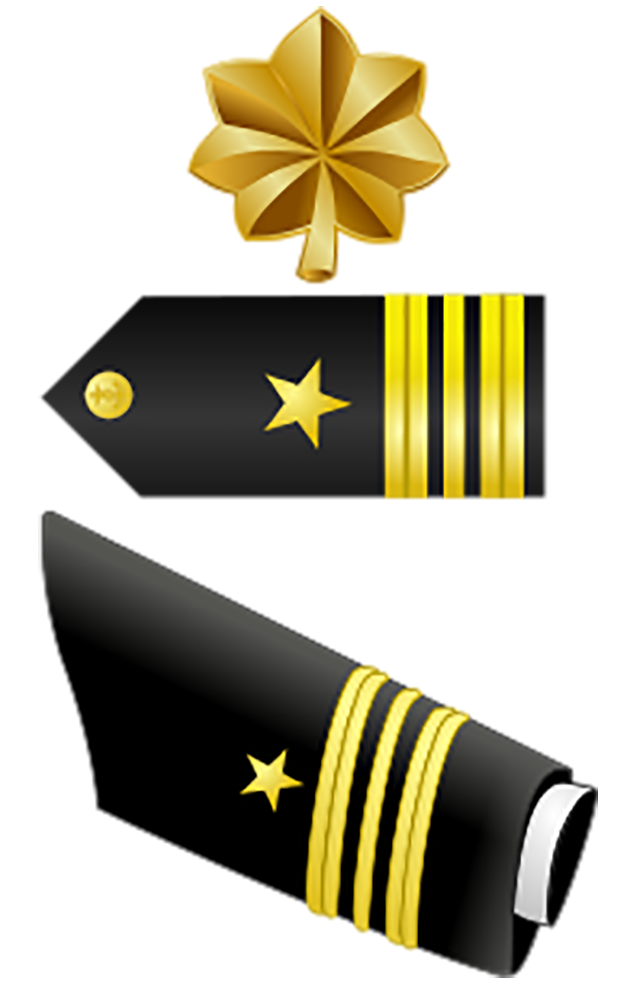
The Navy officer structure begins with Warrant Officers (specialists), then Commissioned Officers. Naval officers wear different rank devices depending upon uniform: khakis use collar insignia pins; whites use shoulder board stripes; blues use sleeve stripes.
Warrant Officers
Warrant officers hold warrants from the Secretary of the Navy and are specialists in certain military technologies. Upon promotion to Chief Warrant Officer 2 they receive presidential commissions.

Commissioned Officers
Commissioned officers hold presidential commissions confirmed by the Senate. Junior grade: O-1–O-3; Mid-grade: O-4–O-6; Flag: O-7 and above.



Enlisted Rating Insignia
The enlisted rating badge for Petty Officer Third Class and above consists of two parts. The chevrons indicate pay grade (rate). Between the chevrons and the eagle is an insignia indicating the rating (job specialty).
Chief Petty Officers are always referred to as “Chief,” “Senior Chief,” or “Master Chief” as appropriate — for example, “Chief Jones” or in subsequent references, simply “Chief.”
The rating insignia are displayed in these groupings:
Administration / Medical / Dental | Engineering / Hull | Aviation | Construction (SeaBees)
Group Rate Marks for Pay Grades E-1 through E-3
Sailors in pay grades E-1 through E-3 are considered to be in apprenticeships. As they begin their path towards advancement to Petty Officer in a specific specialty, they begin wearing Group Rate marks indicating their specialty group.
| Group (linked to rating insignia) |
Pay Grade | Rate | Abbreviation | Stripe Color |
|---|---|---|---|---|
| Deck, Administration, Medical, Dental | E-1 | Seaman Recruit / Hospital Recruit / Dental Recruit | SR / HR / DR | [none] |
| E-2 | Seaman Apprentice / Hospital Apprentice / Dental Apprentice | SA / HA / DA | White | |
| E-3 | Seaman / Hospitalman / Dentalman | SN / HN / DN | White | |
| Engineering, Hull | E-1 | Fireman Recruit | FR | [none] |
| E-2 | Fireman Apprentice | FA | Red | |
| E-3 | Fireman | FN | Red | |
| Aviation | E-1 | Airman Recruit | AR | [none] |
| E-2 | Airman Apprentice | AA | Green | |
| E-3 | Airman | AN | Green | |
| Construction (SeaBees) | E-1 | Constructionman Recruit | CR | [none] |
| E-2 | Constructionman Apprentice | CA | Blue | |
| E-3 | Constructionman | CN | Blue |
Back to Enlisted Rating Insignia ↑ Back to top
Enlisted Rating Insignia — Engineering and Hull Specialties
| Rating | Full Title | Description |
|---|---|---|
| DC | Damage Controlman | DCs perform the work necessary for damage control, ship stability, fire-fighting, and chemical, biological and radiological defense. |
| EM | Electrician’s Mate | The operation and repair of a ship’s electrical power plant and electrical equipment is the responsibility of EMs. |
| EN | Engineman | Internal combustion engines, diesel or gasoline, must be kept in good order. This is the responsibility of ENs. |
| GS | Gas Turbine System Technician (Note 1) | GSs operate, repair and maintain gas turbine engines; main propulsion machinery, including gears, shafting and controllable pitch propellers. |
| HT | Hull Maintenance Technician | HTs are responsible for maintaining ships’ hulls, fittings, piping systems and machinery. They install and maintain shipboard and shore-based diving equipment. |
| IC | Interior Communications Electrician | ICs operate and repair electronic devices used in the ship’s interior communications systems, SITE TV systems, public address systems, and gyrocompass systems. |
| MM | Machinist’s Mate | Continuous operation of the many engines, compressors and gears, refrigeration, air-conditioning and gas-operated equipment aboard ship is the MM’s responsibility. |
| MR | Machinery Repairman | MRs are skilled machine tool operators. They make replacement parts and repair or overhaul a ship’s engine auxiliary equipment. |
| ND | Navy Diver (Note 2) | Navy Divers are responsible for a wide variety of tasks including underwater ship maintenance, construction, explosive ordnance disposal, and salvage operations. |
| PM | Patternmaker | The PM is an important link between the draftsmen who make the drawings and the molders in a Navy foundry who produce the castings used in ship repair. |
Notes:
Note 1: “Gas Turbine System Technician” is used at pay grade E-9 only. Leading to GS: GSE (Electrical) and GSM (Mechanical).
Note 2: Navy Diver rating established 1 Jun 2006.
Back to Enlisted Rating Insignia ↑ Back to top
Enlisted Rating Insignia — Administration, Deck, Medical, Technical, and Weapons Specialties
| Rating | Full Title | Description |
|---|---|---|
| BM | Boatswain’s Mate | BMs train and supervise personnel in all activities relating to marlinspike, deck and boat seamanship, and the operation of deck equipment. |
| CS | Culinary Specialist | CSs operate and manage Navy dining facilities and bachelor enlisted quarters. They cook, bake, order, inspect and account for subsistence supplies. |
| CT | Cryptologic Technician (Note 1) | CTs control the flow of messages and information. Their work depends on their special career area: administrative, maintenance, networks, collection, or interpretive. |
| ET | Electronics Technician | ETs are responsible for electronic equipment used to send and receive messages, detect enemy planes and ships, and determine target bearing and range. |
| FC | Fire Controlman | FCs maintain the control mechanisms used in weapons systems on combat ships, including complex electronic, electrical and hydraulic equipment. |
| FT | Fire Control Technician | FTs maintain the electronic equipment used in submarine weapons systems and their associated equipment. |
| GM | Gunner’s Mate (Note 2) | GMs operate, maintain and repair all gunnery equipment, guided-missile launching systems, rocket launchers, guns, and associated equipment. |
| HM | Hospital Corpsman (Note 3) | HMs assist medical professionals in providing health care to service people and their families. They serve as battlefield medics to the Marine Corps. |
| IS | Intelligence Specialist | ISs analyze military intelligence. They study and evaluate information about enemy activities, forces, and defense capabilities. |
| IT | Information Systems Technician (Note 4) | Naval activities often involve people working at many different locations; ITs operate and maintain the communications networks that link them. |
| LN | Legalman | LNs are trained legal aides who assist professionals in the field of law. They work in Navy legal offices performing paralegal duties. |
| MA | Master-at-Arms | MAs uphold law and order aboard ships and shore stations. They report to the executive officer and help maintain discipline and security. |
| MC | Mass Communication Specialist (Note 5) | MCs are public affairs and visual information experts. They present the US Navy story through newspapers, radio, television, and other media. |
| MN | Mineman | MNs test, maintain, repair and overhaul mines and their components. They are responsible for assembling, testing, and handling of mines. |
| MT | Missile Technician | MTs assemble, maintain and repair missiles carried by submarines and maintain specialized equipment used to store, assemble, and fire submarine-launched ballistic missiles. |
| MU | Musician | MUs play in official Navy bands and special groups such as jazz bands, dance bands and small ensembles. They give concerts and support military ceremonies. |
| NC | Navy Counselor | NCs offer vocational guidance on an individual and group basis to Navy personnel aboard ships and at shore facilities. |
| OS | Operations Specialist | OSs operate radar, navigation and communications equipment in shipboard combat information centers (CICs) or bridges. |
| PC | Postal Clerk | The Navy operates a large postal system manned by PCs, who have similar duties to their civilian counterparts in the U.S. Postal Service. |
| PS | Personnel Specialist (Note 6) | PSs provide enlisted personnel with information and counseling about Navy jobs, opportunities for general education, and advancement in rate. |
| QM | Quartermaster | QMs assist the navigator and officer of the deck (OOD), steer the ship, take radar bearings and ranges, make depth soundings, and perform other navigation functions. |
| RP | Religious Programs Specialist | RPs assist Navy chaplains with administrative and budgetary tasks. They serve as custodians of chapel funds and keep records of religious activities. |
| SH | Ship’s Serviceman | Serving afloat, SHs manage barber shops, tailor shops, ships’ uniform stores, laundries, and dry cleaning plants. |
| SK | Storekeeper | SKs are the Navy’s supply clerks. They ensure needed supplies are available including everything from clothing to aircraft parts. |
| ST | Sonar Technician (Note 7) | STs are responsible for underwater surveillance. They assist in safe navigation and aid in search, rescue and attack operations. |
| TM | Torpedoman’s Mate | TMs maintain underwater explosive missiles, such as torpedoes and rockets, that are launched from surface ships and submarines. |
| YN | Yeoman | YNs perform secretarial and clerical work. They deal with visitors, telephone calls and incoming mail, and prepare and process official correspondence. |
Notes:
Note 1: “Cryptologic Technician” currently consists of five branches: CTI (Interpretive), CTM (Maintenance), CTN (Networks), CTR (Collection), and CTT (Technical).
Note 2: “Gunner’s Mate” is used at pay grade E-7 and above. Leading to GM: GMG (Guns) and GMM (Missiles).
Note 3: The Dental Technician (DT) rating was merged into the Hospital Corpsman (HM) rating 30 Aug 2005.
Note 4: Formerly known as RM (Radioman). DP (Data Processing Technician) merged into RM in 1997. CTO (Cryptologic Technician — Communications) also merged into IT.
Note 5: Illustrator Draftsman (DM), Journalist (JO), Lithographer (LI) and Photographer (PH) merged into MC rating 1 July 2006.
Note 6: Disbursing Clerk (DK) and Personnelman (PN) merged into PS 1 Oct 2005.
Note 7: “Sonar Technician” has two branches: STG (Surface) and STS (Submarine).
Back to Enlisted Rating Insignia ↑ Back to top
Enlisted Rating Insignia — Aviation Specialties
| Rating | Full Title | Description |
|---|---|---|
| AB | Aviation Boatswain’s Mate (Note 1) | ABs operate, maintain and repair aircraft catapults, arresting gear and barricades. They operate and maintain fueling systems and handle aircraft on the flight deck. |
| AC | Air Traffic Controller | ACs assist in the safe, orderly and speedy flow of air traffic by directing and controlling aircraft. They use radar, radio, and other electronic equipment. |
| AD | Aviation Machinist’s Mate | ADs are assigned to billets concerned with maintaining turbo-jet aircraft engines and associated equipment aboard aircraft carriers and at shore installations. |
| AE | Aviation Electrician’s Mate | AEs maintain, adjust and repair aircraft electrical power generating and converting systems; lighting, control and indicating systems; and other electrical equipment. |
| AG | Aerographer’s Mate | AGs are the Navy’s weather forecasters. They are trained in meteorology and the use of aerological instruments to observe, record, and analyze weather data. |
| AK | Aviation Storekeeper | AKs ensure that materials and equipment needed by naval aviation activities are available and in good order. |
| AM | Aviation Structural Mechanic (Note 2) | AMs maintain and repair aircraft parts — wings, fuselage, tail, control surfaces, landing gear and related mechanisms — and hydraulic systems. |
| AO | Aviation Ordnanceman | Navy planes carry guns, bombs, torpedoes, rockets and missiles to attack the enemy on the sea, under the sea, in the air and on land. AOs load, maintain and handle this ordnance. |
| AS | Aviation Support Equipment Technician | ASs perform intermediate maintenance on aviation accessory equipment (“yellow gear”) at naval air stations. |
| AT | Aviation Electronics Technician | Modern aircraft depend on radio, radar and other electronic devices for rapid communications, effective navigation, and accurate weapons delivery. ATs maintain these systems. |
| AW | Aviation Warfare Systems Operator | AWs operate airborne radar and electronic equipment used in detecting, locating and tracking submarines. AWs also operate airborne communications equipment. |
| AZ | Aviation Maintenance Administrationman | AZs handle the many clerical, administrative and managerial duties necessary to keep aircraft maintenance activities running smoothly. |
| PR | Aircrew Survival Equipmentman | Parachutes are the lifesaving equipment of aircrewmen when they have to bail out. PRs pack and maintain parachutes and other life-saving gear. |
Notes:
Note 1: “Aviation Boatswain’s Mate” is used at paygrade E-9 only. Leading to AB: ABE (Launching & Recovery Equipment), ABF (Fuels), and ABH (Aircraft Handling).
Note 2: “Aviation Structural Mechanic” is used at paygrade E-8 only. Leading to AM: AME (Safety Equipment), AMH (Hydraulics), and AMS (Structures).
Back to Enlisted Rating Insignia ↑ Back to top
Enlisted Rating Insignia — Construction Specialties (SeaBees)
| Rating | Full Title | Description |
|---|---|---|
| BU | Builder (Note 1) | Navy Builders are like civilian construction workers. They are skilled carpenters, plasterers, roofers, cement finishers, asphalt workers, masons, painters, and cabinet makers. |
| CE | Construction Electrician (Note 2) | CEs are responsible for the power production and electrical work required to build and operate airfields, roads, barracks, hospitals, and other facilities. |
| CM | Construction Mechanic (Note 3) | CMs maintain heavy construction and automotive equipment — buses, dump trucks, bulldozers, rollers, cranes, backhoes, pile drivers, and similar equipment. |
| EA | Engineering Aide (Note 1) | EAs provide construction engineers with information needed to develop final construction plans. They conduct surveys for roads, airfields, pipelines, and buildings. |
| EO | Equipment Operator (Note 3) | EOs work with heavy machinery such as bulldozers, power shovels, pile drivers, rollers and graders to move earth and construct facilities. |
| SW | Steelworker (Note 1) | SWs rig and operate all special equipment used to move or hoist structural steel, structural shapes and similar material. They erect and dismantle scaffolding and similar structures. |
| UT | Utilitiesman (Note 2) | UTs plan, supervise and perform tasks involved in the installation, operation, maintenance and repair of plumbing, heating, steam, compressed air, and water systems. |
Notes:
Note 1: BU, EA, and SW become CUCM at pay grade E-9.
Note 2: CE and UT become UCCM at pay grade E-9.
Note 3: CM and EO become EQCM at pay grade E-9.