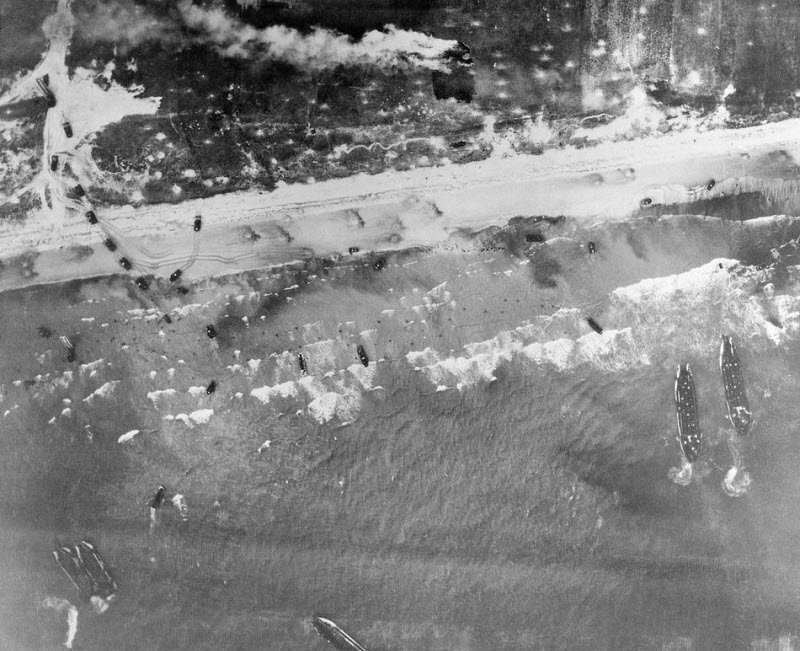
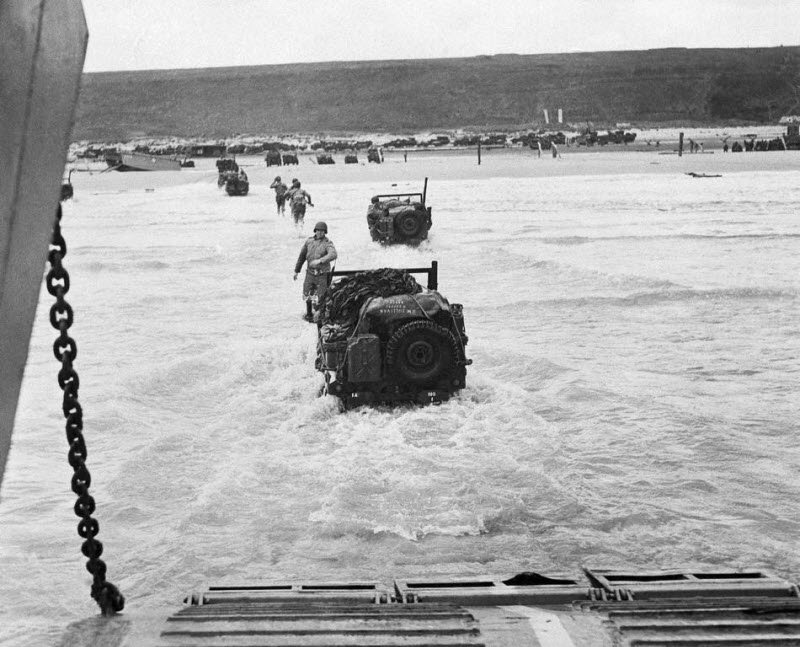
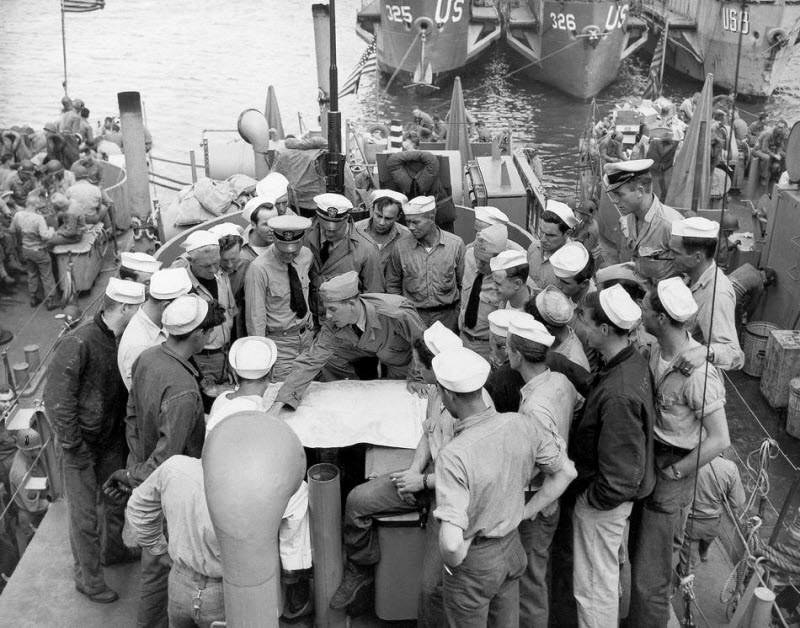
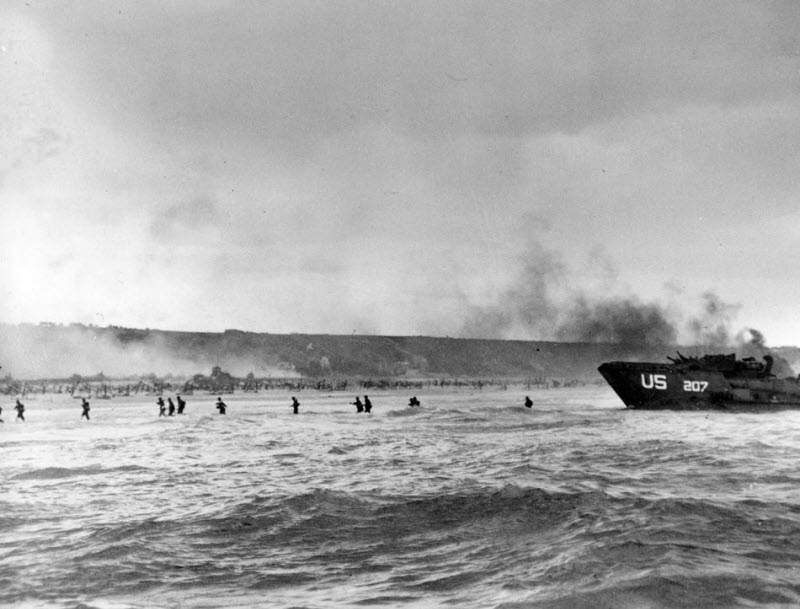
On D-Day, June 6, 1944, Allied troops departed England on planes and ships, made the trip across the English Channel and attacked the beaches of Normandy in an attempt to break through Hitler’s “Atlantic Wall” and break his grip on Europe. Some 215,000 Allied soldiers, and roughly as many Germans, were killed or wounded during D-Day and the ensuing nearly three months it took to secure the Allied capture of Normandy. Commemoration events, from re-enactments to school concerts, were held in seaside towns and along the five landing beaches that stretch across 50 miles of Normandy coastline for the 65th anniversary in 2009. (AP) These 58 photos were published on the Denver Post Photo Blog.
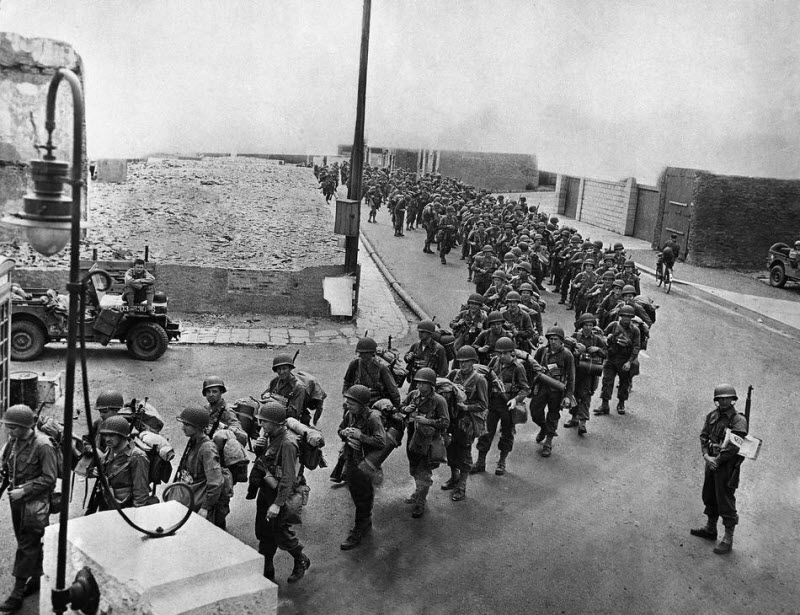
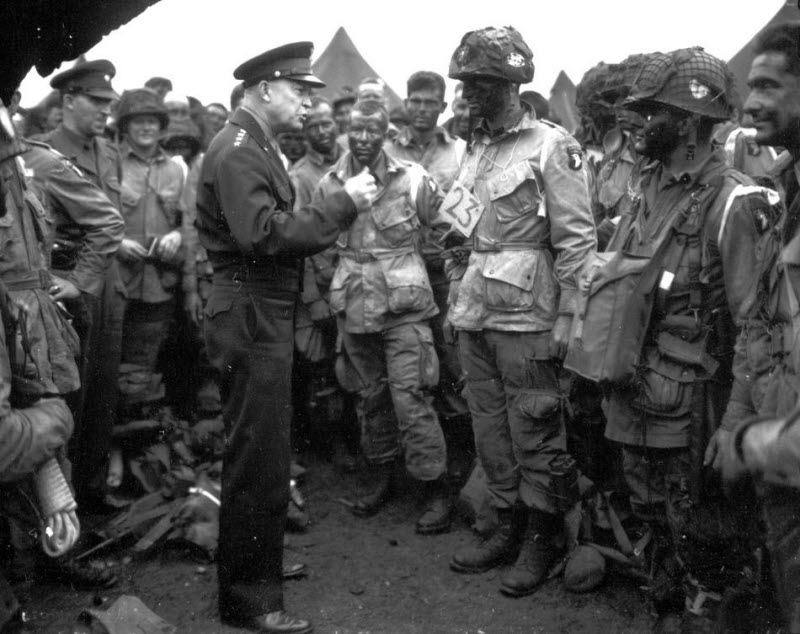
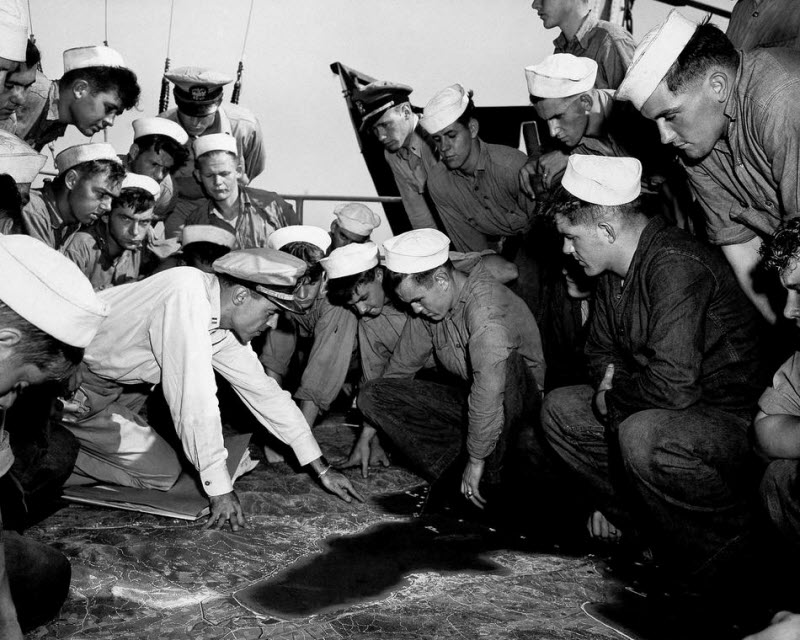
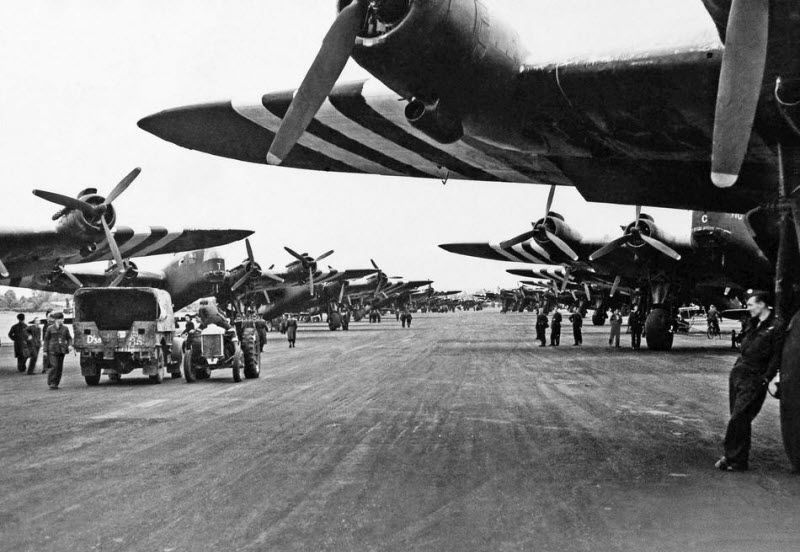
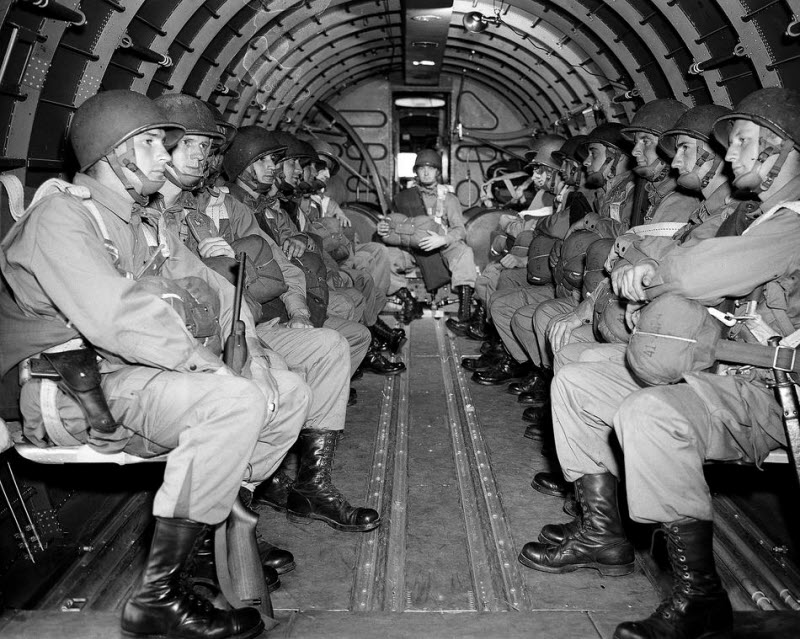
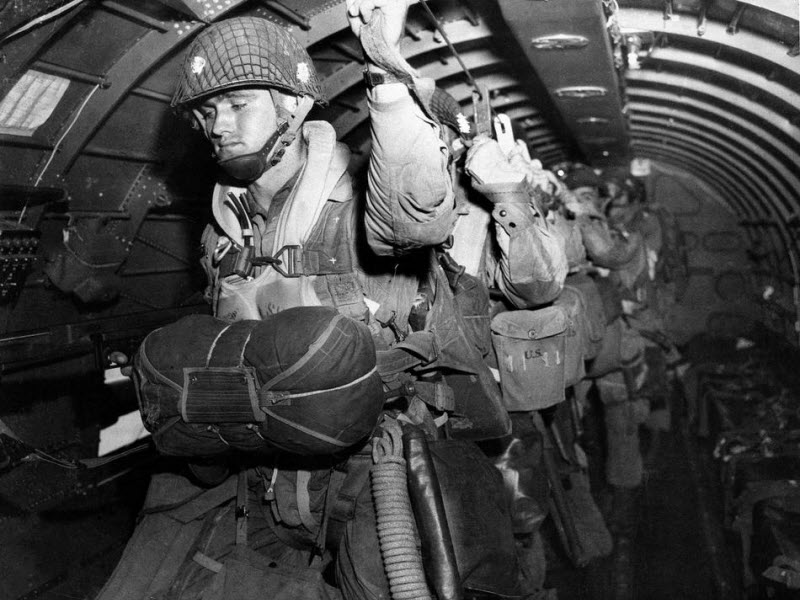
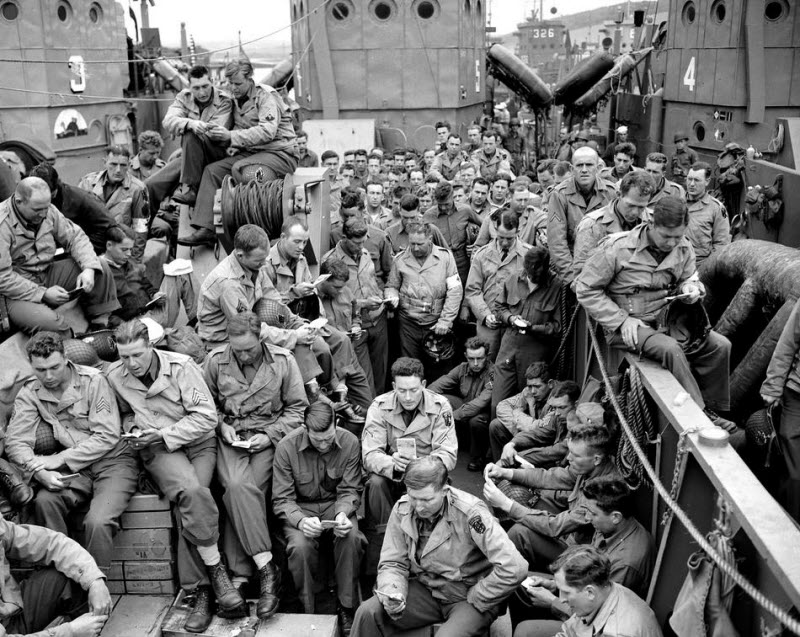
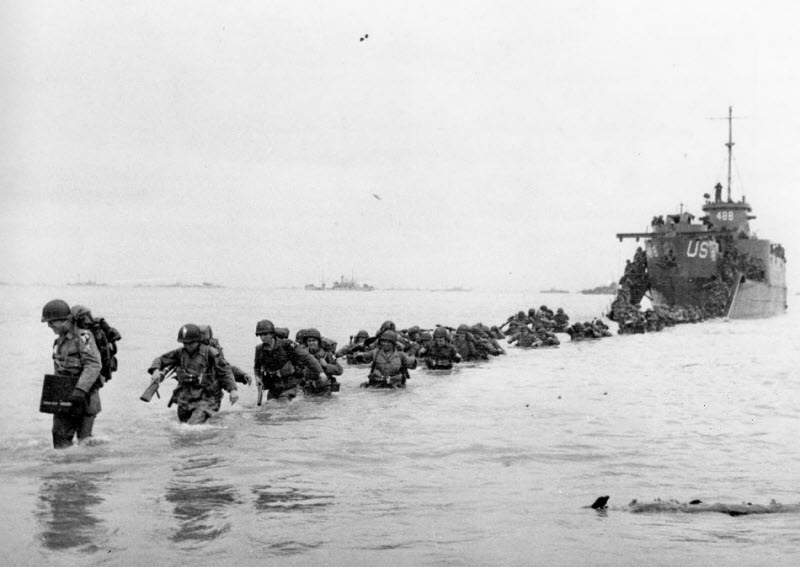
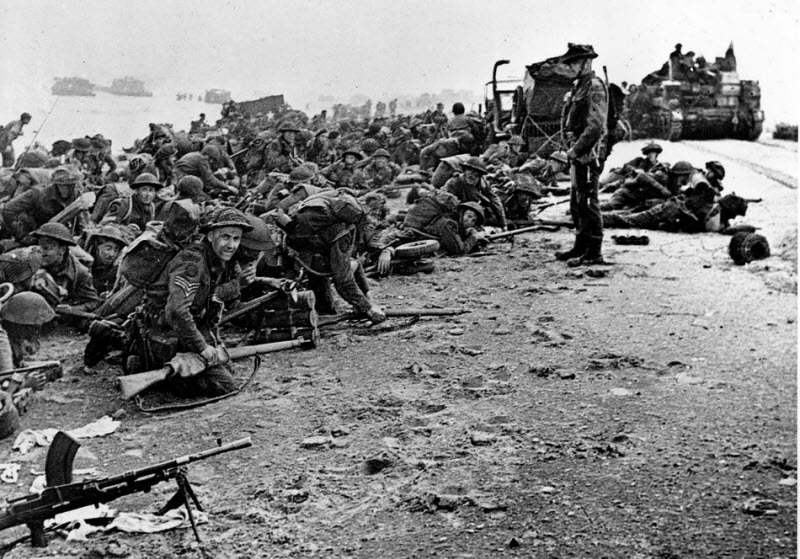
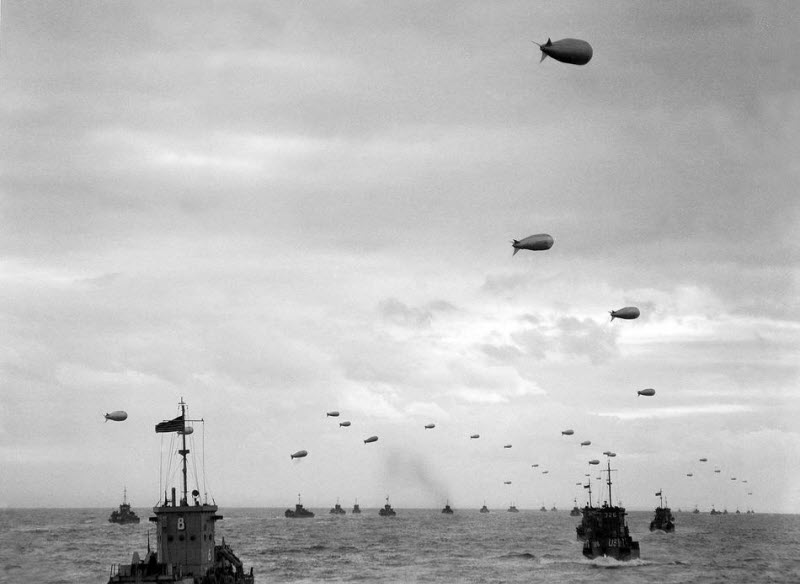
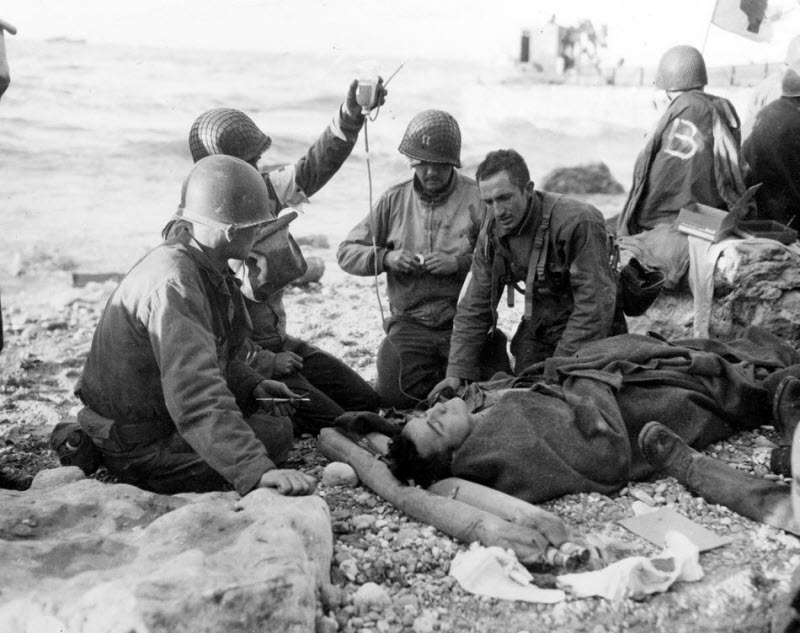
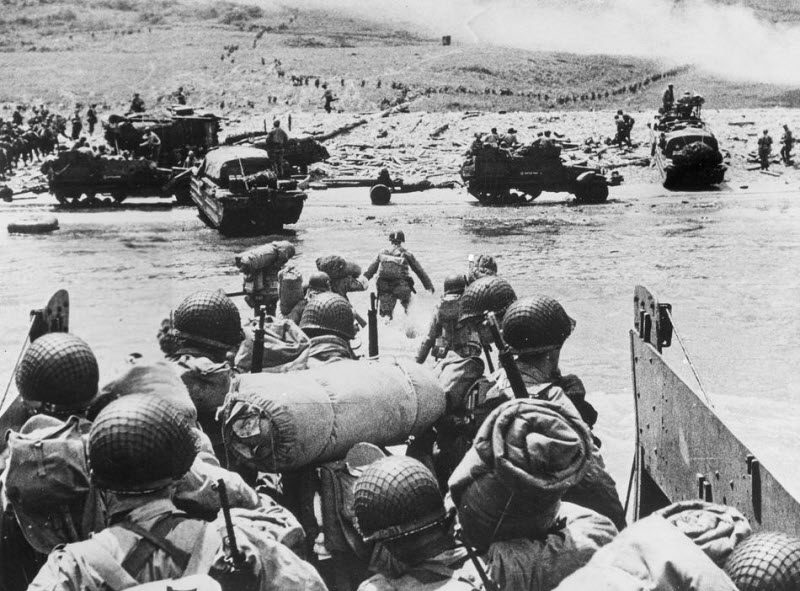
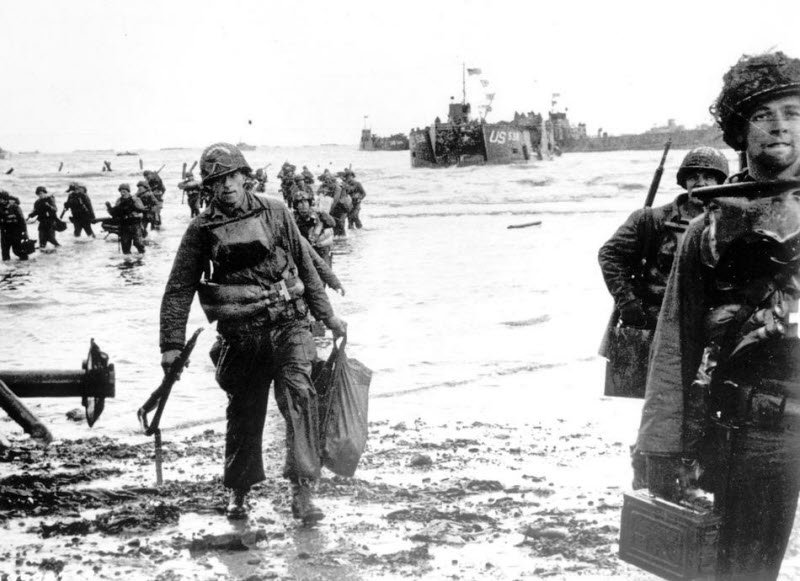
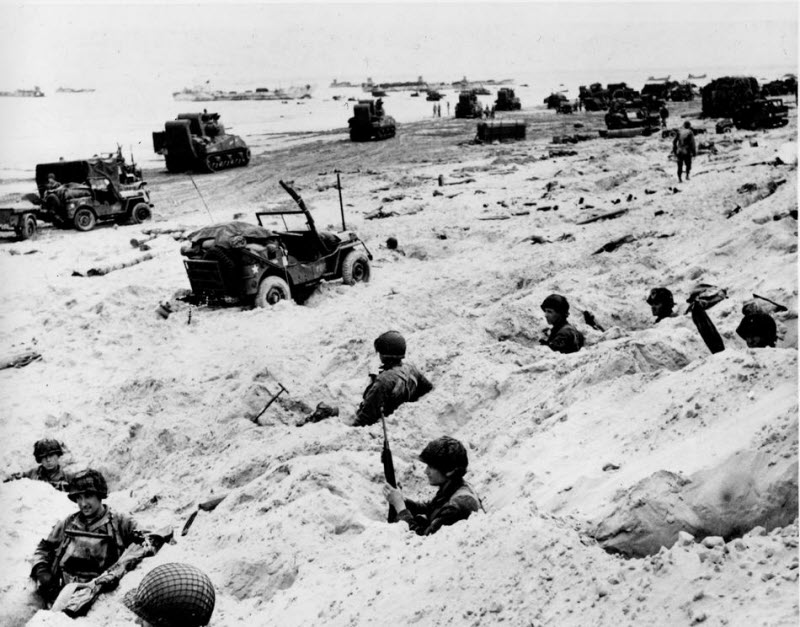
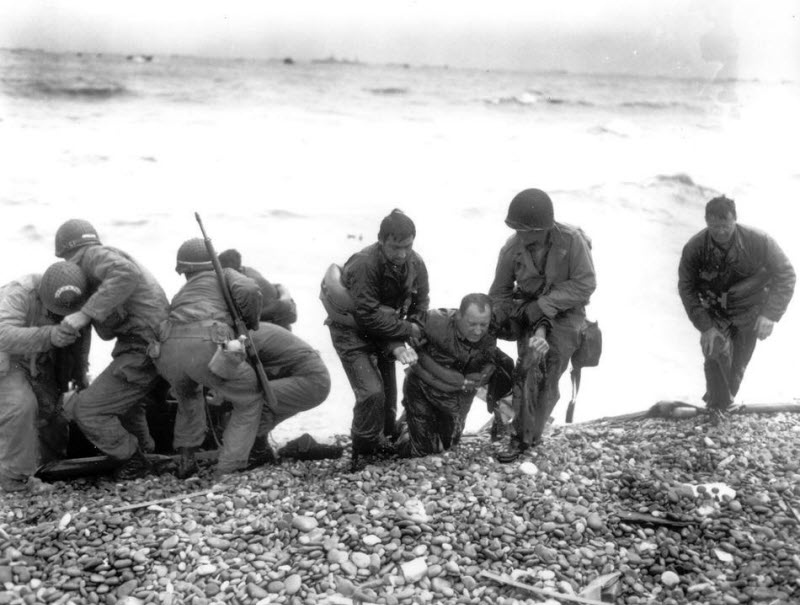
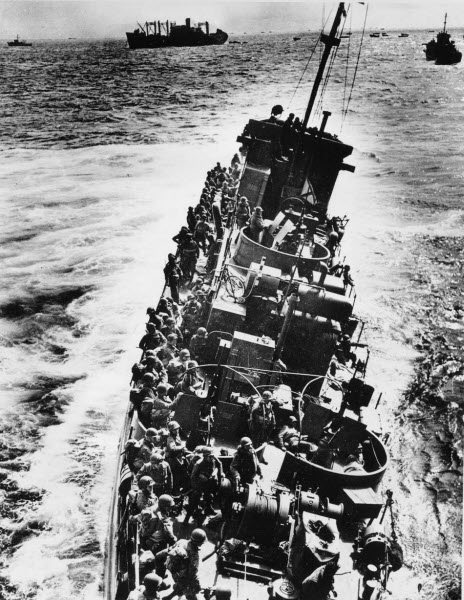
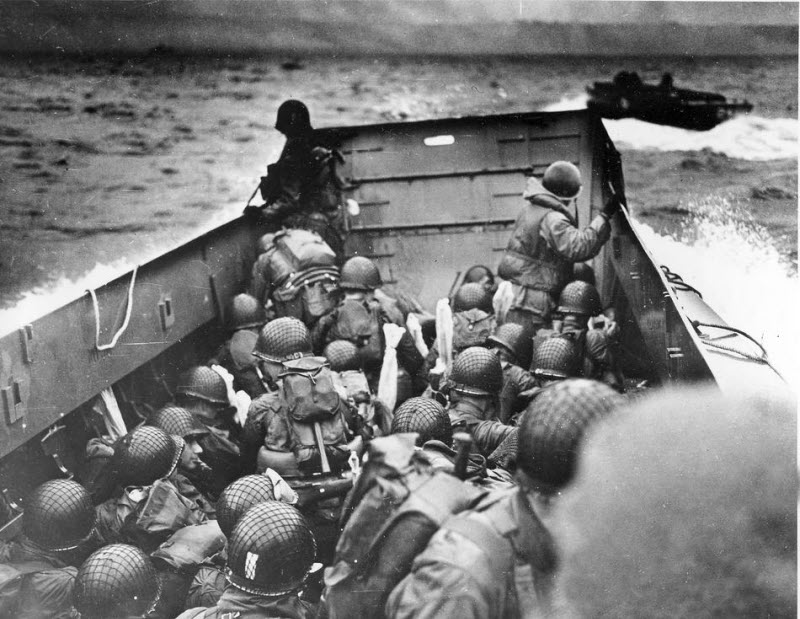
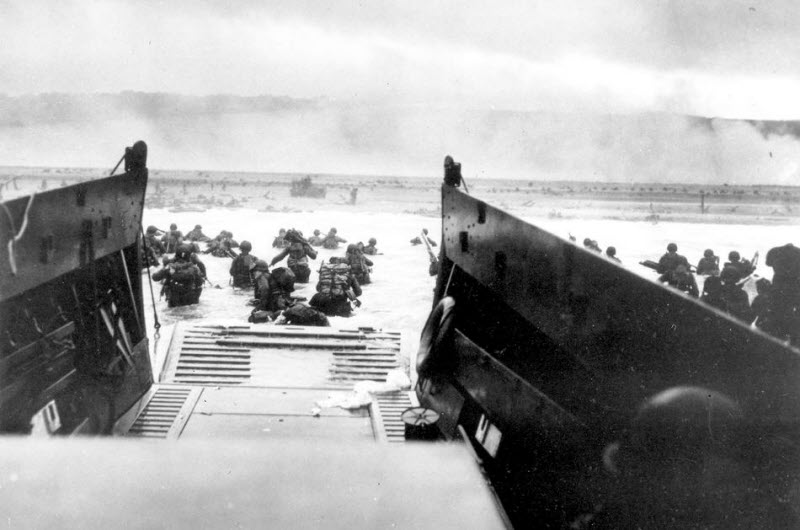
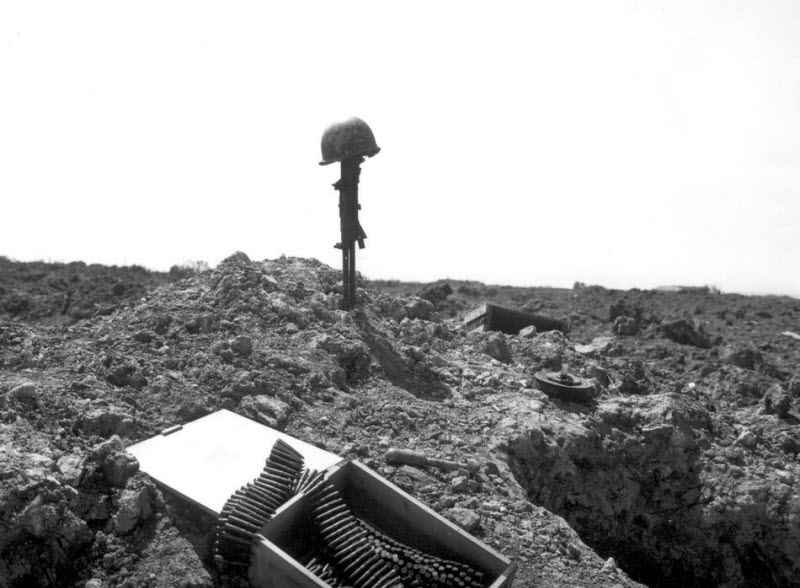
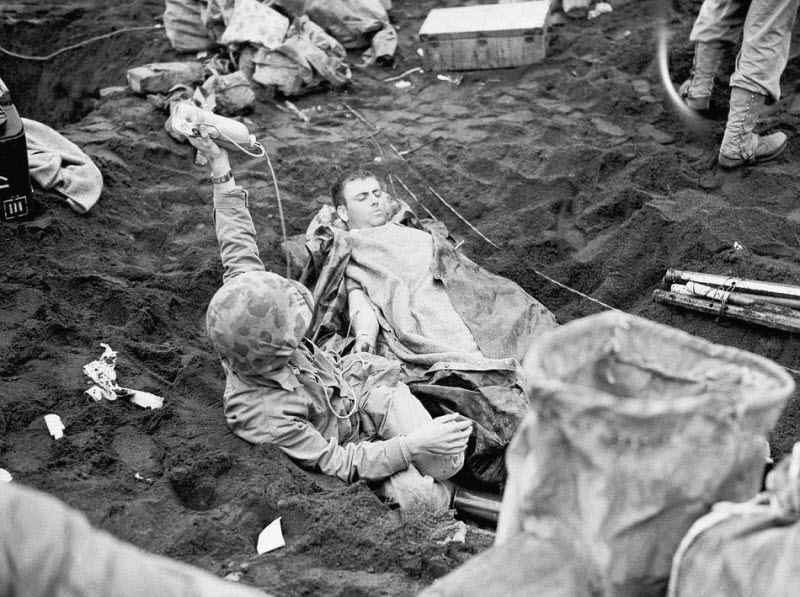
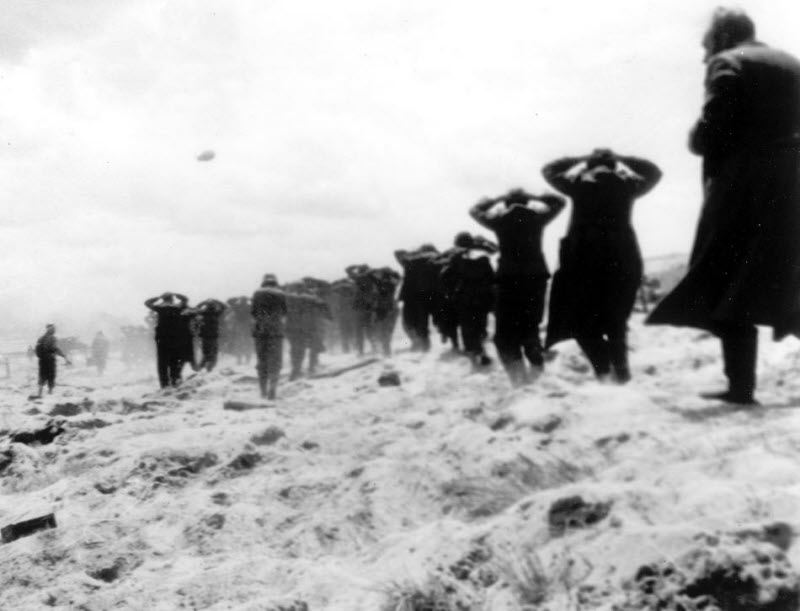
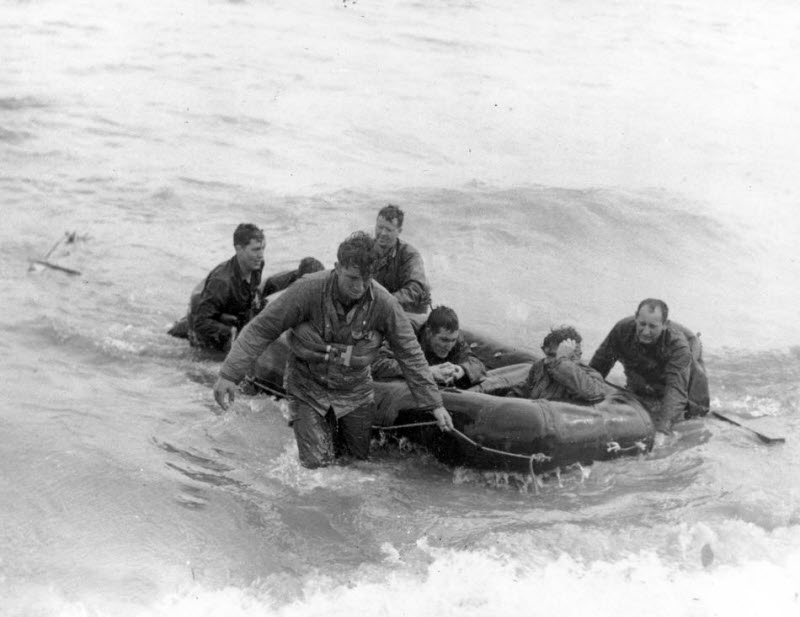
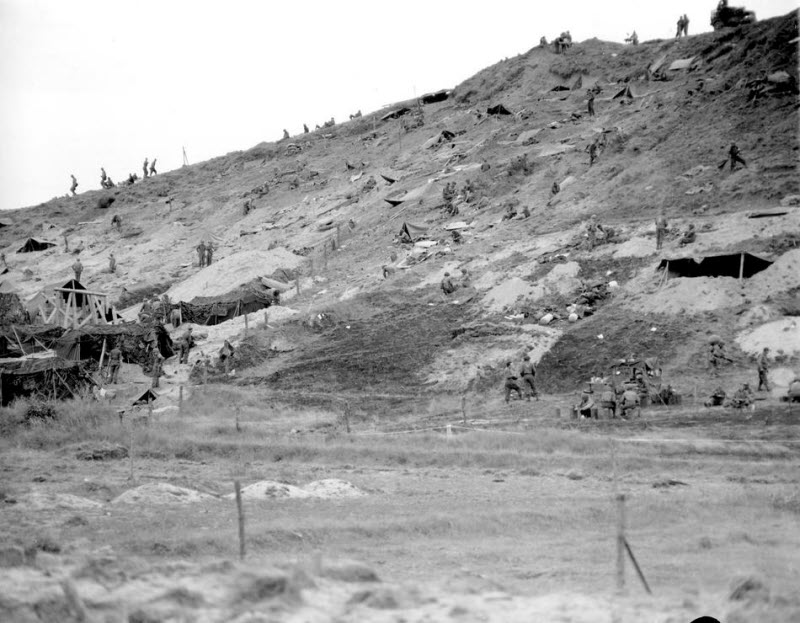
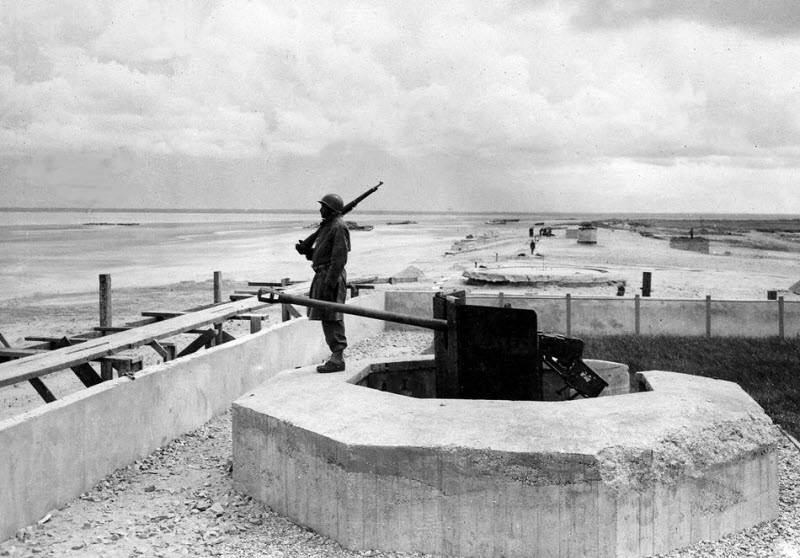
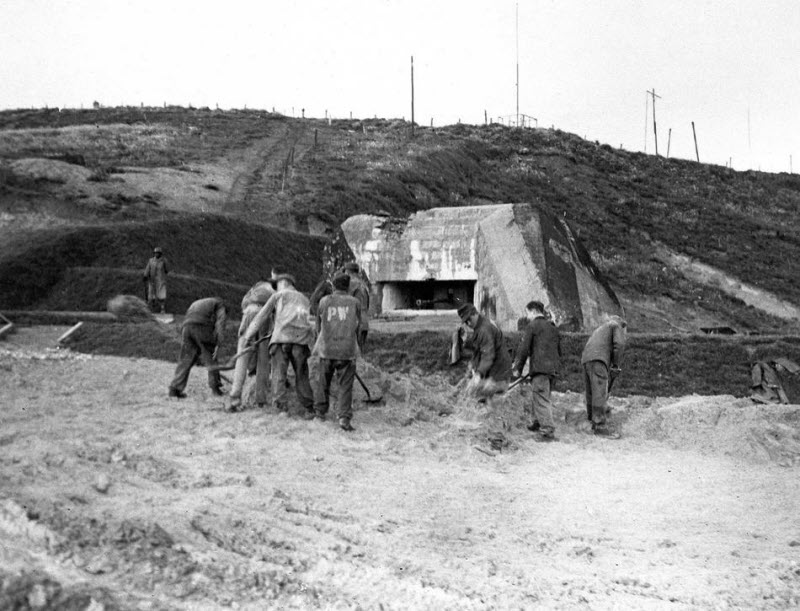
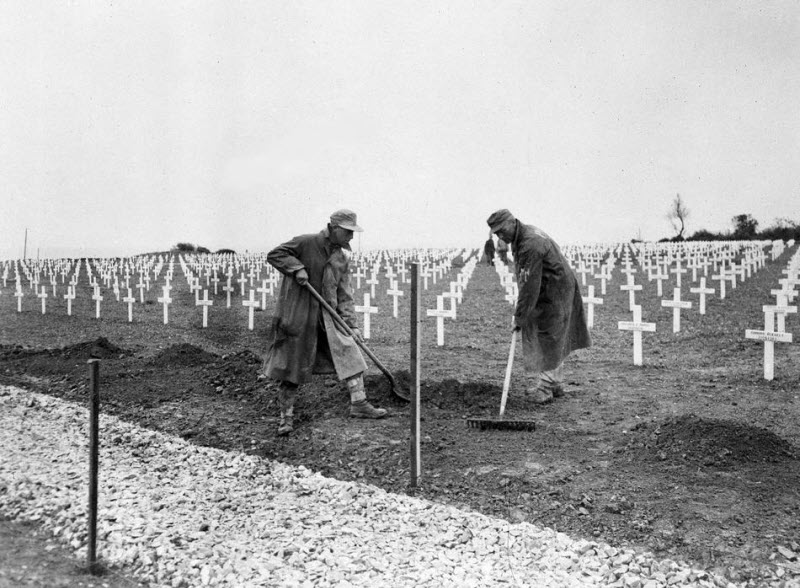
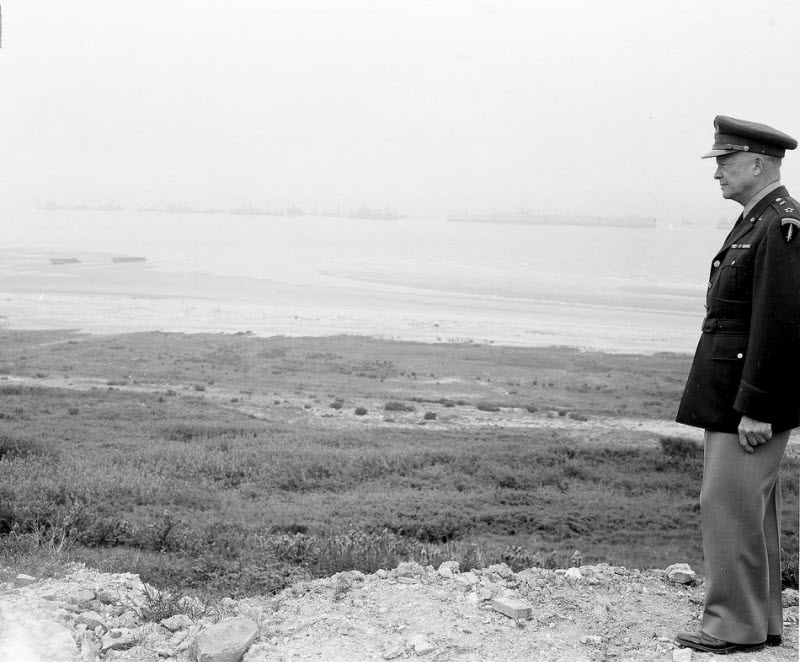
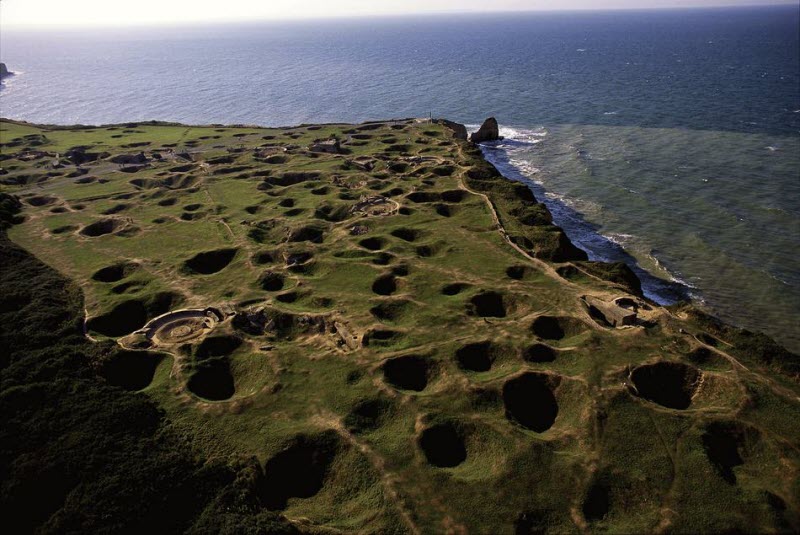
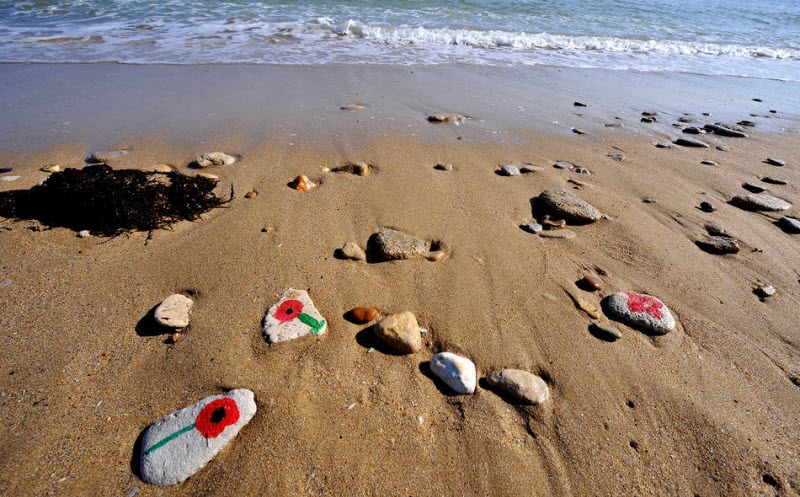
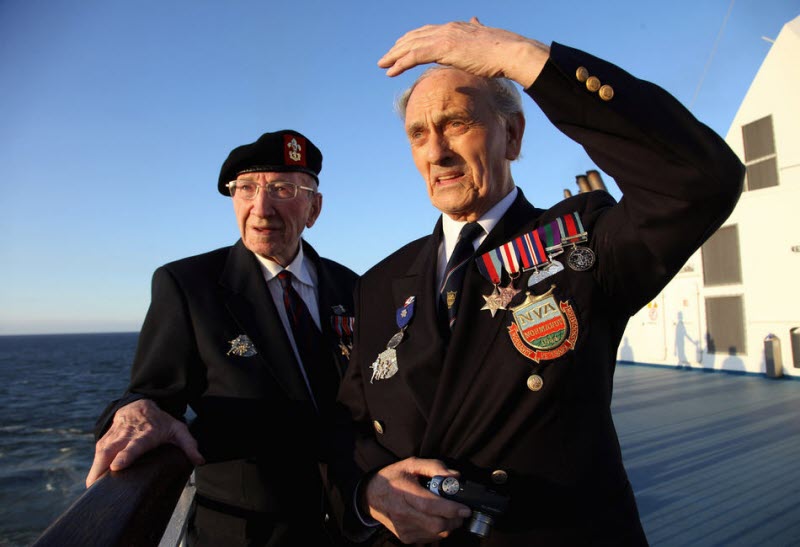
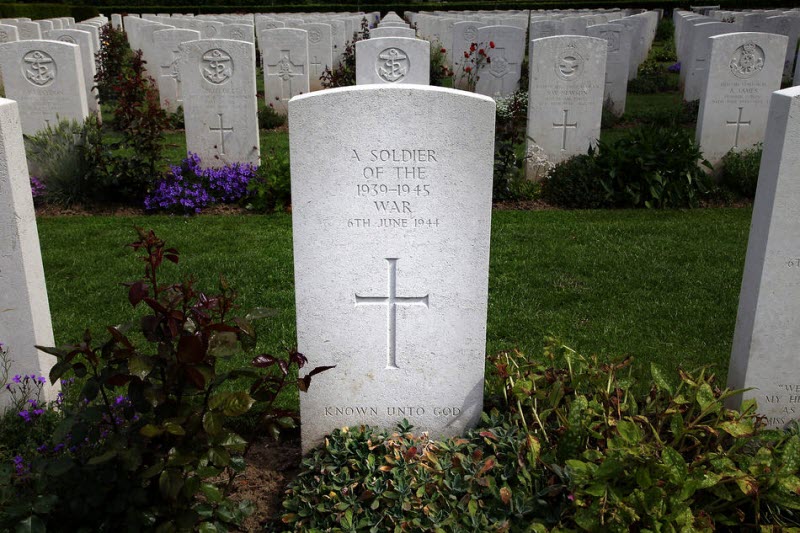
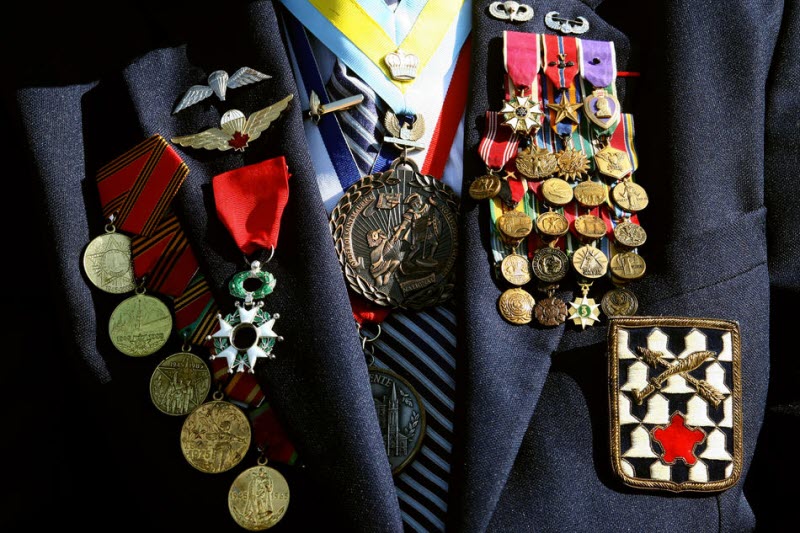
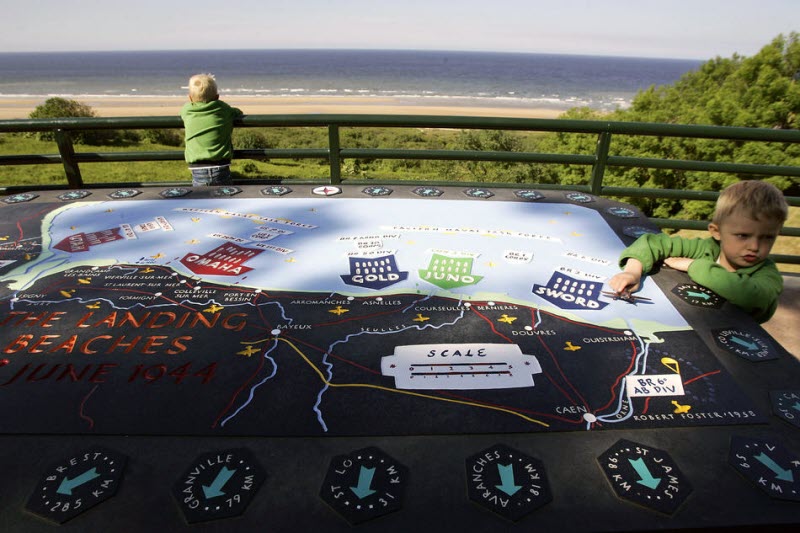
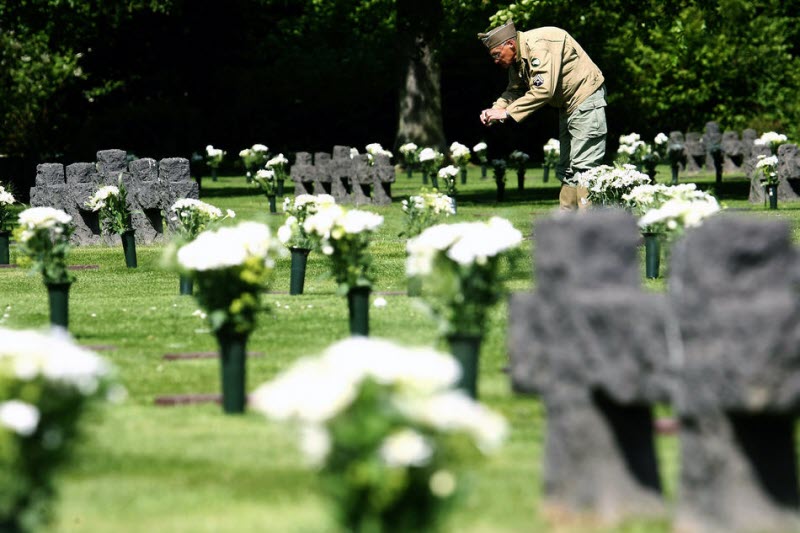
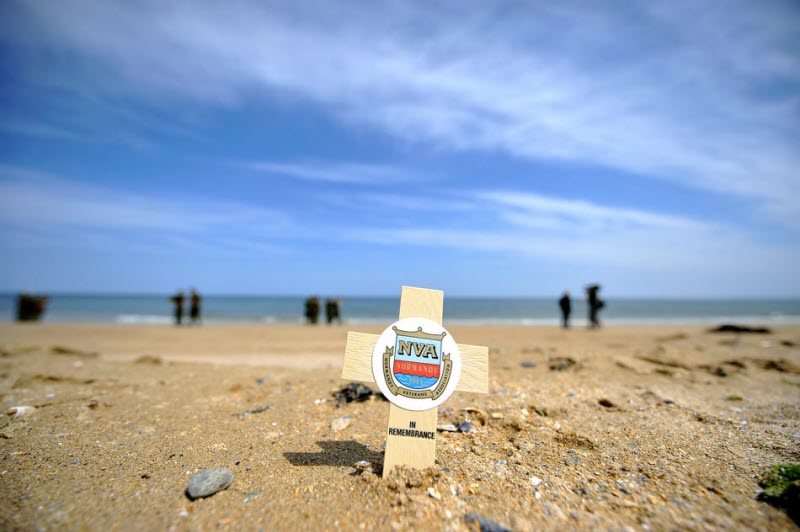
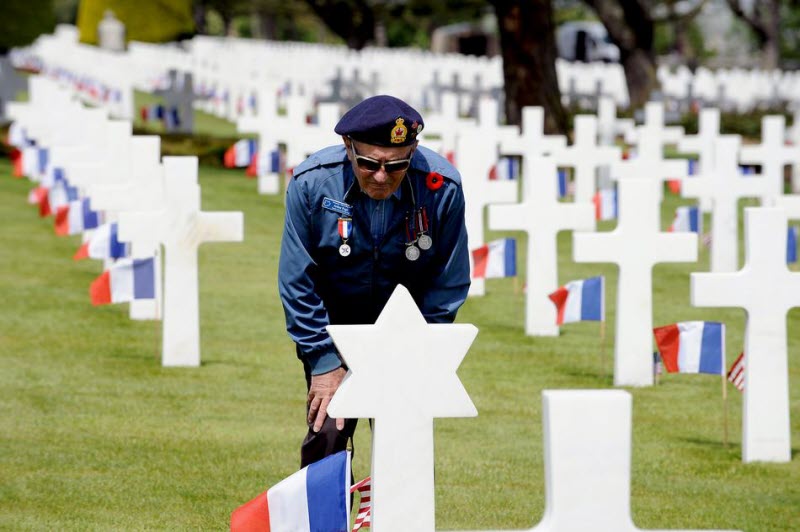
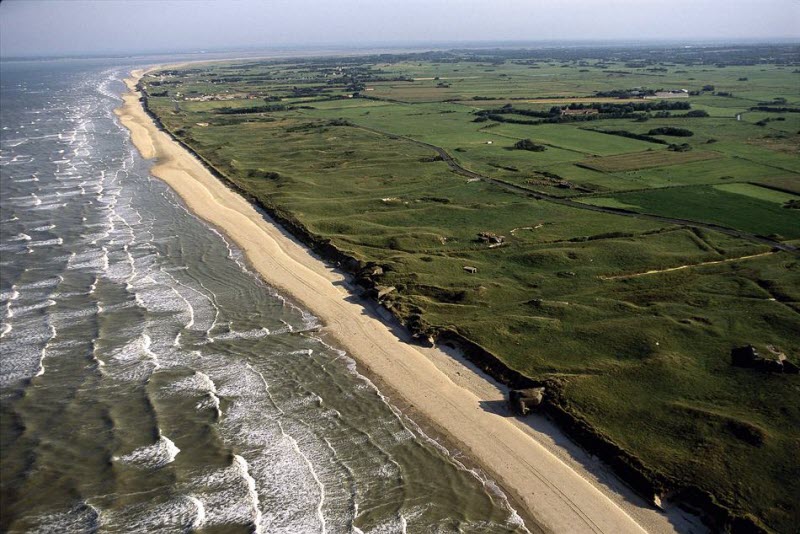
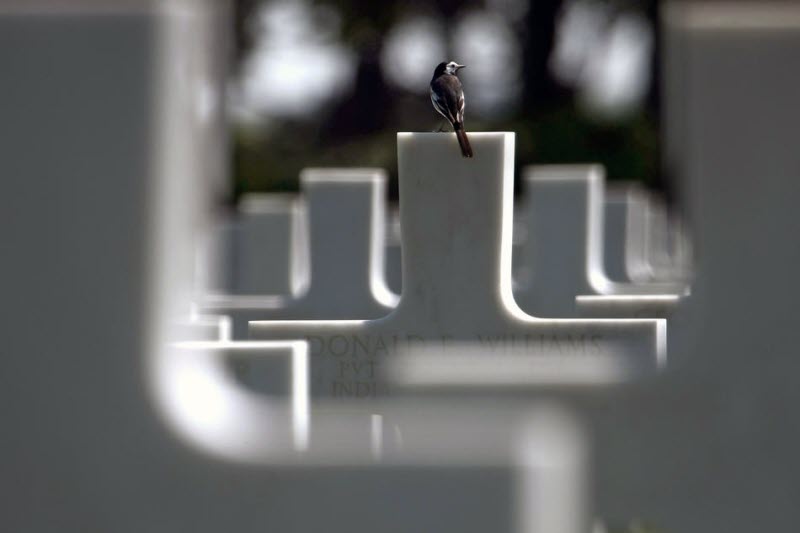
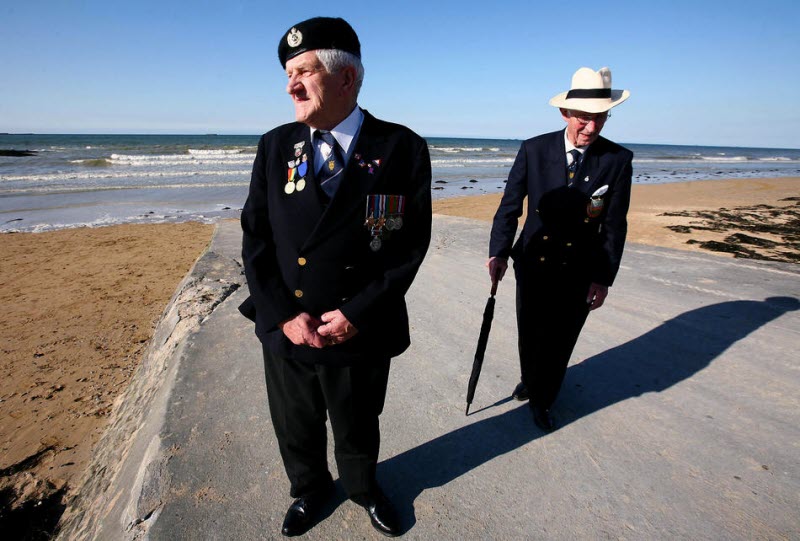
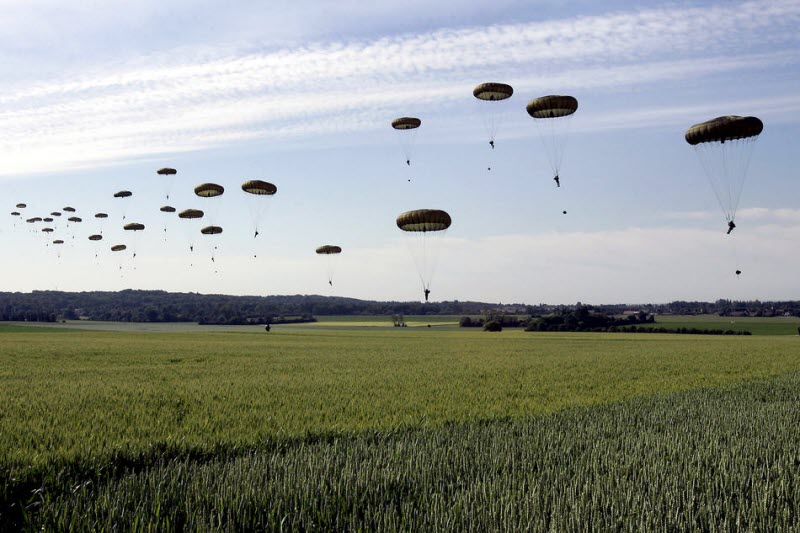
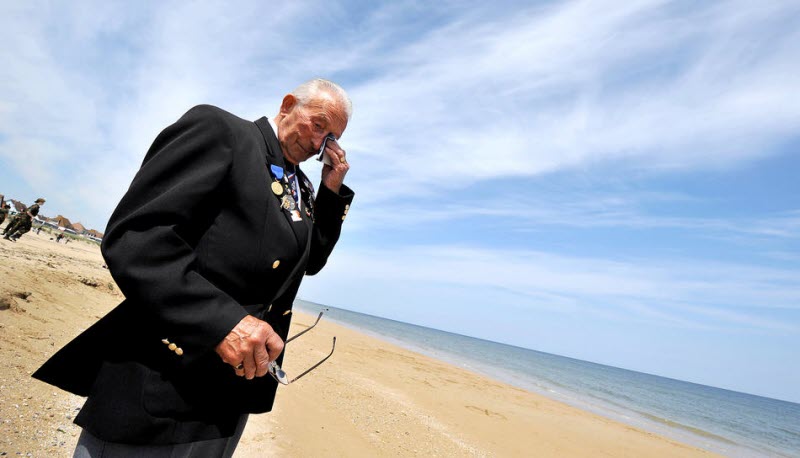
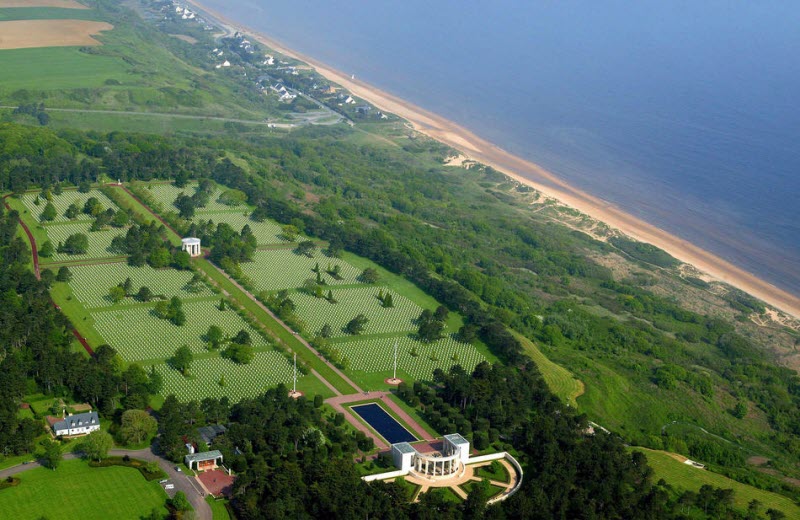
American soldiers equipped with full pack and extra allotments of ammunition march down an English street to their invasion craft for embarkation on June 6, 1944. (AP Photo)Supreme Commander Dwight Eisenhower gives the order of the day “Full victory — Nothing else” to paratroopers of the 101st Airborne Division at the Royal Air Force base in Greenham Common, England, three hours before the men board their planes to participate in the first assault wave of the invasion of Europe, June 5, 1944. (AP Photo)Lieutenant Harrie W. James, USNR, of New York, N.Y., briefs officers and men who participated in landing operations during the invasion of Southern France June 5, 1944, on the day before D-Day. (AP Photo)Airborne troops prepare for the descent on Europe for the D-Day invasion, June 6, 1944. (AP Photo)American paratroopers, heavily armed, sit inside a military plane as they soar over the English Channel en route to the Normandy French coast for the Allied D-Day invasion of the German stronghold during World War II, June 6, 1944. (AP Photo)U.S. paratroopers fix their static lines before a jump before dawn over Normandy on D-Day June 6, 1944, in France. The decision to launch the airborne attack in darkness instead of waiting for first light was probably one of the few Allied missteps on June 6. Improvements were called for after the invasion; the hard-won knowledge would be used to advantage later. (AP Photo/Army Signal Corps)U.S. servicemen attend a Protestant service aboard a landing craft before the D-Day invasion on the coast of France, June 5, 1944. (AP Photo/Pete Carroll)U.S. reinforcements wade through the surf from a landing craft in the days following D-Day and the Allied invasion of Nazi-occupied France at Normandy in June 1944 during World War II. (AP Photo/Bert Brandt)Sight of a low-flying Allied plane sends Nazi soldiers rushing for shelter on a beach in France, before D-Day, June 1944. Their fears were premature; the fliers were taking photos of German coastal barriers in preparation for the invasion, which took place June 6. (AP Photo)After landing at the shore, these British troops wait for the signal to move forward during the initial Allied landing operations in Normandy, France, June 6, 1944. (AP Photo)Invasion forces as far as the eye could see.This June 6, 1944 photo released by Nathan Kline shows a B-26 Marauder flying toward France during the D-Day invasion. (AP Photo/Courtesy of Nathan Kline)U.S. Army medical personnel administer a plasma transfusion to a wounded comrade who survived when his landing craft went down off the coast of Normandy, France, in the early hours of the D-Day invasion, June 6, 1944. (AP Photo)Wounded British troops from the South Lancashire and Middlesex regiments are being helped ashore at Sword Beach, June 6, 1944, during the D-Day invasion of German-occupied France. (AP Photo)American soldiers and supplies arrive on the shore of the French coast of German-occupied Normandy during the Allied D-Day invasion on June 6, 1944 in World War II. (AP Photo)Carrying full equipment, American assault troops move onto a beachhead code-named Omaha Beach on the northern coast of France on June 6, 1944, during the Allied invasion of German-held Europe. (AP Photo)Sitting in the cover of their foxholes, American soldiers of the Allied Expeditionary Force secure a beachhead during initial landing operations at Normandy, France, June 6, 1944. (AP Photo)Canadian troops in landing crafts approach a stretch of coastline code-named Juno Beach, near Bernieres-sur-mer, as the Allied Normandy invasion gets under way, June 6, 1944. (AP Photo)Members of an American landing unit help their exhausted comrades ashore during the Normandy invasion, June 6, 1944. The men reached the zone code-named Utah Beach, near Sainte-Marie-du-Mont. (AP Photo)A U.S. Coast Guard LCI, heavily listing to port, moves alongside a transport ship to evacuate her troops during the initial Normandy landing operations in France, June 6, 1944. (AP Photo)Men and assault vehicles storm the Normandy Beach of France, as Allied landing craft arrive at their destination on D-Day, June 6, 1944. (AP Photo)Out of the open bow doors of a landing craft, American troops and jeeps go ashore on the beach of the Normandy coast of France, June 6, 1944. (AP Photo)Briefing the men on where they were headed. (AP Photo)Under the cover of naval shellfire, American infantrymen wade ashore from their landing craft during the initial Normandy landing operations in France, June 6, 1944. (AP Photo)A U.S. Coast Guard landing barge, tightly packed with helmeted soldiers, approaches the shore at Normandy, France, during initial Allied landing operations, June 6, 1944. (AP Photo)Under heavy German machine gun fire, American infantrymen wade ashore off the ramp of a Coast Guard landing craft on June 8, 1944, during the invasion of the French coast of Normandy. (AP Photo)US assault troops approach Utah Beach in a barge, June 6, 1944, as Allied forces storm the Normandy beaches on D-Day. D-Day is still one of the world’s most gut-wrenching and courageous military operations in history. (AP Photo)A tribute to an unknown American soldier who lost his life fighting in the landing operations of the Allied Forces marks the sand of Normandy’s shore, June 1944. (AP Photo)(Note: Although this photograph was included in the Associated Press D-Day collection, it is most likely a photo from Iwo Jima. It has been left in the collection because so many have commented on it over the years.)German prisoners of war are led away by Allied forces from Utah Beach, on June 6, 1944, during landing operations at the Normandy coast, France. (AP Photo)U.S. doughboys are brought ashore on the northern coast of France following the D-Day invasion of Normandy in World War II on June 13, 1944. (AP Photo)Allied forces camp out in foxholes, caves and tents on a hillside overlooking the beach at Normandy, France, during the D-Day invasion in World War II. (AP Photo)One year after the D-Day landings in Normandy, a lone U.S. soldier guards a knocked-out German gun position on “Utah” Beach, France, May 28, 1945. (AP Photo/Peter J. Carroll)One year after the D-Day landings in Normandy, German prisoners landscape the area around a former German pill box at Saint-Laurent-sur-Mer, France, near “Omaha” Beach, May 28, 1945. (AP Photo)One year after the D-Day landings in Normandy, German prisoners landscape the first U.S. cemetery at Saint-Laurent-sur-Mer, France, near “Omaha” Beach, May 28, 1945. (AP Photo)Gen. Dwight Eisenhower stands on the cliff overlooking Omaha Beach on the Normandy coast in France on an anniversary visit to the scene of the 1944 D-Day landings. (AP Photo)Pointe du Hoc. Omaha Beach, pocked by D-Day bombardment. On June 6, 1944, five Normandy beaches were stormed by British, Canadian and American troops to free Europe from the grip of Nazi Germany. (AP Photo)Pebbles with poppies painted on are seen on the beach of Saint-Aubin-sur-Mer on June 5, 2009, during a ceremony in memory of Canadian troops which landed at Nan Red sector in 1944. (AP Photo)Normandy veterans Frank Allen, 85, and Cyril Askew, 92, both from Liverpool, England, look at the French coastline on a cross-channel ferry on June 4, 2009, from Portsmouth, England. (AP Photo)The sun shines on headstones in the British Cemetery on June 5, 2009, in Bayeux, France. Several hundred of the remaining veterans of the Normandy campaign attended. (AP Photo)British school children help to place 4,000 Union Jack flags bearing messages on Gold Beach on June 5, 2009, in Asnelles, France. The Royal British Legion organized the event. (AP Photo)A US jeep drives by Saint-Laurent-sur-Mer beach, Normandy, western France, on June 4, 2009, during preparations for the D-Day celebrations marking the 65th anniversary. (AP Photo)A US veteran wears his medals during a commemoration ceremony on June 5, 2009, at the German Military Cemetery of La Cambe, Normandy. (AP Photo)Longues-sur-Mer, France — The German artillery battery situated at Longues-sur-Mer is a classic example of the Atlantic Wall fortification. The actual guns are still in place, testament to the heavy construction. (AP Photo)A child plays with a map of the landing beaches at the American Cemetery of Colleville, western France, Thursday, June 4, 2009. (AP Photo/Francois Mori)A US veteran takes pictures of German soldiers’ tombs during a commemoration ceremony on June 5, 2009, at the German Military Cemetery of La Cambe, Normandy. (AP Photo)A remembrance cross left by British Royal Navy veteran Harry Buckley, 84, is pictured on the beach of Colleville-Montgomery on June 5, 2009, where he landed during the 1944 Allied operations in France. (AP Photo)British veteran John Lang, 90, visits the American cemetery on June 5, 2009, in Colleville-sur-Mer. (AP Photo)The broad sands of Utah Beach lead to a countryside scarred by remains of German fortification. On June 6, 1944, five Normandy beaches were stormed by British, Canadian and American troops. (AP Photo)A bird is seen at the American cemetery in Colleville-sur-Mer, Normandy, western France, on June 4, 2009, as preparations take place for ceremonies commemorating the 65th anniversary of D-Day. (AP Photo)The remains of the World War II Mulberry dock at Arromanches in Normandy. The Mulberry dock consisted of a huge pre-fabricated steel and concrete landing system, built in England and towed across the Channel to create an artificial harbor for supplying the invasion forces. (AP Photo)65th Anniversary of D-Day landings. D-Day veteran George Taylor, 86, a Sapper in the Royal Engineers during World War Two, with Percy Lewis of the 1st Buckinghamshire Battalion. (AP Photo)65th Anniversary of D-Day landings. Eric Toylon, a 6th Airborne glider pilot during World War Two, shares his memories with war enthusiasts during a wreath laying ceremony at the Pegasus Memorial Museum, Ranville, France, June 5, 2009. (AP Photo)British paratroopers from the 3rd Parachute Battalion, England, land in a wheat field outside the village of Ranville, near Caen, western France, Friday, June 5, 2009, as troops recreate the D-Day landings. (AP Photo)British Royal Navy veteran Harry Buckley, 84, wipes his tears on the beach of Colleville-Montgomery on June 5, 2009, where he landed during the 1944 Allied operations in France. (AP Photo)Omaha Beach, France — American War Cemetery, aerial view of the landing beaches.