
The Legend (and Truth) about Kilroy
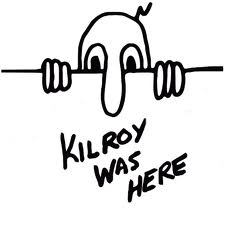
Do you remember Kilroy? You’ve probably seen it scrawled somewhere — the three words “Kilroy was here,” complete with an odd little man peeking over a wall. Anyone born in the mid-thirties or earlier knew Kilroy. We didn’t know why, but we had lapel pins with his nose hanging over the label and the top of his face with his hands hanging over too. No one knew why he was so well known, but we all joined in!
The Legend
While there are numerous legends surrounding Kilroy, the most popular was that he was an inspector at a shipyard in Boston during WWII, responsible for keeping track of how many rivets were set by various crews during a shift.
In his book The History of American Graffiti, Cambridge artist and author Caleb Neelon tells the moniker’s backstory. It did what many graffiti artists wish their tags would do: it ended up everywhere.
“This little icon was something that grew in the latter days of the second World War and became kind of like the U.S. Armed Forces’ tag, almost. It certainly wasn’t thought of that way, but it was something that was easy enough for everybody to remember. And for all these young men who were headed off to the war, it was sort of a reassuring sight — it meant you weren’t on unknown ground. The Americans had been here before — Kilroy had been here before and Kilroy was on your team.”
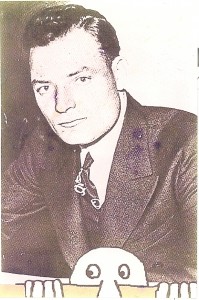
(Courtesy James Kilroy)
Kilroy was at the top of Mt. Everest. Kilroy was on the Moon. Kilroy was everywhere. You can see the Bugs Bunny ‘Hare Devil Hare’ cartoon where he meets Marvin the Martian — when Bugs goes to the Moon, what does he see? “Kilroy was here.”
In 1948, the Transit Company of America held a contest to find the real Kilroy. As it turns out, he lived in Halifax, on the South Shore. James J. Kilroy had worked as a rate setter at the Bethlehem Steel Shipyard in the Fore River shipyard in Quincy — a location where a lot of the big ships that helped the U.S. and the allies win World War II came out of. Tens of thousands of men worked there at the time.
Kilroy was an inspector, and to mark his work he would write that now-famous phrase on ship parts. He didn’t draw the little man peeking over the wall — that was an after-market addition someone coupled with it along the way.
James J. Kilroy died in 1963. Neelon tracked down Kilroy’s eldest son and namesake while researching the graffiti book.
“When I was a kid it was almost bewildering and it was embarrassing,” the younger Kilroy recalled. “It was like making fun of our name. I never had a positive feeling toward it and I’m not sure anyone in my family did. It was just one of those weird things that happened.”
Kilroy is 78 years old now and remembers the transit company contest that recognized his father — and he’ll never forget what the Kilroy family was given for winning: a trolley car.
“Honest to god, a real trolley car was the prize,” Kilroy said with a laugh.
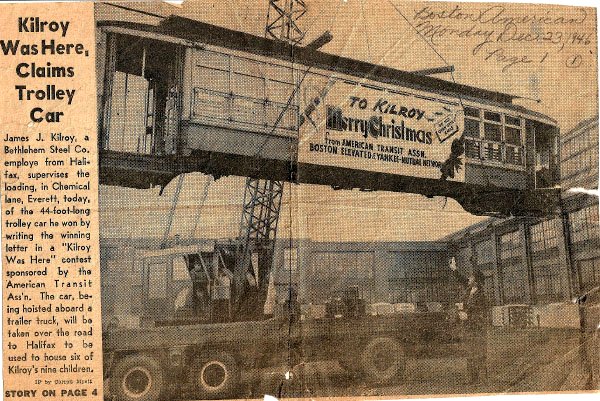
The transit company plunked it down in the family’s backyard. One of his theories about how “Kilroy was here” went viral — in a pre-Internet era — involves the hundreds of other inspectors his dad worked with at the shipyard.
“There must have been ‘Smith was here’ and ‘Jones was here.’ But he had been a sign painter and he had this great, really strong penmanship. My guess is that his graffiti stood out.”
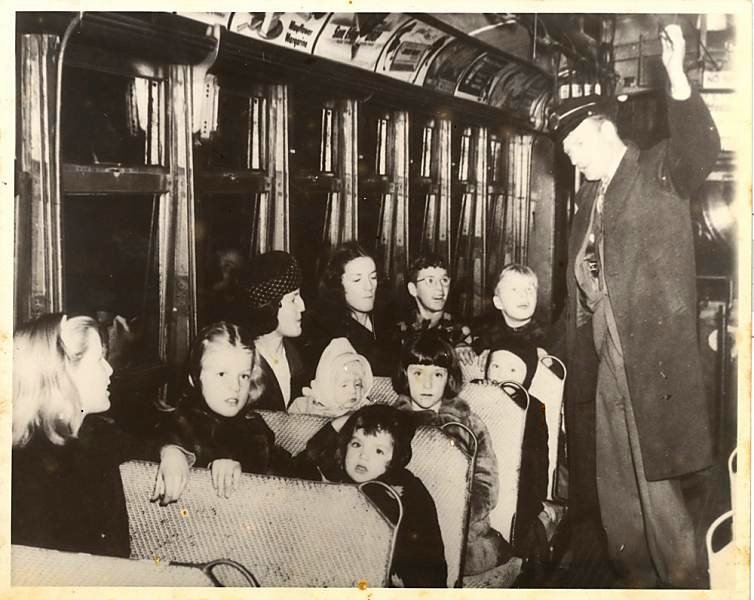
“And that’s pretty much the story,” he added with a laugh. But James Kilroy wanted to add one more ironic piece to the tale: “My father was not in the service. In fact, I don’t think he ever left the state of Massachusetts except for, occasionally, trips to Rhode Island and Rockingham, N.H., which were race tracks. That, I think, was the funniest part about the whole thing — this guy never left the state.”
But, of course, his father’s accidental graffiti tag sure did.