
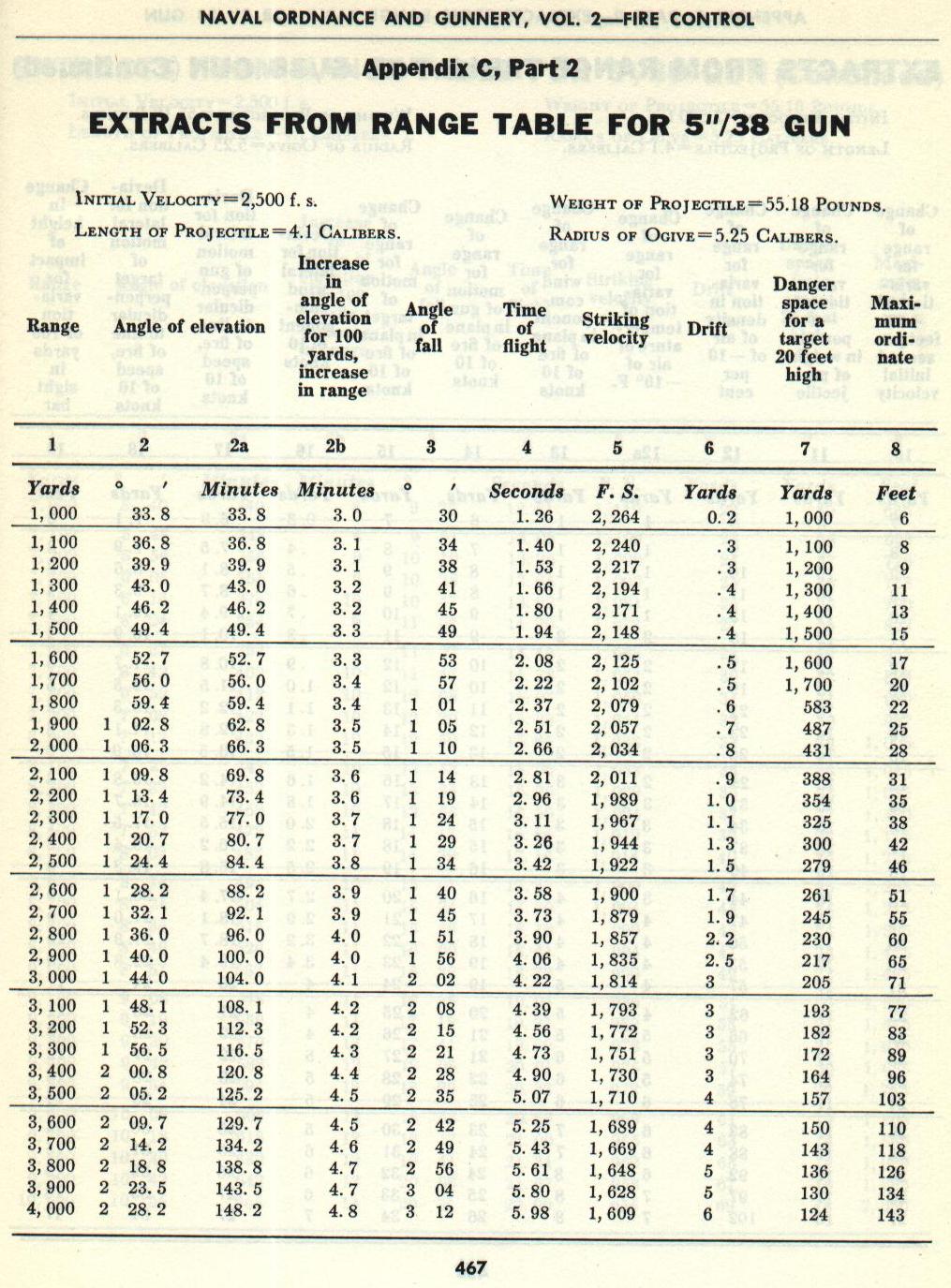
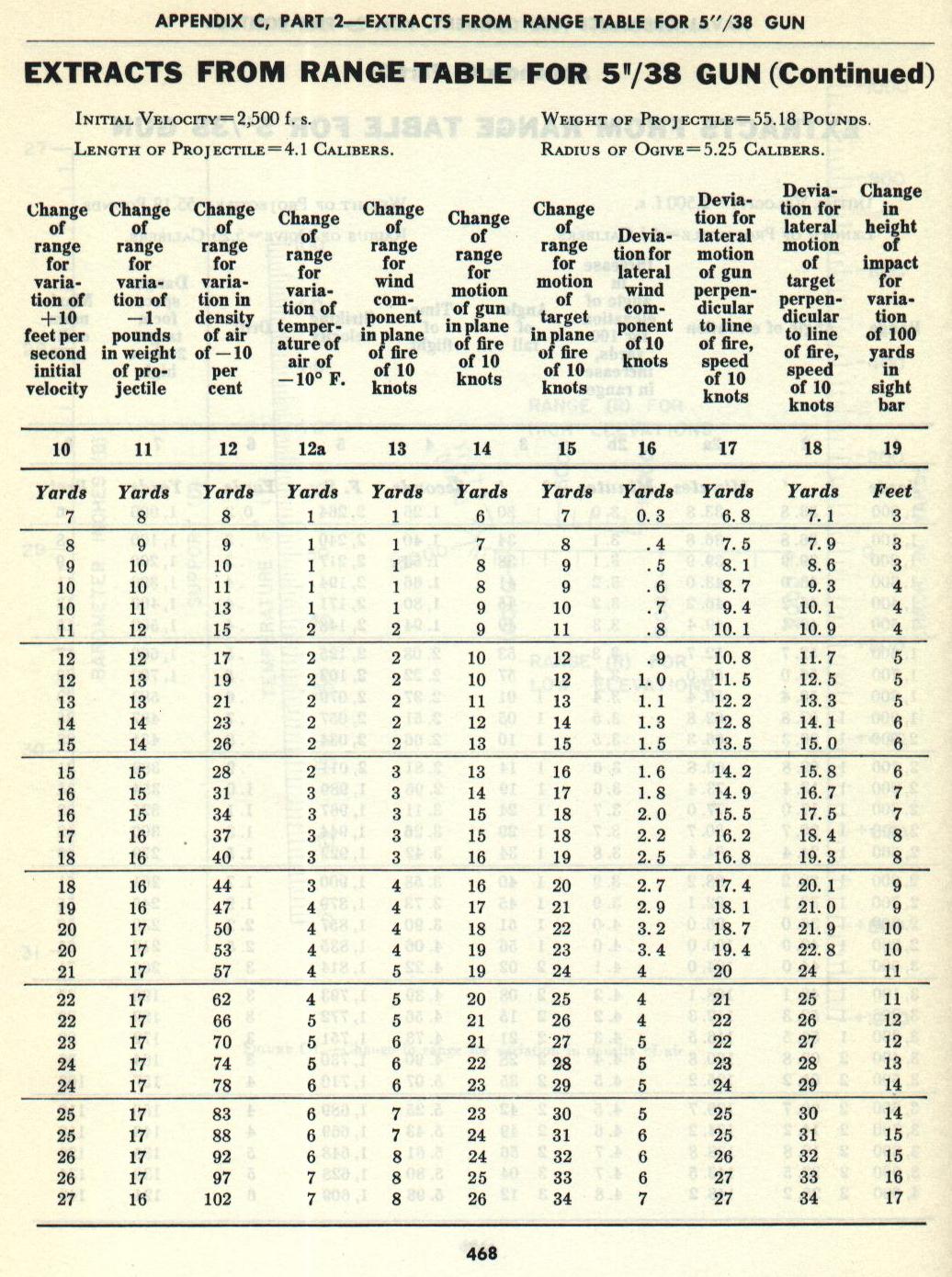
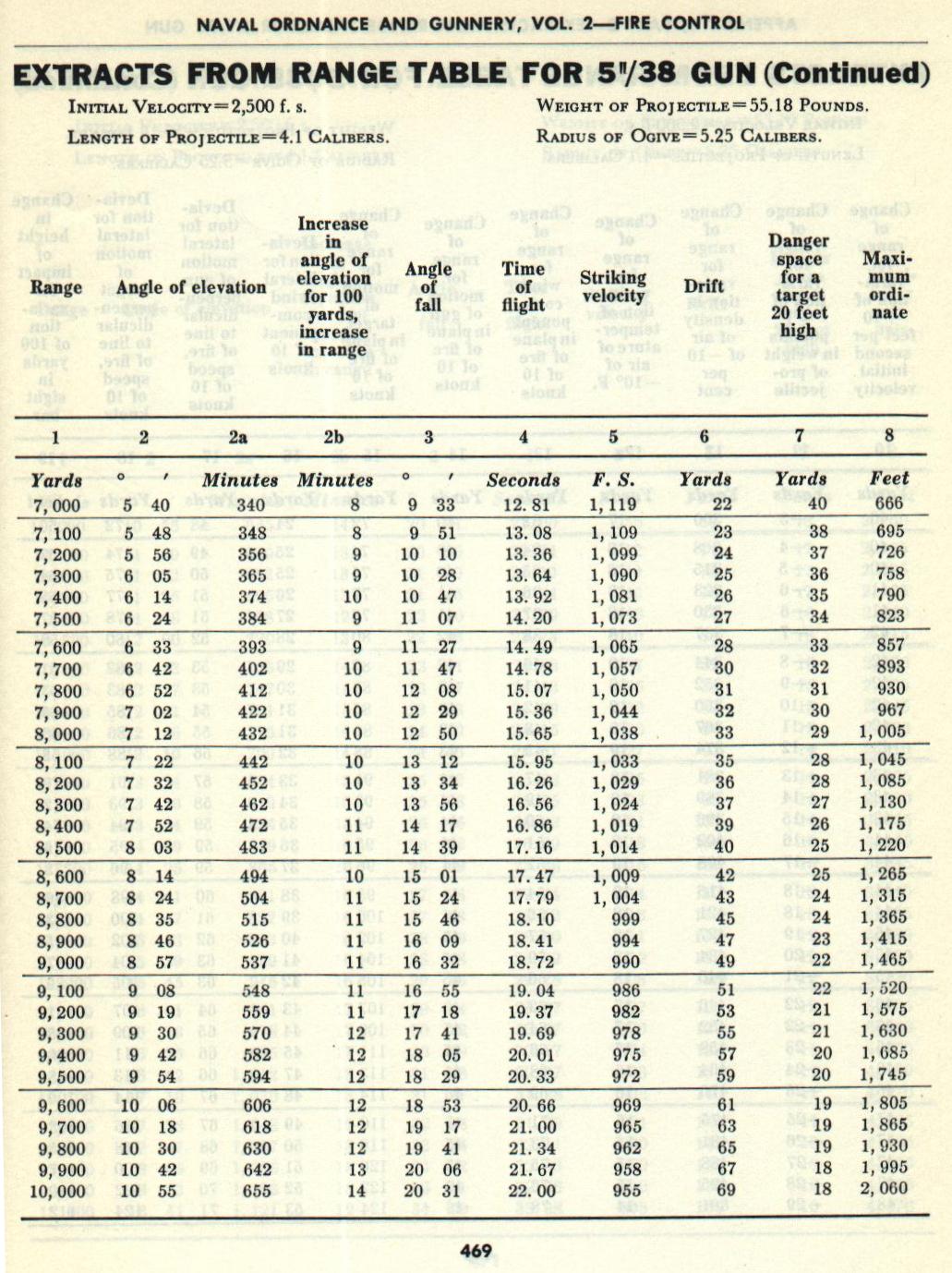
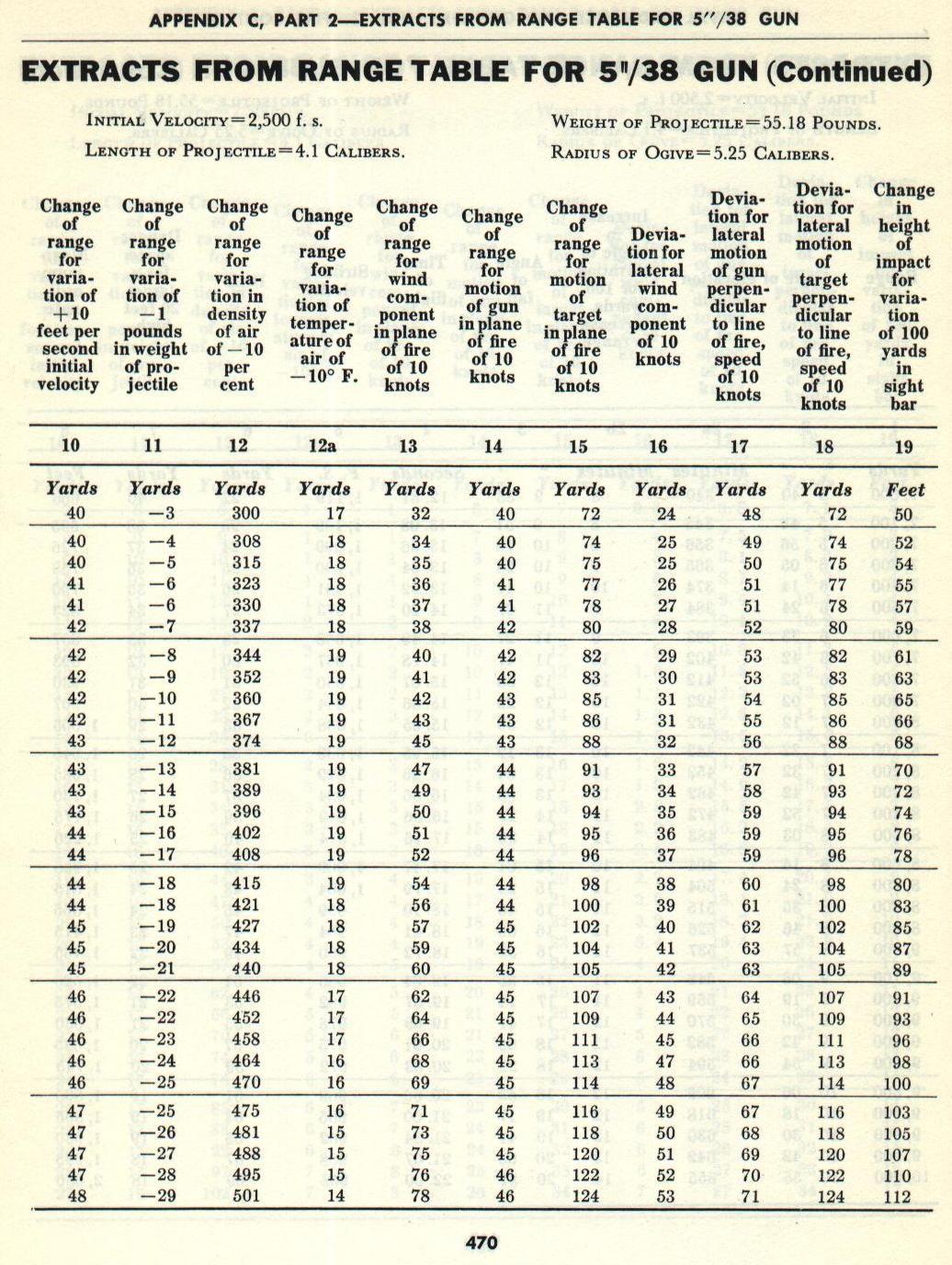
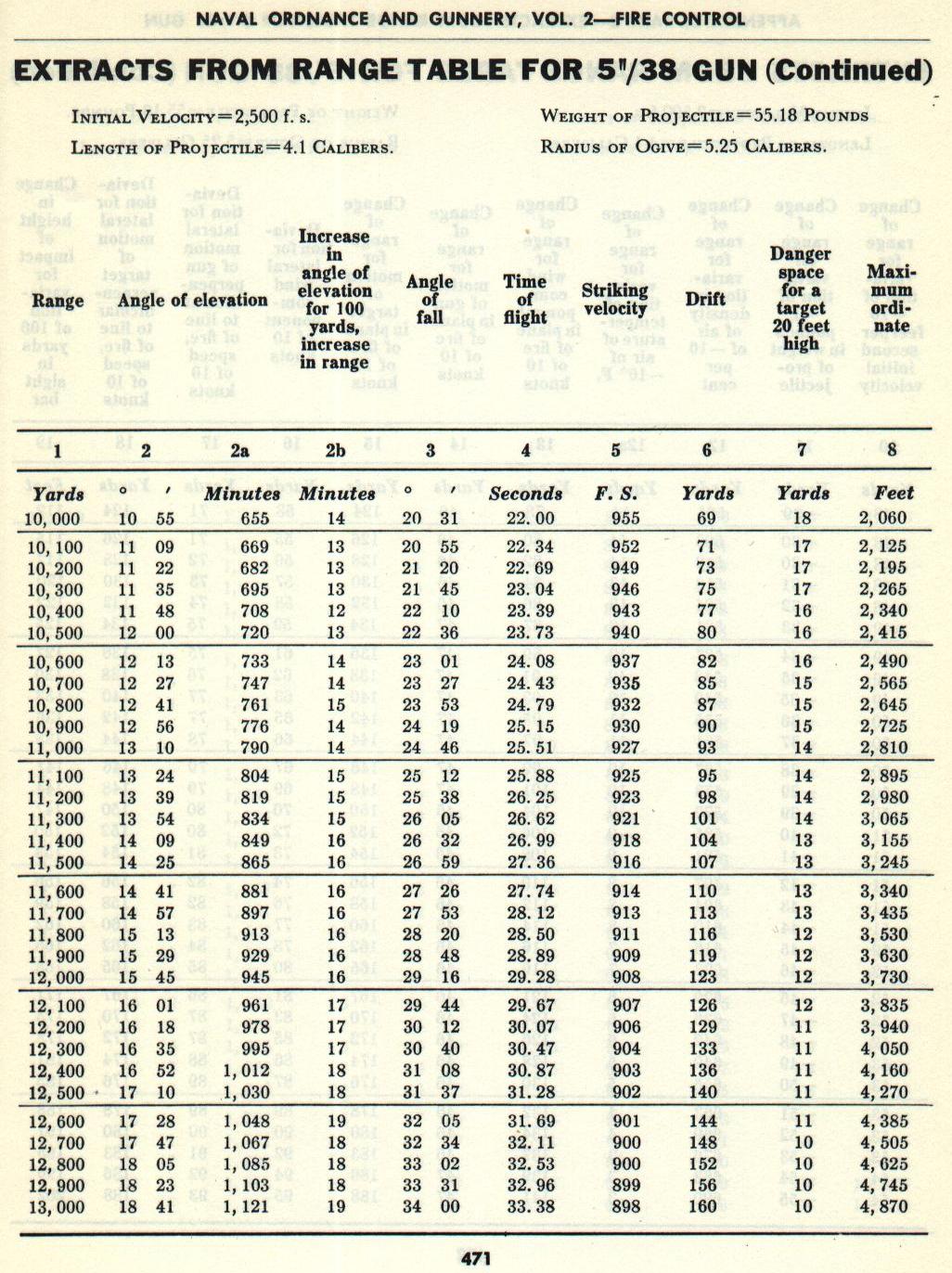
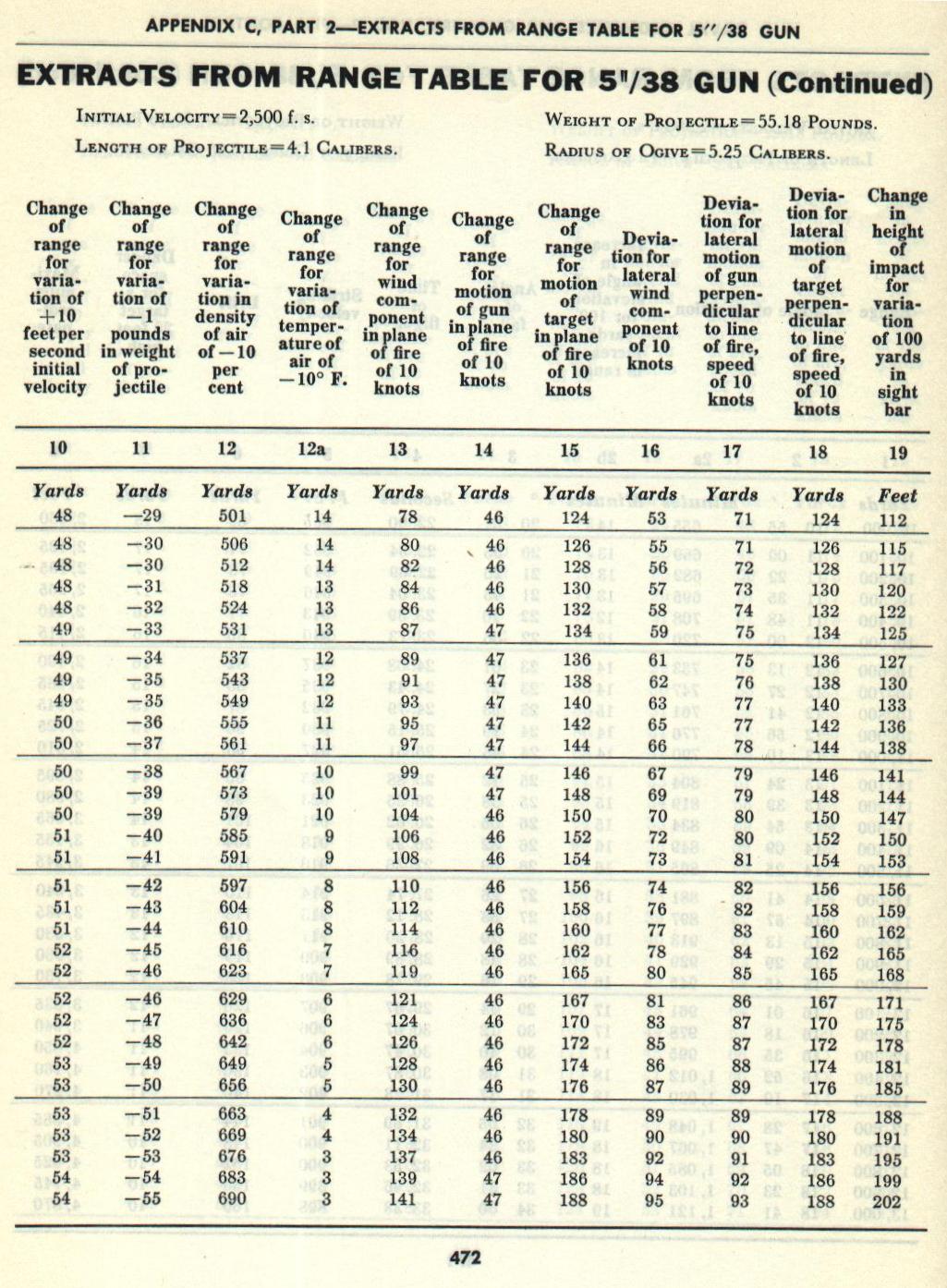
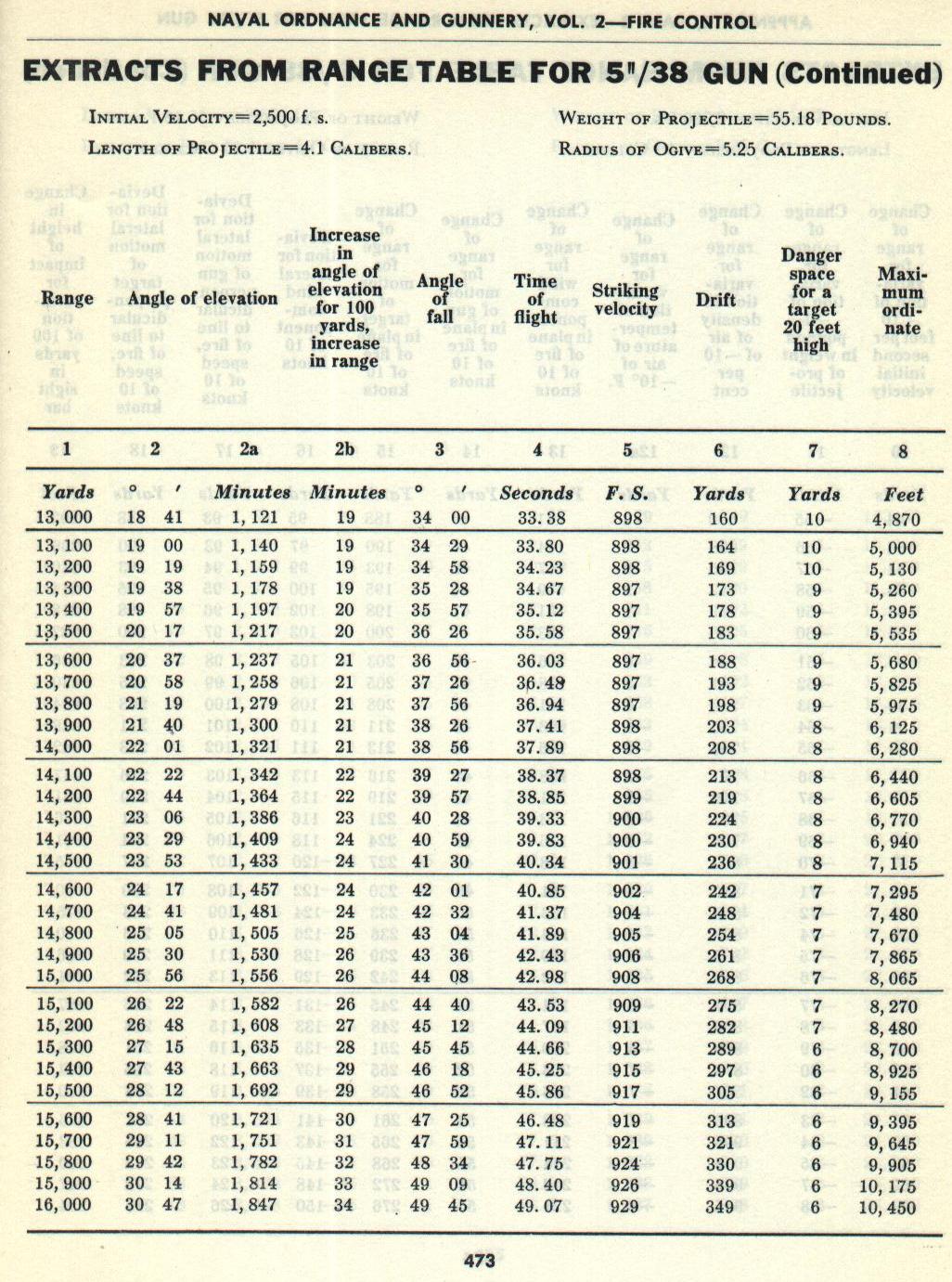
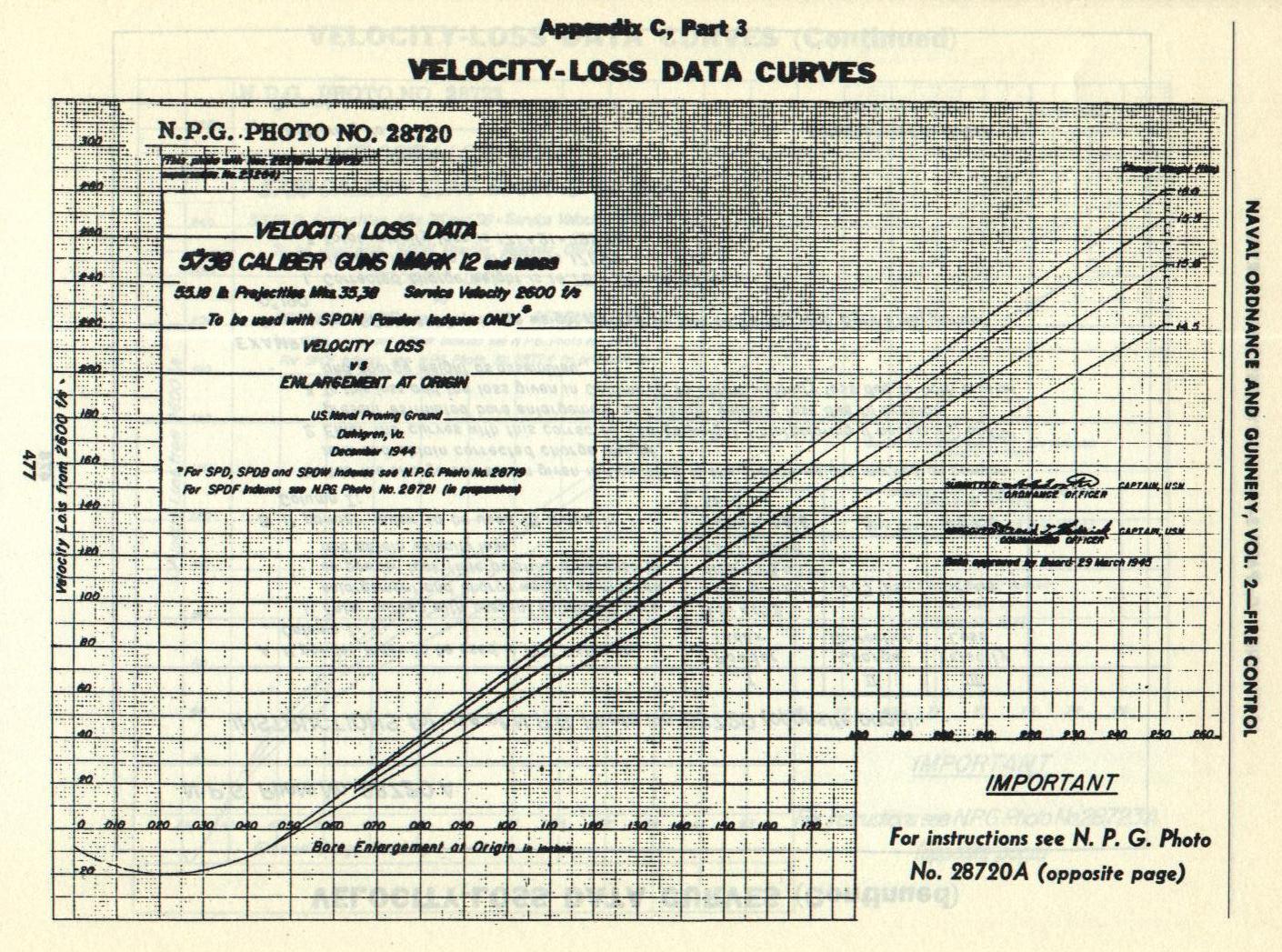
Appendix C of Naval Ordnance and Gunnery, Volume 2: Fire Control (NavPers 10798-A, 1958 edition) presents extracts from the range table for the 5″/38 caliber dual-purpose gun, along with associated fire control data. The 5″/38 Mark 12 gun was the standard dual-purpose weapon of the U.S. Navy throughout World War II and the postwar period, serving in single, twin, and open mounts aboard destroyers, cruisers, battleships, and carriers. The three parts of this appendix — pages 465 through 481 of the volume — provide the air-density nomogram, ten pages of surface gunnery range table data, and five velocity-loss data curve charts used in fire control computations for both surface and antiaircraft engagements.
Part 1 — Air-Density Nomogram
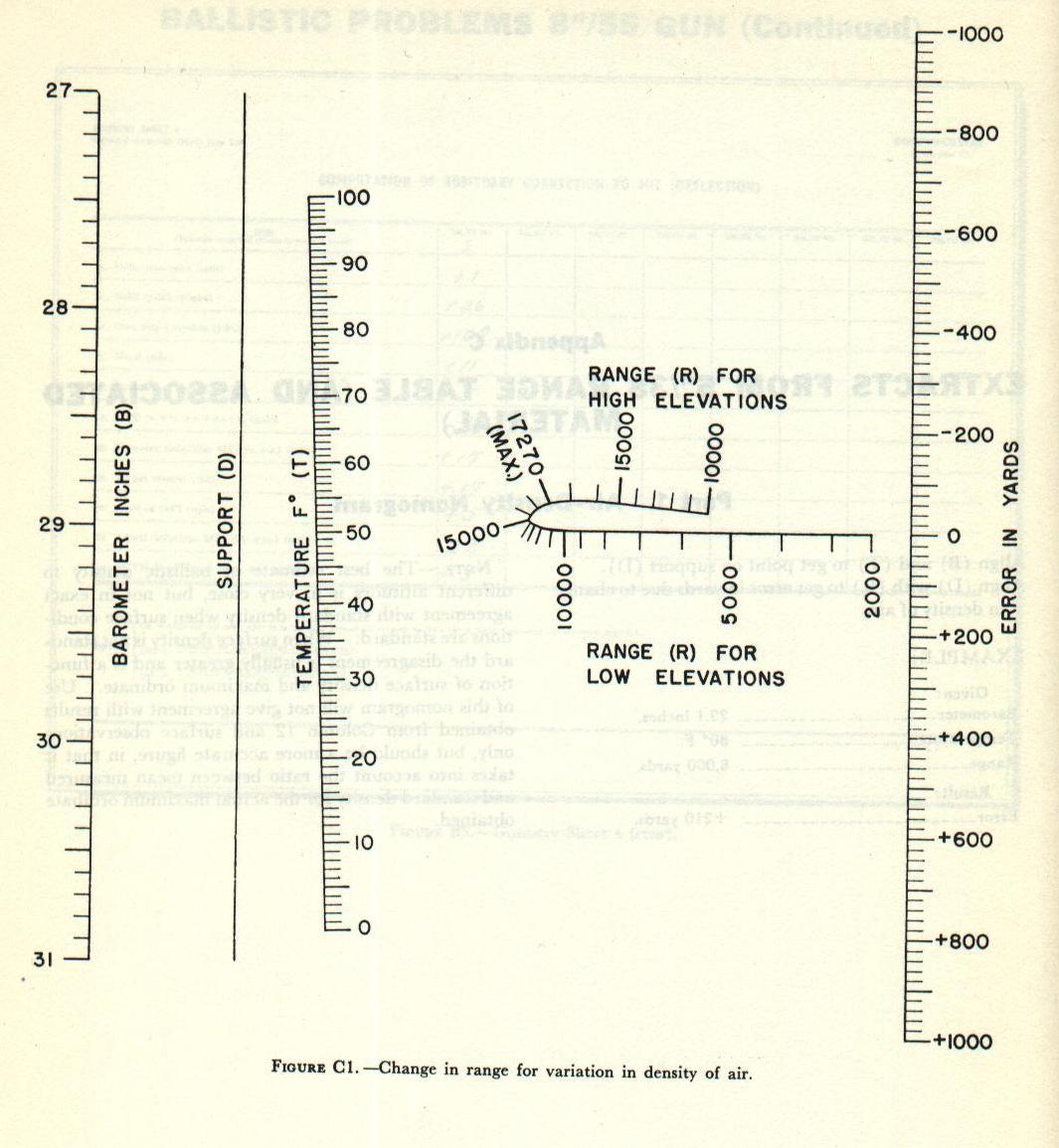
Align (B) and (T) to get point on support (D). Align (D) with (R) to get error in yards due to change in density of air.
Example: Given: Barometer 29.1 inches, Temperature 80°F, Range 8,000 yards. Result: Error +210 yards.
Note: The best estimate of ballistic density to different altitudes is in very close, but not in exact agreement with standard density when surface conditions are standard. When surface density is not standard the disagreement is usually greater and is a function of surface density and maximum ordinate. Use of this nomogram will not give agreement with results obtained from Column 12 and surface observations only, but should be a more accurate figure, in that it takes into account the ratio between mean measured and standard density for the actual maximum ordinate obtained.
Part 2 — Extracts from 5″/38 Range Table
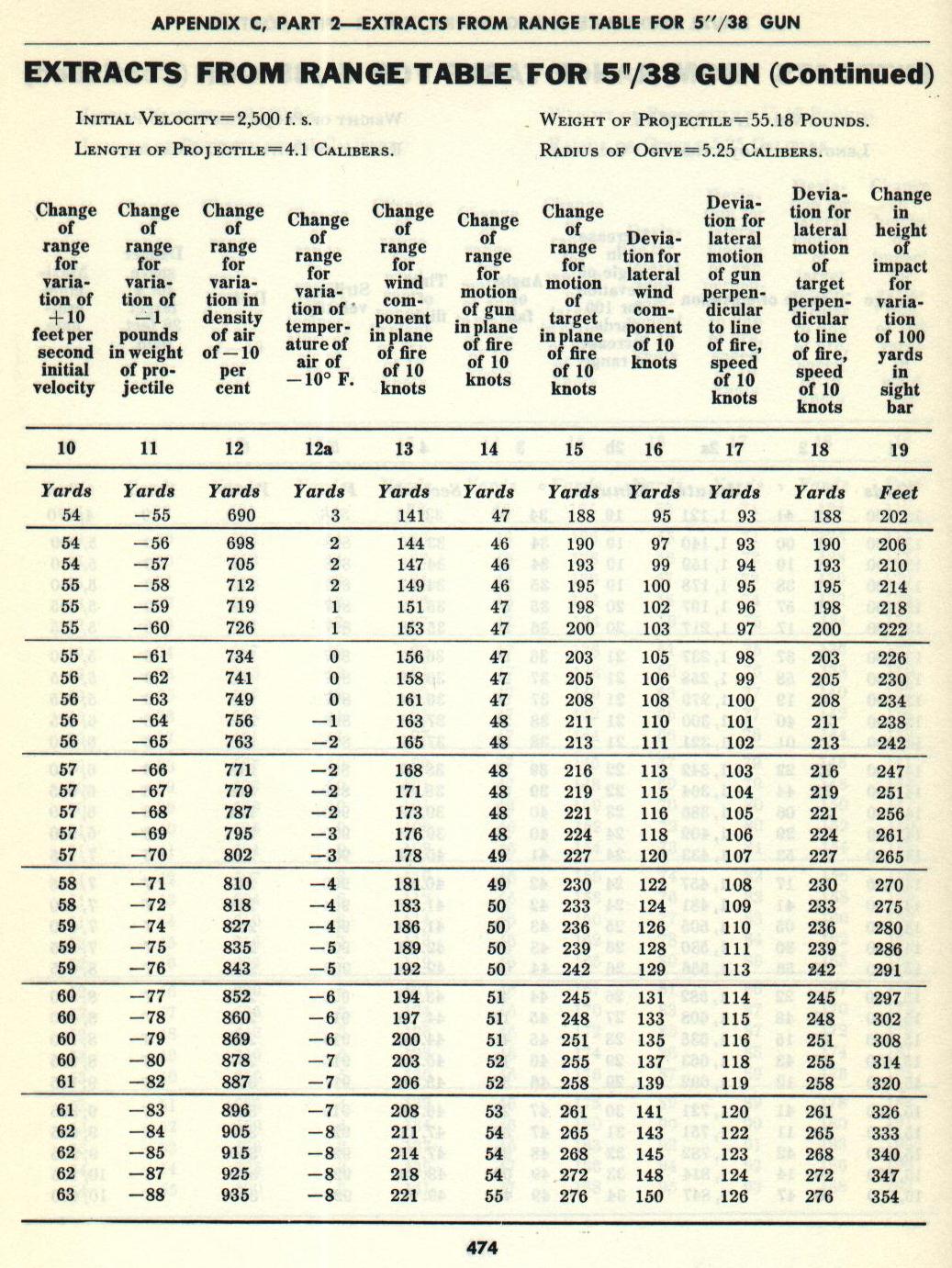
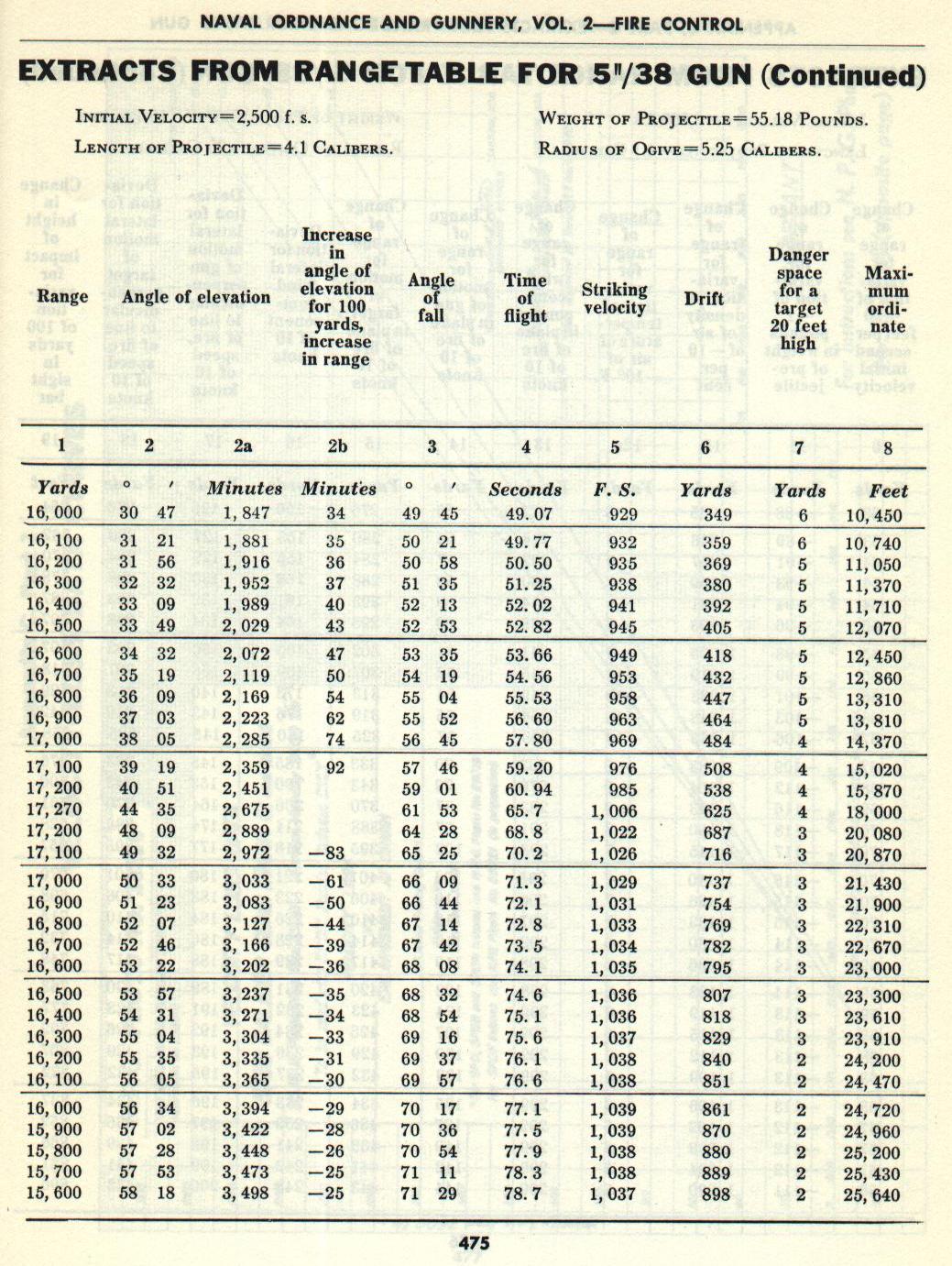
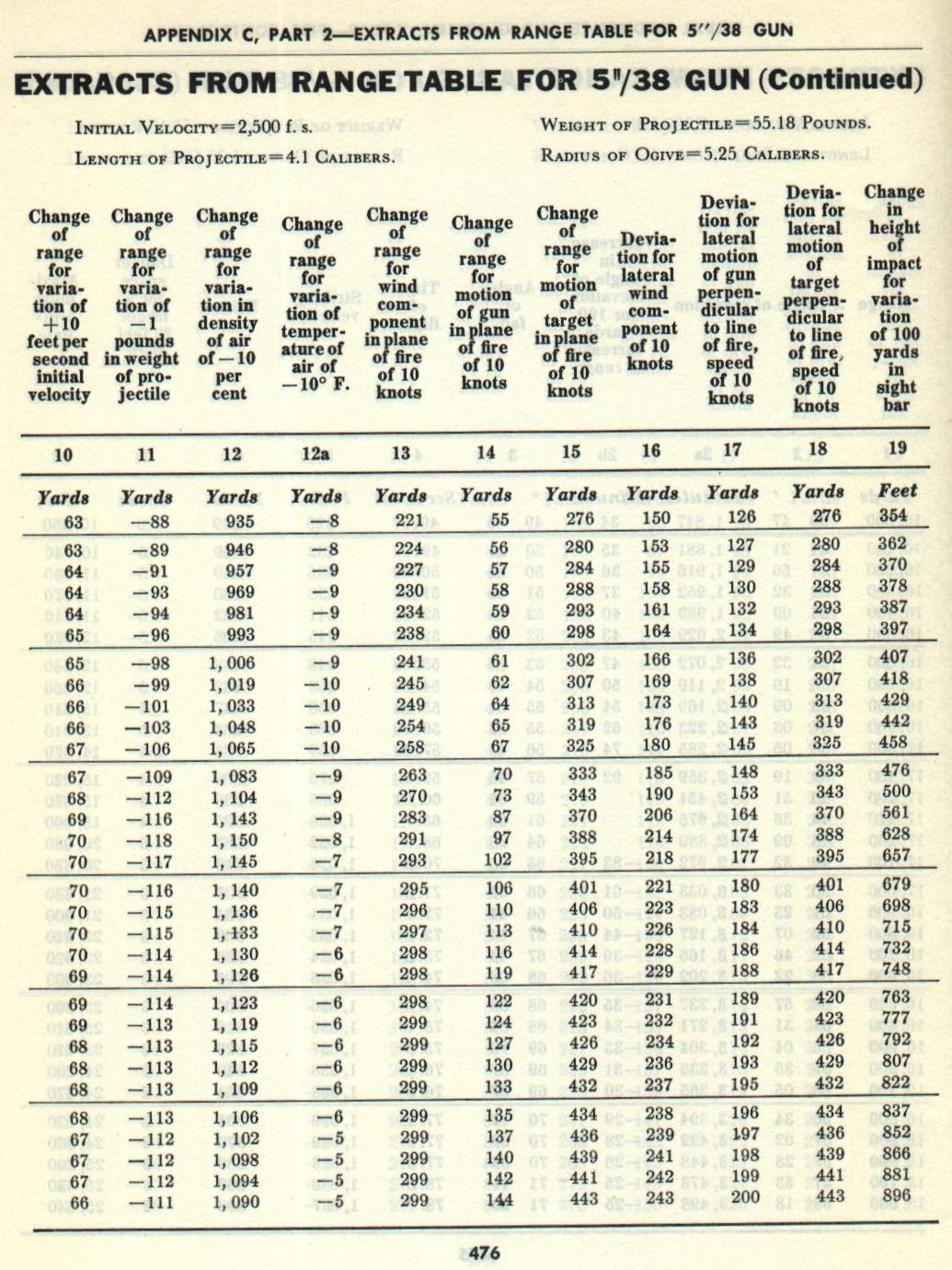
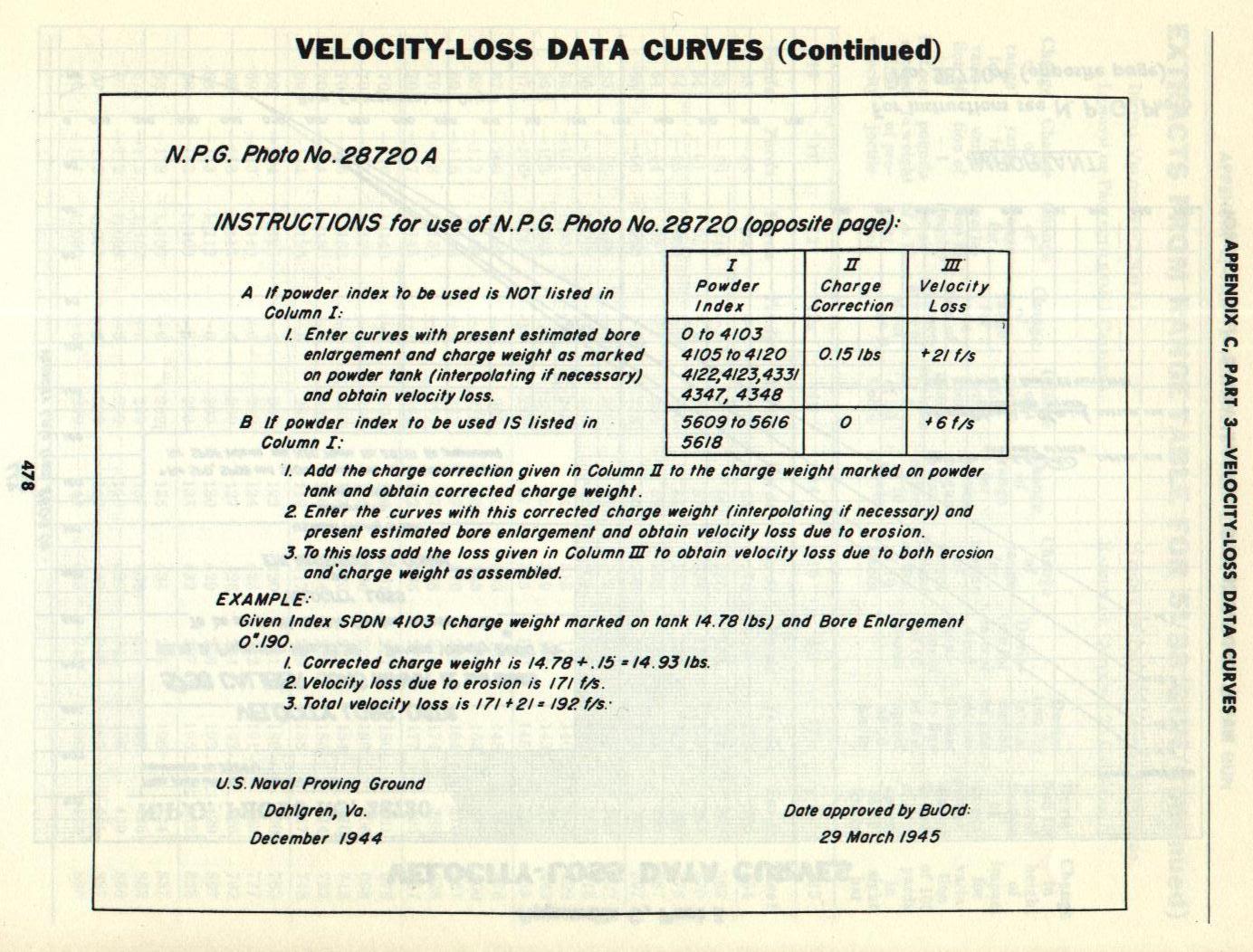
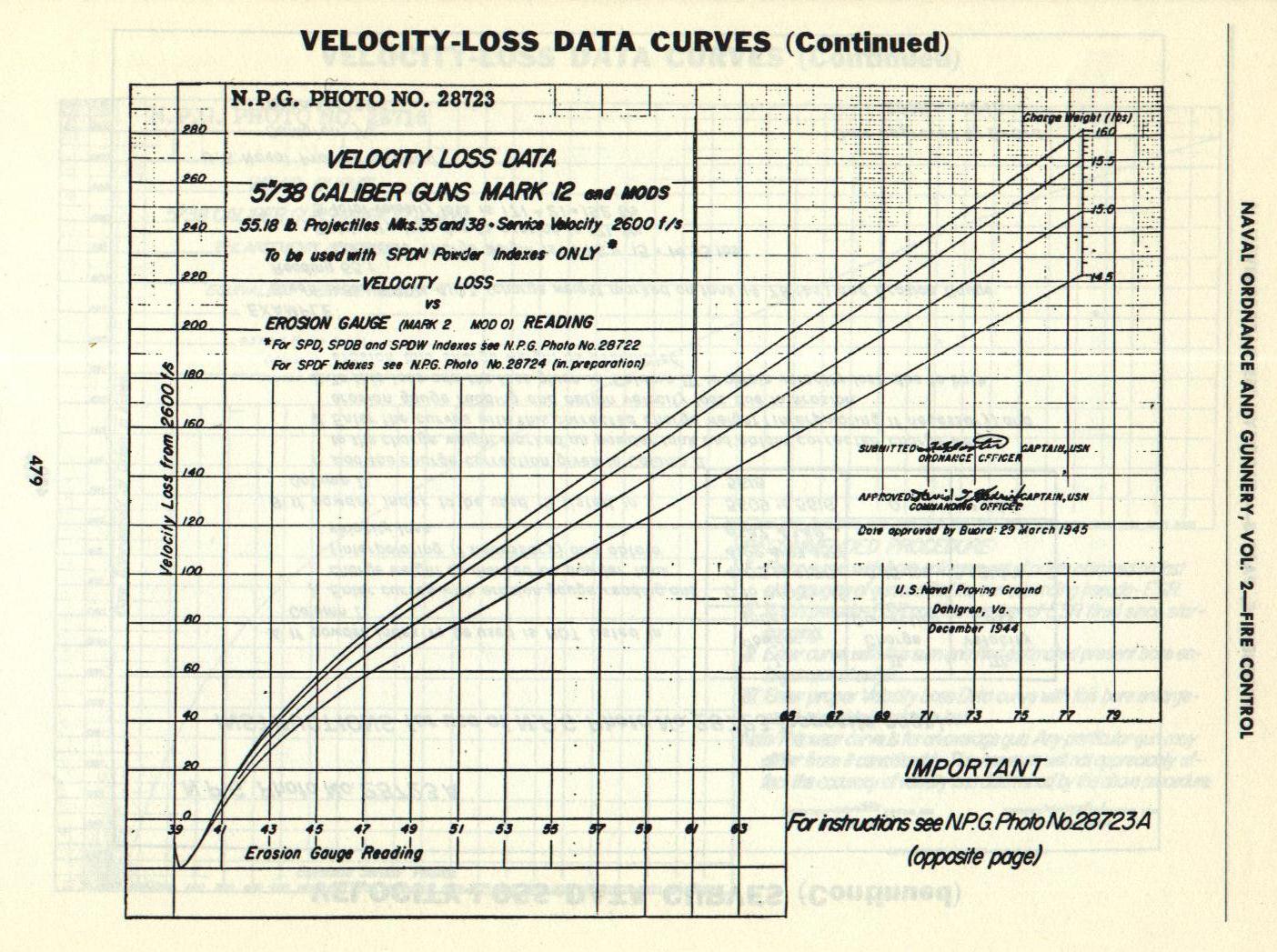
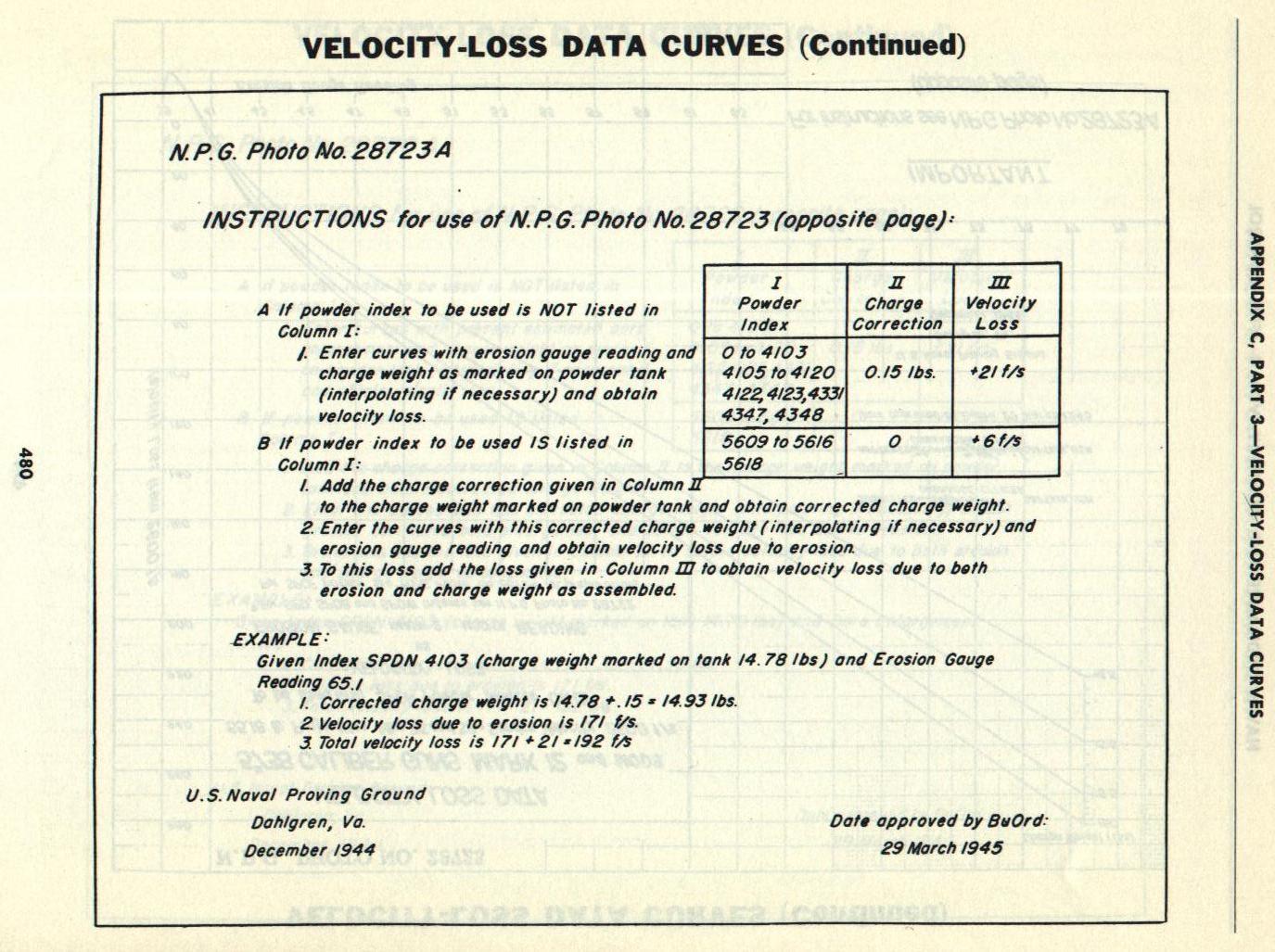
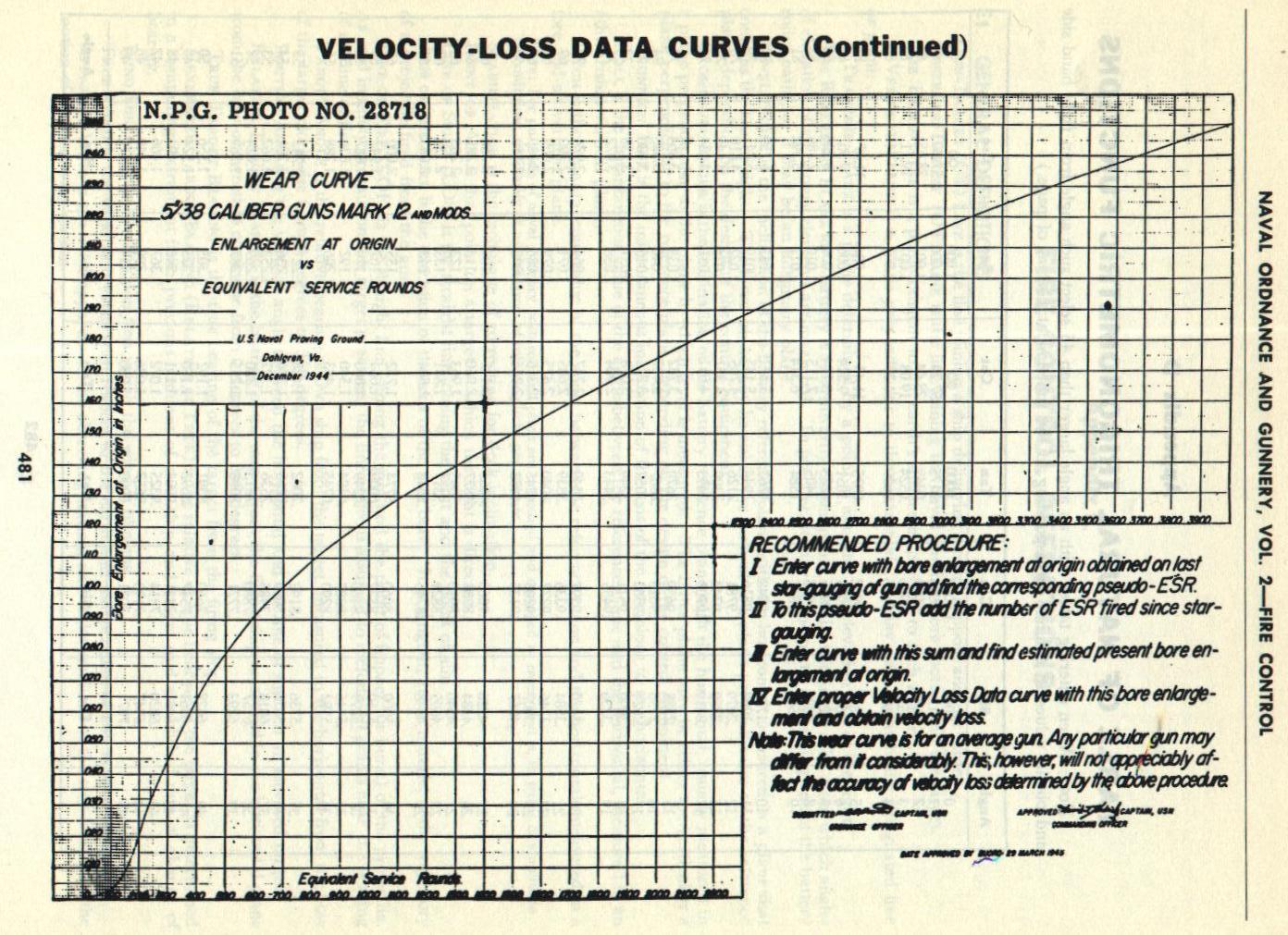
Part 3 — Velocity-Loss Data Curves
Get a free email whenever a new page like this goes up — original gun books, ordnance pamphlets, and wartime film straight from the archive. No spam, unsubscribe any time.
Subscribe for Free →