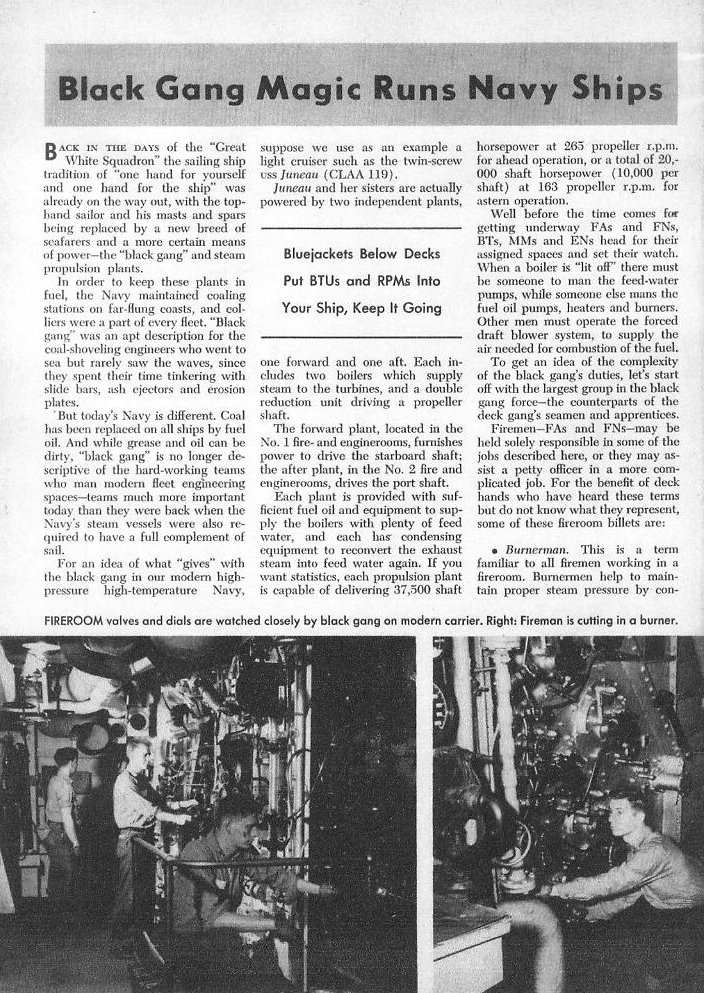
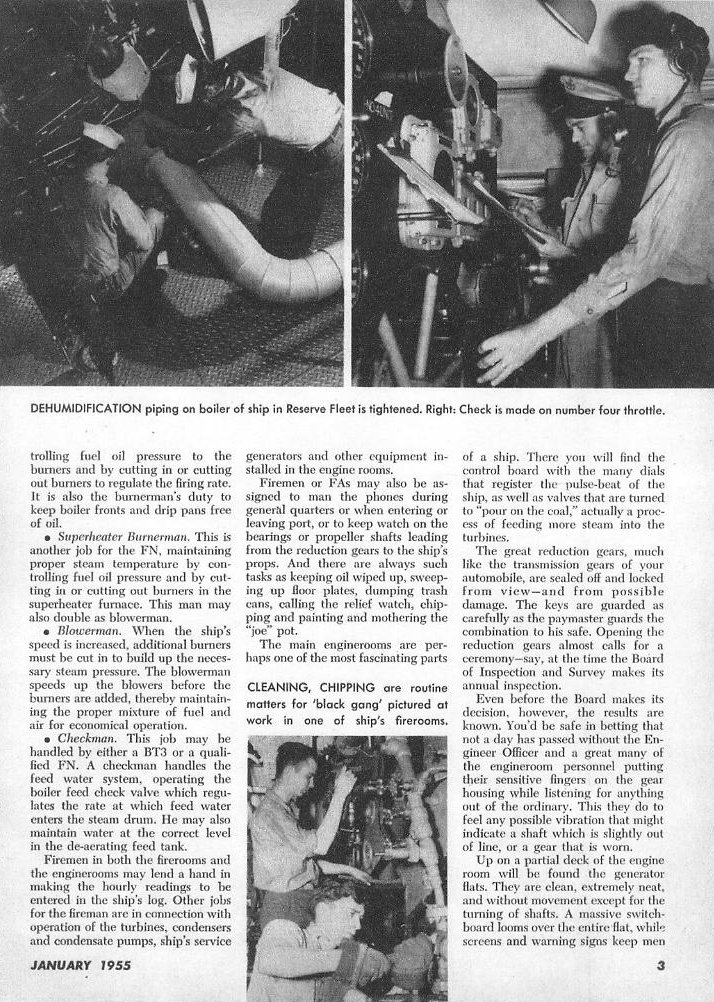
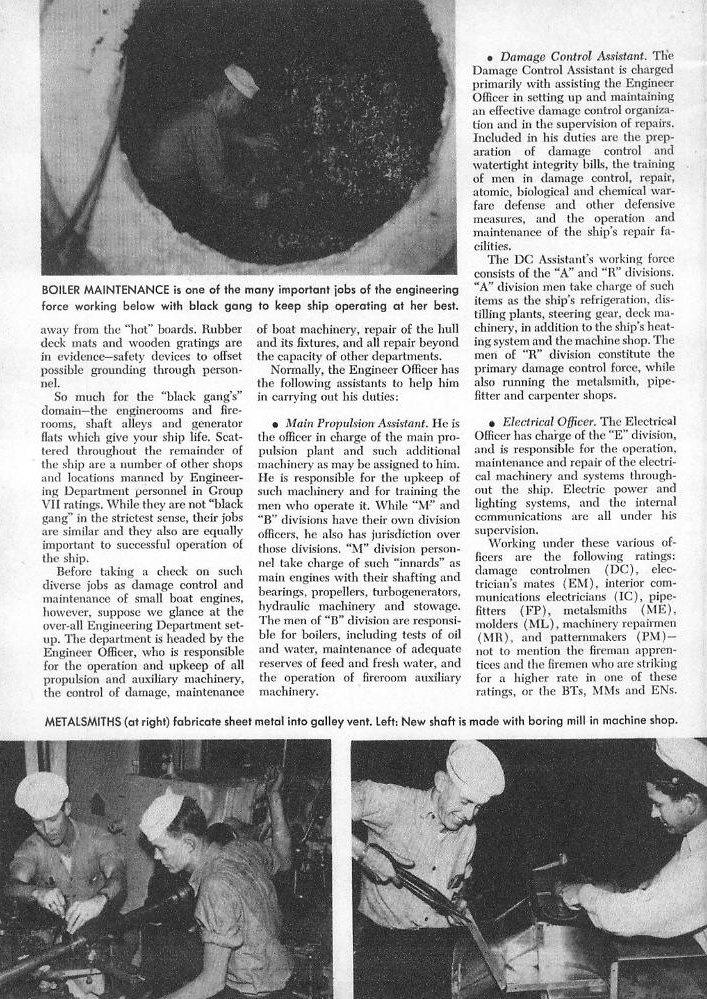
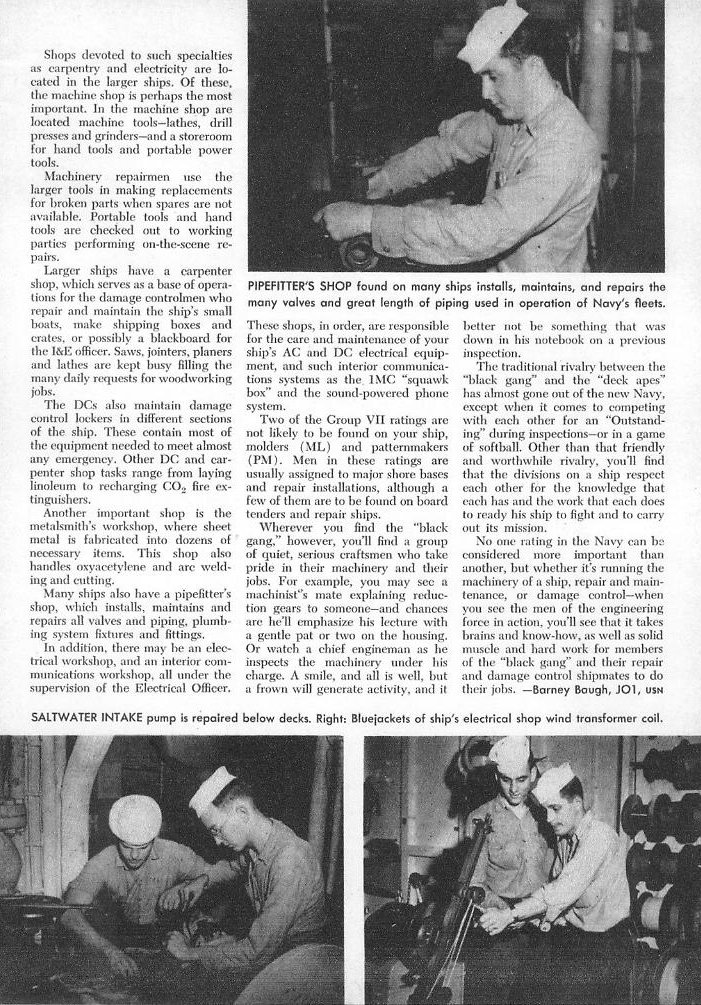
“The Black Gang” is the time-honored nickname for the engineering crew of a US Navy warship — the machinist’s mates, boiler tenders, and enginemen who lived and worked in the fire rooms and engine rooms far below the waterline. The name traces to the coal-burning era of the late nineteenth and early twentieth centuries, when stokers emerged from the bunkers and fire rooms covered head to foot in coal dust. The Navy converted its fleet from coal to oil fuel during the years before World War I, but the nickname proved more durable than the coal itself and followed the engineering ratings into the age of oil and steam.
In a World War II–era or early Cold War combatant, the Black Gang stood watch over the boilers that generated superheated steam at pressures of 400 to 600 psi, the high-pressure and low-pressure turbines that converted that steam into shaft horsepower, the double-reduction gears that stepped turbine speed down to a usable propeller RPM, and the condensers, pumps, and auxiliary machinery that kept the whole plant running. In action or at flank speed the fire rooms and engine rooms reached temperatures well above 100°F. A full engineering watch on a hard-driven destroyer or cruiser was among the most physically demanding billets in the Navy. This January 1955 article profiles the men of the Black Gang and the machinery they tended.
Note: page 1 of this article was not digitized; the scan begins at page 2.